
Publication
The Ankara Pact 2026: “Turan” as an instrument of British influence

ARVAK Center comment, August 1, 2027 [1]
1. Ankara Pact 2026: official partnership parameters
In early July 2026, on the margins of the 36th NATO Summit in Ankara, a landmark strategic partnership agreement was signed between the United Kingdom and Turkey in the field of defense and security. The document was signed by UK Prime Minister Keir Starmer and Turkish President Recep Tayyip Erdoğan.
Based on the content of the official communiqués of the parties, this agreement on strategic cooperation in the defense sphere once again declares the determination of the British Crown and the Turkish Republic to strictly ensure mutual security, while confirming adherence to the fundamental principles of the North Atlantic Alliance.
According to a statement by the Directorate of Communications of the Turkish Presidential Administration, the signed agreement is intended to solidify the mutual aspiration of Ankara and London – key European members of NATO – to deepen and institutionalize their partnership in the context of the transformation of the Euro-Atlantic environment. This document will allow the United Kingdom and Turkey to intensify consultations, employing new mechanisms for interaction in the military-political sphere, including issues of strategic deterrence and defense, development of military technologies, defense industry, space activities, as well as civil readiness and resilience.
Furthermore, the official commentary from the Turkish agency emphasizes that both powers make a “unique and indispensable contribution” to the security of the macro-region. Guided by allied solidarity and shared responsibility, the Parties declare their intention to systematically increase defense spending and build up the potential of the North Atlantic Alliance in order to strengthen Europe’s position while maintaining stable transatlantic ties.
2. Traditions of British “latent diplomacy” in the new reality
The 36th Ankara Summit was highlighted by this treaty, which analysts consider a defining event that illuminates the framework of British strategy amidst extensive geopolitical realignments across Europe, Central Asia, the Middle East, and globally. London has historically formulated and executed its military-political agendas with minimal public disclosure. This legacy of concealing foreign policy objectives is rooted in the British colonial era, when secrecy and disinformation were paramount to successfully competing with rival European powers for the exploration, seizure, and exploitation of colonial territories. These methods eventually became fully institutionalized within British political traditions. Conversely, continental Europe, shaped by successive popular revolutions, witnessed a growing shift toward more declarative foreign diplomacy, propelled by societal demands for greater oversight and transparency regarding government initiatives.
Over time, the concept of “British policy” evolved into a synonym for covert orchestration, intense secrecy, and the systematic misdirection of adversaries. This was paired with an expert ability to exploit international rivalries to advance the United Kingdom’s expansionist goals. London spent centuries refining this approach, which consistently proved more effective than overt proclamations or massive military deployments. The primary mechanisms driving British global ascendancy became hidden diplomacy and quiet influence over international geopolitics. Consequently, this approach heavily relied on British intelligence networks, which are deeply embedded within the state’s political and diplomatic frameworks to carry out its international doctrine. Within this strategy, the British Cabinet traditionally viewed the overt display or deployment of armed strength as a last resort, reserved solely for extreme emergencies. During the 20th century, the necessity to project power through direct military means was heavily offset by the UK’s NATO integration, which enabled London to shift much of its defense burden to a multilateral body while preserving its geopolitical leverage across global regions. In recent decades, the UK has continuously ranked among the lowest spenders in the North Atlantic Alliance regarding defense allocations as a percentage of GDP. Nonetheless, this strategy permitted the Kingdom to maintain nominal status as a front-rank military power that stands in stark contrast to the actual financial commitments dedicated to its national forces.
3. Evolution of strategy: from “soft power” to direct military instrumentarium
In this regard, analysts emphasize the unprecedented intensification of the military segment in London’s foreign policy course over the past year, which is an atypical phenomenon for British strategy since the 1982 Falklands Crisis. First of all, amid the “financial and budgetary furore” initiated by D. Trump within the North Atlantic Alliance, the United Kingdom proceeded to the accelerated search for alternative resources to modernize its national armed forces (ARVAK analyzed this issue in detail in the article “Crisis of the UK Defense Budget” dated 24.06.2026). Furthermore, in this paradigm, special attention is deserved by the strategic cooperation treaty between the UK and the Republic of Turkey, concluded within the framework of the Ankara NATO Summit. According to a number of experts, this step signifies a fundamental transformation of London’s doctrine, which, against the backdrop of large-scale geopolitical shifts in its zones of influence, seeks the direct activation of forceful instruments and the qualitative strengthening of its own security architecture.
4. London’s dual agenda: NATO crisis and eurasian expansion
The bilateral agreement signed between Britain and Turkey in Ankara holds significant geopolitical interest. According to expert consensus, this document underscores London’s urgency in addressing two critical strategic challenges by establishing a fundamentally new defense partnership with Ankara.
- NATO’s widening stagnation, which analysts warn could lead to its eventual fragmentation or deep structural overhaul, compels London to pursue exclusive paths to reinforce its alignment with Turkey – Europe’s most formidable military actor. Amidst the prevailing geopolitical volatility across the continent fueled by NATO’s financial and ideological decline, the British Crown is moving swiftly to institutionalize its cooperation with Ankara. This initiative seeks to build an alternative framework to safeguard British strategic priorities across Eastern Europe, the Middle East, and the Mediterranean, where its vital naval and air assets are positioned. Notably, Madrid’s diplomatic shifts regarding Washington, alongside intensifying Greek-Turkish disputes, already pose direct risks to British installations in Gibraltar and Cyprus, limiting London’s capacity to subtly balance regional interests in the Mediterranean. As Ankara’s prominence in regional security grows alongside the visible erosion of cohesion within NATO, the UK is actively aligning its politico-military frameworks with its Turkish counterparts. This strategic shift serves as a direct counterweight to emerging regional coalitions spurred by NATO’s internal friction: specifically, the “Bucharest Nine” and the “Three Seas Initiative” in Eastern Europe, the U.S.-Israeli alignment in the Middle East, and the joint axis of France, Greece, Cyprus, and Israel in the Eastern Mediterranean. Navigating this intricate geopolitical landscape, London is making a calculated wager on deepening its defense ties with Turkey, leveraging its historical influence, Ankara’s substantial capabilities, and the shared geopolitical interests of both nations.
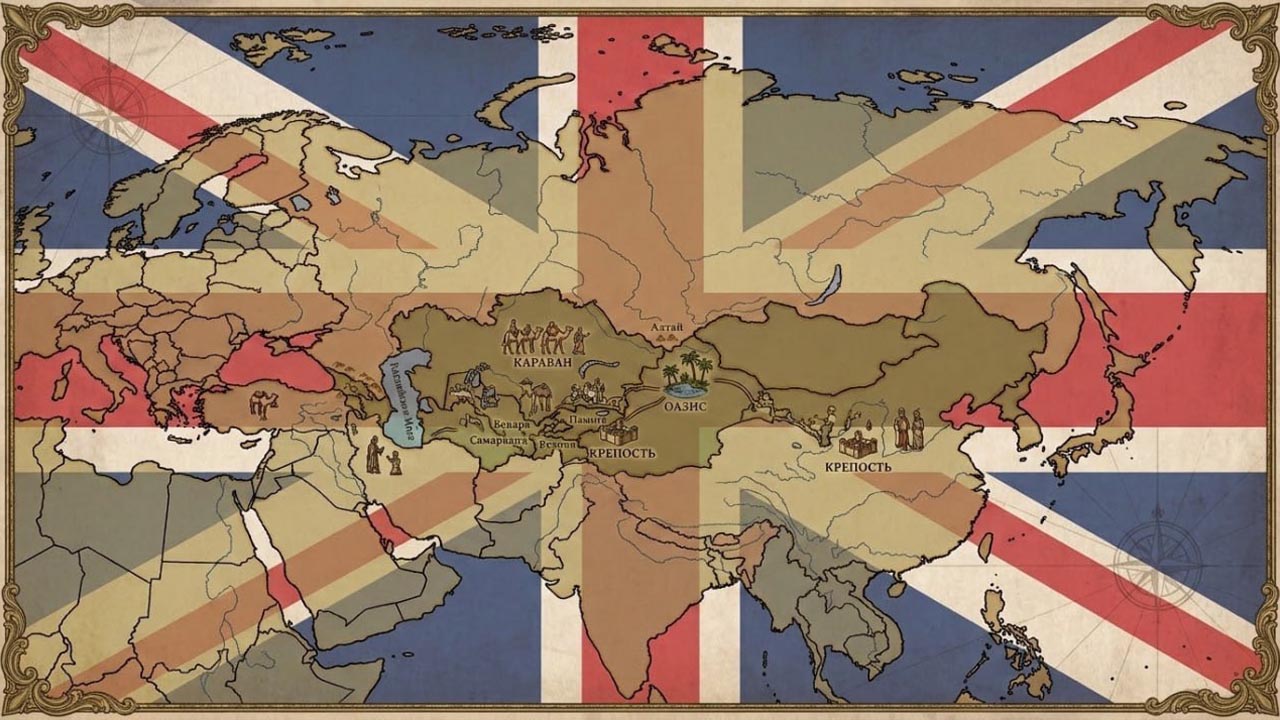
- London’s secondary strategic objective centers on leveraging Turkish expansionism to systematically displace Russia from Central Asia and the Black Sea–Caspian basin. The ongoing conflict in Ukraine has severely depleted Moscow’s military capacities, eroding its maritime dominance in the Black Sea, diminishing its leverage across the South Caucasus, and loosening the military and political ties that Central Asian nations historically maintained with the Russian Federation. Concurrently, a resurgence of Pan-Turkic ideology provides Turkey with a prime opportunity for extensive geopolitical penetration into Central Asia. Ankara is poised to convert its extensive diplomatic, economic, and cultural networks – cultivated through the Turkic Council and the Organization of Turkic States (OTS) – into a cohesive military-political bloc. While certain OTS participants remain hesitant to finalize such a tightly integrated alliance (ARVAK analyzed the issue of Astana’s resistance to Turkish initiatives in its comment dated May 26, 2026), Turkey’s diplomatic and political pressure is projected to intensify. Consequently, the CSTO faces the imminent risk of losing its efficacy as a regional security guarantor, potentially reframing Russia as a source of instability rather than order. In this context, the persistent threat of radical Islamism emerging from Afghanistan underscores the demand for a replacement security framework. This new architecture would abandon obsolete post-Soviet paradigms in favor of one anchored in ethnolinguistic alignment, shared confessional ties, and the shared ambition to establish a potent new power center in the heart of Eurasia.
5. “Turan” project and security challenges for Russia
The Ankara Agreement marks a pivotal shift for the United Kingdom, transitioning from its historical reliance on “latent diplomacy” to the direct deployment of its defense capabilities. By establishing this unprecedented security alignment outside of collective NATO mandates, London seeks to escalate pressure along the southern frontiers of the Russian Federation. Drawing on its strategy of supporting Kyiv, the UK aims to permanently sever Moscow’s influence over Turkic-speaking regions and establish conditions designed to ultimately undermine Russian statehood.
This development represents the culmination of a long-term British strategy to integrate into the emerging “Turan” framework, elevating it from an ideological concept into a concrete geopolitical and military structure. For over two centuries, London has quietly fostered pro-Turkish alignments among the populations and leadership of Central Asia and the Caucasus. Following the collapse of the Soviet Union, this anti-Russian “Turkicization” initiative intensified, facilitating Turkish expansion into spheres of vital interest to Moscow. While these complex interactions were previously kept covert to shield the mission against Russian influence from public scrutiny, the new bilateral pact brings this geopolitical confrontation into the open.
Driven by an unprecedented surge in the UK’s military and political engagement with Turkey, the Russian Federation is encountering a convoluted array of existential threats. This strategic approach by London highlights an explicit attempt to reenact the successful 19th-century Crimean Campaign. During that historical conflict, the unified power of Anglo-French fleets alongside Ottoman land forces in the Black Sea theater successfully secured a strategic edge over Moscow.
6. Regional consequences for the South Caucasus
The most profound danger to the security of the Russian Federation stemming from the evolving British-Turkish alignment lies in how unstated assurances of British nuclear deterrence could radicalize Ankara’s geopolitical maneuvers. Although formal NATO structures preclude any explicit mentions of nuclear solidarity within the text of the Ankara Agreement, the underlying trajectory of their partnership suggests that London is establishing a strategic nuclear safety net for Turkey should the North Atlantic Alliance dissolve. Such an arrangement threatens to dismantle the historical deterrence factors that traditionally prevent a direct military confrontation between Russia and Turkey, thereby unlocking highly destabilizing scenarios across Eurasia that serve long-standing British interests.
Concurrently, while British-Turkish designs in the Central Asian region face a slower, more obstructed rollout, their combined influence in the South Caucasus is already generating severe apprehension in Moscow. Azerbaijan’s absorption into Turkey’s military-political orbit was effectively cemented by the outcomes of the 2020 44-day war and the 2023 ethnic cleansing of the Armenian population, which precipitated the departure of Russian peacekeepers. Armenian analysts observe that the newly signed Ankara Strategic Partnership Treaty, when integrated with the provisions of the 15.06.2021 Shusha Declaration, serves as the institutional mechanism for London to project direct force into the region. Consequently, this introduces a qualitative transformation of security threats along Russia’s southern periphery, extending across the Black Sea theater, the Caspian basin, and the strategically vital Volga region.
[1] The original (in Rus.) was posted on our website on 17.07.2026.