
Publication
Geopolitical motives behind the Pakistan–Afghanistan escalation (September 2026)

ARVAK Center comment, September 30, 2026[1]
1. Pakistan–Afghanistan escalation in September 2026
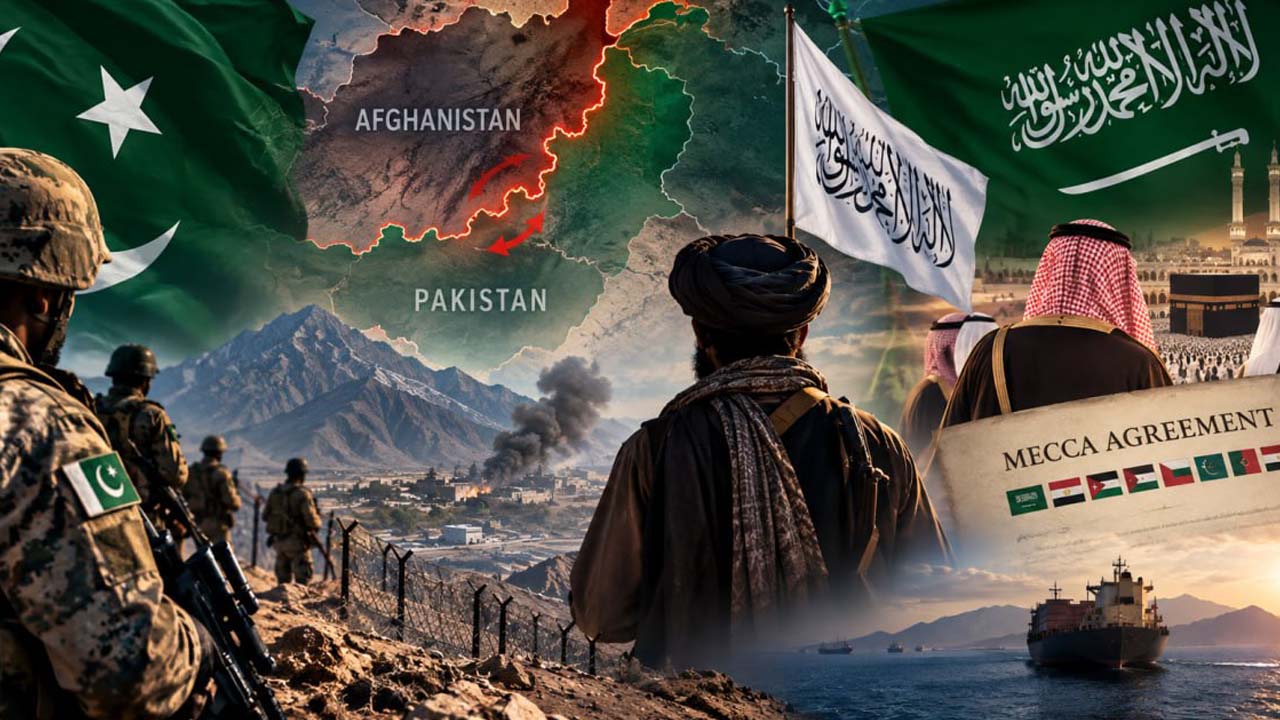
In mid-September 2026, a significant deterioration of the situation was recorded along the Afghan–Pakistani border. According to official statements from Islamabad, the escalation was caused by attacks on law-enforcement personnel, border guards, and civilians in the areas of Hangu and Kohat in Khyber Pakhtunkhwa province. The Pakistani side attributed these actions to the Afghanistan-based extremist formations Tehrik-i-Taliban Pakistan (TTP) and Ittehad-ul-Mujahideen (IMP alliance), which, in its assessment, are affiliated with the Taliban movement ruling in Kabul. The aforementioned groups denied involvement in the incidents, while representatives of the Taliban movement accused Pakistan of disinformation and of seeking unfounded pretexts for conducting military operations on Afghan territory.
On the night of 20-21 September 2026, the Pakistani military attacked a number of targets in Afghanistan’s border areas, stating that the strikes were directed against militant infrastructure. The Afghan side, in turn, stated that only residential buildings and civilian neighborhoods had been shelled. In response, on September 21, 2026, the Taliban Foreign Ministry delivered a protest note to the Pakistani ambassador summoned to the ministry in Kabul, warning of its intention to take retaliatory measures if attacks on civilians continued. Beginning the following day, hostilities resumed along virtually the entire perimeter of the border between the two states.
Claiming that Taliban drones had penetrated deep into Pakistani airspace from several directions at once, while Afghan forces had attempted to breach the border by attacking Islamabad’s strongpoints and outposts in the Zazi-Aryub area, Pakistani forces proceeded to directly shell Kabul with missiles.
2. Analysis of the causes and interpretations of the border conflict
At first glance, the latest escalation of tensions between Kabul and Islamabad follows the familiar dynamics of conflicts in this region. The scenario appears conventional: terrorist attacks on Pakistani territory by groups linked to the Taliban movement are followed by retaliatory military measures by Islamabad – primarily rocket and air strikes against presumed extremist bases on Afghan territory – which subsequently lead to localized armed clashes directly along the demarcation line. However, specialized analysts note a significant feature of the current incident: independent international media outlets have found no information from alternative sources confirming the Pakistani side’s reports concerning the timing, location, and consequences of the attacks attributed to TTP and IMP formations. The overwhelming majority of foreign media outlets covering the current conflict rely exclusively on official statements from Islamabad when describing the causes of destabilization, specifically noting the absence of independent verification of this information. Afghan media outlets, for their part, not only deny the Taliban movement’s involvement in incidents on Pakistani territory, but also completely dispute the credibility of these events, claiming that Islamabad is disseminating unreliable information. Some Afghan commentators point out that, if there are genuine facts indicating attacks on civilian and military facilities, responsibility for them should be assigned to Pakistani intelligence and security services. In their assessment, Islamabad’s initiation of another cycle of border escalation is unfounded and serves as a pretext for carrying out large-scale military actions against Afghanistan, misleading both the public of the two states and the international community.
According to Afghan sources, whose assessments indirectly echo publications by Reuters, the BBC, and reports by the United Nations Assistance Mission in Afghanistan (UNAMA), Islamabad escalated the situation at the border without objective grounds, or its military response to systematic local incidents was disproportionately harsh. Such an approach indicates Pakistan’s direct interest in destabilizing the so-called “Tribal zone” and resuming large-scale clashes with Kabul.
3. Crisis surrounding Saudi Arabia and the “Mecca Agreement”
There are grounds to believe that these steps by Islamabad are driven by an effort to address foreign-policy objectives beyond the Afghan direction, despite the considerable costs and risks to its own armed forces and citizens. This dynamic is directly linked to developments surrounding Saudi Arabia – a key military-political ally of Pakistan that has found itself in acute confrontation with the Houthi movement Ansar Allah.
In its publication of 18.09.2026 (“A new phase of the Middle East crisis: The struggle for the Red Sea and the Straits”), ARVAK analyzed in detail the escalation in the southeastern part of the Red Sea and the critical situation in which Riyadh found itself. Having brought key Yemeni ports near the Bab el-Mandeb Strait under its control and defeated the forces of Yemen’s internationally recognized government in Aden, the Houthis redirected the focus of their offensive directly toward Saudi Arabia.
At present, the Ansar Allah movement is conducting a ground offensive in the southern regions of the Kingdom of Saudi Arabia (KSA) and carrying out massive strikes with ballistic missiles and attack UAVs against strategic oil-industry facilities – refineries, port terminals, and distribution hubs. As a result of these attacks, the East–West oil pipeline was damaged; it had remained the kingdom’s key hydrocarbon export route amid the closure of the Strait of Hormuz by Iran. In addition, since mid-September, the KSA capital has been subjected to systematic shelling; the largest attack on Riyadh took place on Saturday, September 19, 2026.
The high intensity and scale of the Yemeni rebels’ actions prompted Saudi Arabia to seek direct military support from Pakistan and Turkey. With these states, Riyadh concluded the so-called “Mecca Agreement” on August 07, 2026, known in expert circles as a declaration on the formation of “Sunni NATO”. A key provision of the document treats an attack on any participant in the agreement as an act of aggression against all parties, thereby legitimizing the provision of direct military support to an ally. According to Middle Eastern sources, within the framework of the “Mecca Agreement”, Riyadh approached Ankara and Islamabad privately on 10-14 September 2026 for assistance in containing the Houthi advance along the Red Sea coast and neutralizing their missile and drone attacks on KSA territory. Nevertheless, information on the actual provision of such assistance is not available in the public domain.
Official representatives in Ankara and Islamabad stated that, by mid-September, no formal request had been received from the Saudi side to activate the pact’s defense mechanisms. At the same time, according to available information, the Turkish side expressed readiness to provide technical and defensive assistance, including the deployment of air-defense systems. Pakistani authorities, for their part, confirmed their intention to fulfill their treaty obligations “when the time comes”. In particular, on September 10, 2026, Pakistani diplomatic official Sajjad Haider Khan assured that Islamabad would intervene if the corresponding need arose.
Despite the fact that two weeks had already passed since the beginning of the active phase of the armed confrontation in the southwest of the Arabian Peninsula, the “need” for direct military assistance announced by the Pakistani diplomat never materialized. According to a number of analysts, Islamabad and Ankara deliberately decided not to become involved in the Saudi–Houthi conflict. This position was apparently also influenced by explicit warnings from the leadership of Ansar Allah, which stated that it was prepared to immediately strike Turkish and Pakistani forces in the region and employ its entire available arsenal against them in the event of any military intervention on Riyadh’s side.
The Yemeni escalation has become a serious test of the resilience of “Sunni NATO”, yet the absence of active steps by Turkey and Pakistan to provide “collective defense” – a key principle of the “Mecca Agreement” – has already triggered a wave of skepticism among experts. Analysts point out that deep geopolitical contradictions and divergent national interests among its participants are restraining factors in the pact’s development into a cohesive alliance. Under the circumstances, the bloc’s member states will have to acknowledge that mutual commitments to unconditional military support were proclaimed prematurely.
In response to persistent accusations concerning the failure of “Sunni NATO” and the failure of the geopolitical project that made a high-profile appearance in August, Turkish Foreign Minister Hakan Fidan cited NATO’s experience as an example, claiming that during its “70-year history” it had allegedly “never”[2] invoked Article 5 of its founding treaty, despite, according to him, having had grounds to do so on multiple occasions. Fidan stated that the Sunni alliance was only beginning its historical journey and should not be considered a “paper tiger”.
4. Islamabad’s diplomatic maneuver
Thus, while Ankara seeks to defend the viability of the “Mecca Agreement” and justify its non-intervention in the war with the Houthis within the public discourse, Islamabad has chosen a different logic to explain its withdrawal from a conflict in which, under the provisions of the agreement, it was obliged to participate. In this context, there are sufficient grounds to assume that the renewed tensions on the Afghan-Pakistani border, which occurred only a few days after the beginning of Ansar Allah’s active offensive on the Arabian Peninsula, may have been provoked with the direct involvement of Islamabad. In order to convincingly refuse Riyadh’s request for direct military support, Pakistan needed a compelling pretext. The clashes with the Taliban became precisely the factor that made it possible to legitimize its refusal to participate in defending the interests of the KSA in the Red Sea area. At the same time, Pakistan did not turn to Riyadh for reciprocal assistance, thereby establishing parity in the failure to fulfill the mutual obligations enshrined in the agreement.
This factor explains why Riyadh, limiting itself to informal behind-the-scenes consultations and requests for defense support, never proceeded to the formal procedure of appealing to the pact’s participants to become involved in the Yemeni confrontation. Islamabad required an extremely complex combination, involving the risks of military casualties and direct clashes with the Taliban, in order to construct a convincing legal and moral justification for distancing itself from the Saudi-Houthi conflict. Riyadh is a key financial donor to Pakistan and a major investor in its vulnerable economy, making it impossible for Islamabad to directly reject a Saudi request without compelling and exhaustive grounds. On the other hand, the Pakistani authorities are aware of the critical danger of direct involvement in the Yemeni campaign, which could turn into a catastrophic adventure for a country that is already forced to devote resources to containing Iran and India while simultaneously neutralizing internal destabilizing threats from radical groups and tribal associations. It is precisely this deep contradiction that is currently undermining the viability and effectiveness of the “Mecca Agreement”.
[1] The original (in Rus.) was posted on our website on 28.09.2026.
[2] In fact, Article 5 of the North Atlantic Treaty on collective defense was officially invoked on 12 September 2001 in response to the terrorist attacks against the United States.