
Publication
Lebanon: Turkish-Israeli geopolitical rivalry on the background of the UNIFIL mandate expiration

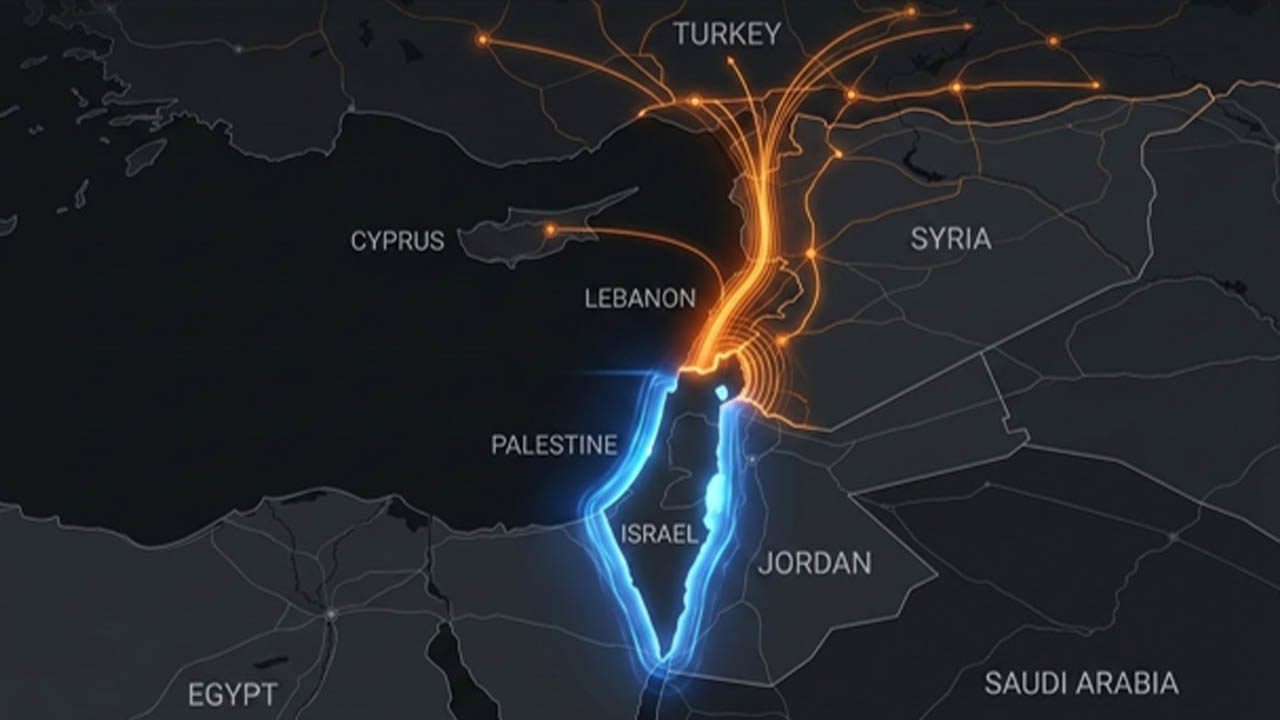
ARVAK Center comment, August 5, 2026[1]
1. Ankara’s strategic imperatives in Lebanon after the expiration of the UNIFIL mandate
The geopolitical rivalry between Ankara and Tel Aviv has also encompassed the Lebanese track.
Following the negotiations held on July 30, 2026, in Ankara with Lebanese President Joseph Aoun, the head of Turkey, Recep Tayyip Erdogan, announced the republic’s intention to become part of a new international structure for maintaining security in Lebanon. This step is planned to be implemented upon the expiration of the United Nations Interim Force in Lebanon (UNIFIL) mandate, which ends on January 31, 2026. According to the Turkish leader, Ankara aims to provide “all necessary support to prevent a security vacuum in Southern Lebanon”. Turkey’s plans include assistance in the reconstruction of residential areas and infrastructure facilities damaged during recent Israeli actions, assistance in protecting Lebanon’s borders, and the transfer of military-technical aid to the Lebanese Armed Forces. Joseph Aoun, for his part, demonstrated Beirut’s readiness to approve these initiatives, emphasizing that the deployment of a Turkish contingent near the Lebanese-Israeli border would serve as a stabilizing factor.
Ankara is actively seeking to expand the scope of its military presence in Lebanon, where Turkish units previously served as part of the UNIFIL forces. According to analysts, in the absence of certainty from the UN regarding the future format of international forces in the republic, the Turkish leadership expects to receive Beirut’s consent to grant a special status. This will allow the Turkish side to secure a key role in future peacekeeping structures, regardless of the principles of their further formation.
At the same time, despite the interest expressed by Paris and Rome in participating in the renewed international mission in southern Lebanon, Turkey is doing everything possible to ensure the dominant position of its contingent. Ankara aims to make its military the leading element in the collective system of “support for peace and order” being created in this strategic zone.
2. Existential risks and escalatory potential of Turkish presence for Tel Aviv
Israel’s reaction to the news of the Turkish-Lebanese rapprochement turned out to be predictably alarming. Tel Aviv issued a warning to Beirut, stating that relying on Ankara’s military assistance is fraught with serious consequences for Lebanon. The Israeli leadership is convinced: the deployment of a Turkish contingent near the northern borders of the Jewish state lays the foundation for a direct geopolitical clash between two regional powers, and all responsibility for this lies with the Lebanese side. According to Israeli analysts, Ankara’s official statements about its desire to stabilize Lebanon and “pacify Hezbollah” do not reflect its real goals. In reality, Southern Lebanon is perceived by Turkey as a strategic bridgehead on the Israeli border, necessary in the event of a large-scale Turkish-Israeli military escalation. In addition, Tel Aviv fears that the special status of Turkish “peacekeepers” will allow Ankara to deploy an echeloned intelligence and monitoring system in Lebanon, the zone of close monitoring of which will cover almost the entire territory of Israel. Agreements on military-technical cooperation, which involve supplying Lebanese troops with Turkish weapons, are also subject to critical analysis in Israel – this step is viewed as a tool for Ankara’s long-term political and military influence on Beirut.
3. Consequences of U.S. geopolitical mediation in the Lebanese crisis
It is significant that Tel Aviv, in the context of the Lebanese-Israeli negotiations that began in April 2026, categorically opposed the deployment of international peacekeeping forces in Southern Lebanon. Tel Aviv insisted that after the completion of the UNIFIL mission, no country, neither in a collective format under the auspices of international organizations nor unilaterally, should introduce its peacekeepers into the Arab republic. Initially, Israel was willing to see only the U.S. Army in this role, but Washington itself refused such an opportunity, after which Tel Aviv declared options with other countries counterproductive.
According to the Israeli side, government forces in Beirut are quite capable of ensuring security in Southern Lebanon and along the border on their own after the withdrawal of IDF troops. Tel Aviv believes that with the assistance of the U.S. and Israel in the field of intelligence and consulting, the Lebanese military will be able to eliminate the remaining pockets of Hezbollah’s influence and guarantee stability in the region. The presence of third-party peacekeeping forces, as Israel believes, will only destabilize the situation and create unnecessary burden for the key participants in the process – Beirut and Tel Aviv. As an argument, the Israeli side points to the failure of the 7,500-strong UNIFIL mission, which did not prevent the strengthening of Hezbollah, but only hindered the IDF’s actions to neutralize threats. The Israeli leadership and command claim that the concept of “pilot zones” agreed upon through Washington’s mediation will demonstrate its effectiveness provided that Lebanon takes a firm position. This plan involves a gradual transfer to the control of official Beirut of those territories where, according to the conclusions of Israeli intelligence and headquarters, the infrastructure and cells of Hezbollah will be finally liquidated, and the counter-terrorist operation recognized as completed.
The Israeli leadership viewed Joseph Aoun’s negotiations with Recep Tayyip Erdogan on the possible participation of Turkish forces in the disarmament of Hezbollah and ensuring the territorial integrity of the country as a direct violation of preliminary agreements by Beirut. Tel Aviv has consistently argued that Lebanon is obliged to solve these tasks exclusively on its own, without involving any external mechanisms or third parties.
Against the backdrop of a deep crisis in Israeli-Turkish relations, many representatives of official Tel Aviv characterized these actions of Beirut as an overtly hostile step towards the Jewish state. In the opinion of the Israeli side, such contacts cannot be justified even by the weakness of the position of the Lebanese leader, who is forced to balance in power and take into account the demands of Sunni circles in the government, who are actively lobbying for strengthening Ankara’s role as a counterweight to potential Israeli occupation.
At the same time, Tel Aviv is aware that contacts between Beirut and Ankara regarding the possible role of Turkey in “strengthening the balance of security” on Lebanese territory could hardly have taken place without the knowledge and probable approval of Washington. The Israeli side expresses dissatisfaction with the course of the D. Trump administration, aimed at containing the direct military involvement of the Jewish state in processes within Lebanon. Particularly unacceptable in Tel Aviv were the actions of the U.S. to integrate the Lebanese issue into the framework of the American-Iranian negotiation process, because this, in Israel’s opinion, narrowed the operational capabilities of the IDF in its confrontation with the pro-Iranian group Hezbollah.
Another reason for serious concern among Israeli authorities was the call by D. Trump on June 6, 2026, on the sidelines of the G7 summit in Evian, France, to allow the Syrian army to “deal with Hezbollah”. At a meeting with the Emir of Qatar, Tamim bin Hamad Al Thani, the American leader said that he would like to see not the Israeli IDF as the punisher of Hezbollah, which, in his opinion, is too cruel and indiscriminate in choosing Lebanese targets for attacks, but the “New Syrian Army” led by Ahmad al-Sharaa. According to his assurance, “Ahmad al-Sharaa is quite capable of dealing with Lebanese terrorists”.
Although the Syrian leader hastened to categorically reject D. Trump’s statement, Tel Aviv perceived the White House’s position as an alarming signal. In Israel, they fear that Washington is seeking to provoke a confrontation between Sunnis and Shiites in Syria and Lebanon, which could destabilize regional security. In these actions, one can clearly trace the U.S. calculation to pit Turkey and Iran against each other, since the Shiite Hezbollah is oriented towards Tehran, and the Sunni “provisional Syrian authorities” enjoy the patronage of Ankara. And although theoretically such a geopolitical scheme of the U.S. may meet Israel’s long-term strategic plans, in practice it carries existential challenges for the inviolability of its own borders.
Obviously, after the failed precedents with the Kurdish card and the Syrian factor, the U.S. does not abandon attempts to provoke a conflict between Ankara and Tehran, seeking to create conditions for the confrontation of the Turkish army with pro-Iranian forces in Lebanon. In turn, Turkey is highly likely to guess about Washington’s plans, in the context of which Joseph Aoun discusses with Recep Tayyip Erdogan the expansion of the Turkish presence in the country. However, in Ankara, it seems, they believe that the long-term geopolitical benefits of bringing Turkish troops close to the Israeli borders outweigh the risks of confrontation with Iran over Hezbollah.
It is this prospect that causes the greatest concern in Israel. In Tel Aviv, they see a high probability that Ankara will be able to outplay the American side in Lebanon. Having avoided imposed clashes with the Lebanese Shiites supported by the IRI, Turkey is able to significantly strengthen its military presence in the Arab republic, ending up just a few dozen kilometers from Tel Aviv and Jerusalem.
4. Formation of the “Sunni Arc” as a factor in the transformation of the regional balance of power architecture
Tel Aviv views Turkish-Lebanese contacts regarding the potential deployment of Turkish “peacekeeping forces” in southern Lebanon and the increase in military aid to Beirut from Ankara as part of a comprehensive strategy to surround Israel with a ring of unfriendly regimes and zones of instability. Against the backdrop of an unprecedented rapprochement with the military regime of Abdel Fattah el-Sisi in Egypt, as well as financial and arms support for the government of Ahmad al-Sharaa in Syria, Turkey is now seeking to ensure the direct presence of its armed forces at the Israeli borders in the Lebanese direction. Thus, the process of forming a hostile “Sunni arc” around the Jewish state, predicted by Israeli experts immediately after the collapse of the “Assad regime”, is being consistently implemented. Two days before the meeting of Joseph Aoun and R. T. Erdogan in Ankara, Israeli Defense Minister Y. Katz once again sharply warned Turkey against ill-considered steps, calling on it “not to put itself in the position of Iran”. Earlier, on June 22, 2026, an even more uncompromising statement was made by Israel’s Minister of Diaspora Affairs Amichai Chikli, who emphasized that Tel Aviv should prepare for a war with Turkey, which will take place at sea.
In matters concerning Turkish activity, the Israeli authorities increasingly refuse rhetorical figures in favor of direct signals of readiness for specific actions.
5. On situational rapprochement between Israel and Iran in conditions of erosion of the regional status quo
In the opinion of a number of Israeli experts, the abandonment of a confrontational course by Ankara and Tel Aviv is now practically impossible, since their fierce rivalry for regional dominance and the status of a key U.S. partner has entered a progressive phase, where attempts at de-escalation may not yield results. Concurrently, Israeli political discourse increasingly reflects the view that dismantling the “Shiite arc” and the downfall of the Assad regime in Syria constituted a strategic miscalculation, disrupting the delicate inter-confessional balance of power within the region’s Islamic environment. The expanding Sunni axis spearheaded by Turkey could pose a threat to the Jewish state no less severe than that of pro-Iranian factions. Under the prevailing conditions in the Middle East, a unique scenario could emerge wherein the strategic interests of Israel and Iran – particularly along the Syrian and Lebanese vectors – coincide, potentially generating hypothetical prerequisites for covert anti-Sunni cooperation between them.
[1] The original (in Rus.) was posted on our website on 04.08.2026.