
Publication
Challenges and problems of U.S.–Saudi nuclear cooperation amidst regional escalation

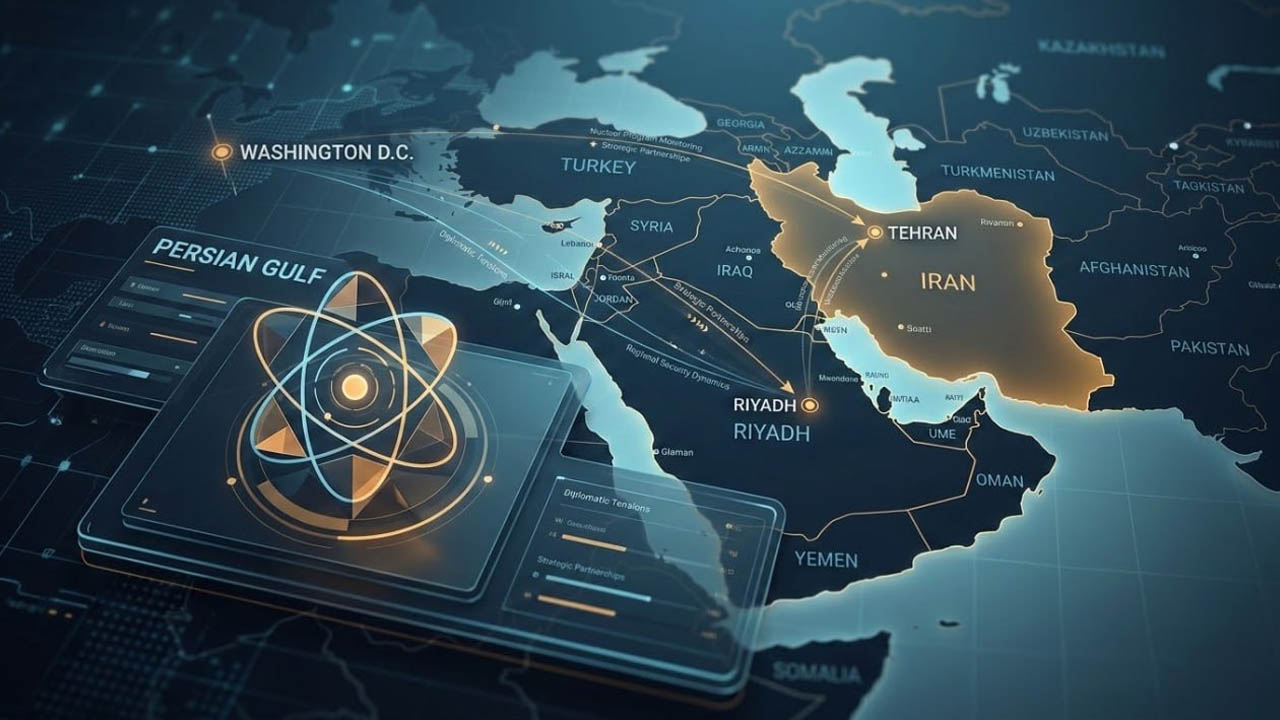
ARVAK Center comment, July 29, 2026[1]
1. Genesis and evolution of the U.S.–KSA agreement on “peaceful atom”
In an unexpected development amidst the highly volatile situation in the Persian Gulf and Washington’s third anti-Iranian campaign over the past year, President Donald Trump announced on July 22, 2026, that the United States was finalizing a “peaceful atom” agreement with the Kingdom of Saudi Arabia (KSA).
This agreement is the ultimate product of a prolonged negotiating history that began in 2008 with a memorandum of understanding (MOU) on nuclear energy. Substantive, full-scale negotiations under “Agreement 123”, referencing the U.S. Atomic Energy Act of 1954, were launched in 2012 under President Barack Obama and later accelerated in 2018 during Donald Trump’s first administration. The process experienced a slowdown following the October 7, 2023, events and Israel’s subsequent military actions in the Gaza Strip, as Riyadh took issue with Washington’s overt alignment with Tel Aviv. Nonetheless, deep dialogue eventually resumed, allowing the text to be completely finalized by October 2025. The official signing was ultimately deferred by D. Trump, apparently to allow for further consultations and coordination with Israeli leaders.
2. The U.S. dilemma: between Israel’s demands and Saudi Arabia’s requests
Global media reacted strongly to the news, particularly because D. Trump initially departed from the approach of his predecessor, G. Biden, by not requiring Saudi Arabia to recognize the State of Israel as a prerequisite for nuclear program development. This stance shifted rapidly, however; the following day, the U.S. president asserted that a deal depended on Riyadh joining the “Abraham Accords”. Entering these accords would require Saudi Arabia to formally recognize the Jewish state and normalize bilateral relations, bringing an end to historic grievances and opening paths for cultural, foreign policy, and economic collaboration. Yet, just a day later, the administration’s stance evolved once more, with Trump explicitly demanding that Riyadh officially recognize Israel, omitting any reference to the “Abraham Accords” entirely.
These rapid updates to the proposed terms and the overall erratic nature of the process suggest a fluid, three-way dialogue among Tel Aviv, Riyadh, and Washington, with both regional powers attempting to influence the White House. Trump’s brief insistence on the “Abraham Accords” likely stemmed from significant pushback from Israeli leaders, who were alarmed by reports that the U.S. might finalize “Agreement 123” without securing any commitments from Riyadh. In response to this shift, Saudi Arabia may have adopted an uncompromising position, threatening to cancel the arrangement altogether. Consequently, the American president modified his approach yet again, narrowing the requirement strictly to the formal recognition of Israel while removing the “Abraham Accords” from his conversation.
3. Transaction parameters and risks
The nuclear accord appears to have been finalized with an eye toward a future breakthrough regarding the Israeli issue. The agreement will officially take effect unless blocked by the U.S. Congress within a 90-day review period following its submission. Under this 30-year arrangement, valued in the tens of billions of dollars, Saudi Arabia will leverage American technological support, materials, and expertise to expand its nascent “peaceful nuclear program”. Specifically, Riyadh secures the domestic right to enrich uranium under the banner of the “development of peaceful atoms” to support its civilian infrastructure and diversify its growing national economy. U.S. administration officials maintain that the strict terms completely rule out any military conversion of this “peace program”, a view echoed by Saudi leaders who frame the deal strictly around economic modernization and the diversification of energy sources.
In line with “Section 123” of the U.S. Atomic Energy Act, the Kingdom has committed to keeping its nuclear advancements entirely civilian, guaranteeing comprehensive monitoring capabilities to Washington. Despite these assurances, certain experts contend that establishing a closed-loop nuclear system under the guise of peaceful research provides a technical pathway to weapons-grade uranium enrichment. Furthermore, analysts warn that solid guarantees are lacking to prevent Washington and Riyadh from reaching a mutual political agreement down the line. Should regional or global geopolitics severely deteriorate, the United States might potentially contemplate allowing the Kingdom nuclear weapon access in the medium term – a scenario made more plausible by visible efforts from both capitals to significantly limit international oversight.
Crucially, the treaty excludes the “IAEA Additional Protocol”, thereby restricting the international agency from conducting short-notice or expanded inspections at undeclared technology centers, leaving only basic monitoring for officially declared facilities. Specialists flag this oversight limitation as a profound security risk. Without the protocol’s intrusive inspection mechanisms, Saudi Arabia could theoretically establish clandestine operations to develop nuclear weapons capabilities at classified installations, even as it officially advances its civilian nuclear initiatives.
4. The nuclear factor as a tool for containing Iran
Analysts highlight the timing of the framework agreement as clear evidence of long-term geopolitical strategies between Washington and Riyadh. This initiative appears directly linked to the White House’s policy toward Iran, following the collapse of diplomatic negotiations in Oman and Switzerland and the return to active armed confrontation. The American vision for a peaceful resolution was derailed by Tehran’s refusal to dismantle its nuclear infrastructure or relocate its enriched uranium stockpiles. Furthermore, intelligence reports compelled the U.S. administration to call off a major sabotage operation intended to seize Iran’s nuclear assets by force. To circumvent a strategic deadlock resulting from the failure of both diplomatic and coercive options, Washington pursued a regional nuclear rebalancing strategy by offering comparable enrichment technologies to Saudi Arabia, Iran’s primary regional adversary.
A clear indicator of this approach is that the core parameters of the “123 Agreement” had already been finalized by the autumn of 2025. The delay in its execution was a calculated U.S. move based on expectations surrounding the success of a spring military campaign against Iran, which was intended to neutralize Tehran’s “nuclear ambitions”. Under those expected circumstances, Washington intended to impose stringent conditions on Riyadh, demanding the unconditional recognition of Israeli sovereignty within boundaries approved by Tel Aviv, alongside Saudi Arabia’s inclusion in the Abraham Accords.
Consequently, the strategic ambiguity regarding compelling Iran to halt its nuclear advancements and surrender drives the United States toward a strategy of symmetrically boosting the technological capabilities of Iran’s primary regional adversary. The White House projects that this tactic will provide leverage to secure concessions from Tehran in future peace negotiations or, if conditions worsen, trigger processes that diminish the Islamic Republic’s regional leverage and successfully check its nuclear ambitions.
Given the high stakes for Washington, it feels compelled to move urgently, even if it compromises the interests of Israel, its chief regional partner. Tel Aviv remains deeply opposed to any scenario where Iran’s nuclear facilities and enriched uranium stocks are out of reach for American and Israeli military options, thereby demanding that any resolution to the conflict ensure the absolute dismantling of Tehran’s future nuclear capabilities.
As the Middle East’s sole nuclear power, Israel strongly opposes Arab nations joining this exclusive category. Tel Aviv preferred that Saudi Arabia emulate the United Arab Emirates, which deliberately abandoned its own nuclear fuel cycle – including reprocessing and uranium enrichment – following the launch of the Barakah Nuclear Power Plant in 2008–2009 to alleviate concerns regarding nuclear weapons development. Riyadh, however, maintained a completely different stance from the beginning. In response, Israel set rigid prerequisites for the White House, making its approval of the deal conditional upon Saudi Arabia’s formal recognition of Israeli sovereignty and its integration into the “Abraham Accords”. Nonetheless, the present urgency is compelling Washington to bypass the maximalist demands of its key ally, though the U.S. still endeavors to secure particular concessions from the Kingdom to accommodate Israeli interests.
5. Transformation of the regional security architecture and the role of China
Due to the intensifying Iranian crisis, Gulf states are compelled to re-examine their traditional approaches to regional stability and pursue a more diversified security architecture. Decades of reliance have revealed that the United States cannot guarantee dependable protection for Arab monarchies, particularly regarding their critical industrial infrastructure and vital hydrocarbon supply routes. Rather than deterring threats from Tehran, the long-standing American military apparatus has proven ineffective and has functioned as a provocation, aggravating direct friction between Iran and its neighbors. In light of these challenges, Saudi Arabia, the recognized leader of this regional bloc, has signaled its intent to secure the removal of U.S. military bases and personnel from its territory, viewing their presence as an impediment to normalized relations with Tehran. Moving forward, Riyadh intends to champion a redesigned framework for collective security, rooted in multi-vector defense partnerships and enhanced cooperation among the Gulf nations.
Over the past several decades, China has vastly expanded its economic and financial footprint across the Persian Gulf, lending credence to expert analysis that Riyadh seeks to involve Beijing in reshaping the region’s security framework. As a primary economic ally for multiple Arab states, China shares a bilateral trade volume with its top regional partner, Saudi Arabia, that now surpasses $100 billion. This robust trade is anchored by Chinese imports of Saudi petrochemicals and hydrocarbons, representing nearly 17% of Riyadh’s aggregate exports, while Chinese goods constitute roughly 12% of what the Kingdom imports.
Despite this intense economic interconnectedness, observers highlight a distinct imbalance when it comes to the geopolitical and military dimensions of their relationship. Because the Gulf serves as an indispensable energy supplier for China, regional instability directly threatens the economic security of the world’s second-largest economy, driving Beijing’s enduring ambition to deploy a military presence in the area. Nonetheless, a crucial element for stability remains China’s capacity to sustain equitable diplomatic ties with both Iran and Saudi Arabia, positioning Beijing as a potential mediator equipped to temper rivalries and reconcile disputes between prominent Middle Eastern powers.
Washington recognizes that the war unleashed against Iran has upset the regional balance of power and created a security vacuum. If a compromise is reached between key Gulf states, China could occupy this vacant space. The chances of achieving such a consensus are quite high, as Beijing, unlike Washington, has maintained a neutral stance and maneuvered between the sides in the Arab-Iranian conflict. This is due to Iran’s strategic importance for the logistics system of the “Belt and Road Initiative”, as well as the Chinese economy’s heavy dependence on energy supplies from the region’s Arab monarchies. Given these factors, China’s mediation and “arbitration” have the potential to be a more effective tool for ensuring stability than the American strategy, which relies on unilateral forceful regulation in the region.
Allowing Riyadh to develop its own nuclear program under American supervision, as a counterweight to Iranian projects, is Washington’s attempt to slow the erosion of its influence over Saudi Arabia and other Arab monarchies. This step is intended to create a new framework for the Kingdom’s dependence on the United States, while simultaneously mitigating the risks of China’s deep military-technical advancement in the Middle East. The White House believes that the hypothetical creation of nuclear weapons capabilities based on the Saudis’ civilian “peaceful nuclear energy” project remains the only tool currently available to curb Riyadh’s shift toward the East.
Riyadh’s position effectively served as an ultimatum to the United States: Washington had to either dismantle Iran’s nuclear initiative entirely or permit Saudi Arabia to acquire its own nuclear capability. The de facto Saudi leader, Prince Mohammed bin Salman Al Saud, has repeatedly made it clear that if Shiite Iran secures nuclear weapons, Sunni Riyadh will immediately take steps to establish its own nuclear arsenal – a stance the U.S. treats with utmost seriousness. White House actions indicate an admission that eliminating the Iranian program is no longer feasible. Consequently, Washington faces a critical choice, as walking away from a nuclear agreement with Riyadh would simply invite China to step into the security void. Beijing is expected to proceed prudently, likely working through Pakistan, an established military and political ally of Saudi Arabia. Should this materialize, America risks completely relinquishing its strategic leverage over Middle Eastern affairs, transforming nominal “peaceful nuclear programs” into an active, direct regional nuclear arms race.
6. Prospects of “nuclear proliferation” for the Middle East
Analysts point out that after a protracted stagnation in negotiations with Riyadh, Washington is now noticeably accelerating the process. This urgency stems from a recognition that regional nuclear ambitions are unstoppable; consequently, the U.S. seeks to steer this momentum under its own regulatory umbrella and technological stewardship. However, this strategy carries severe risks that could backfire, ultimately intensifying and broadening the trajectory of global proliferation rather than constraining it.
The regional and international repercussions are profound. Crucially, the U.S.–Saudi arrangement provides Iran with a new pretext to legitimize its sovereign nuclear activities. Concurrently, Turkey is expected to ramp up its nuclear initiatives, which were previously obscured from public view, while Egypt may soon assert its own right to operate a full domestic nuclear cycle. Given the immense challenges Washington faces in controlling these interconnected dynamics, many experts already view “Agreement 123” with KSA as the opening of a metaphorical Pandora’s box.
[1] The original (in Rus.) was posted on our website on 28.07.2026.