
Publication
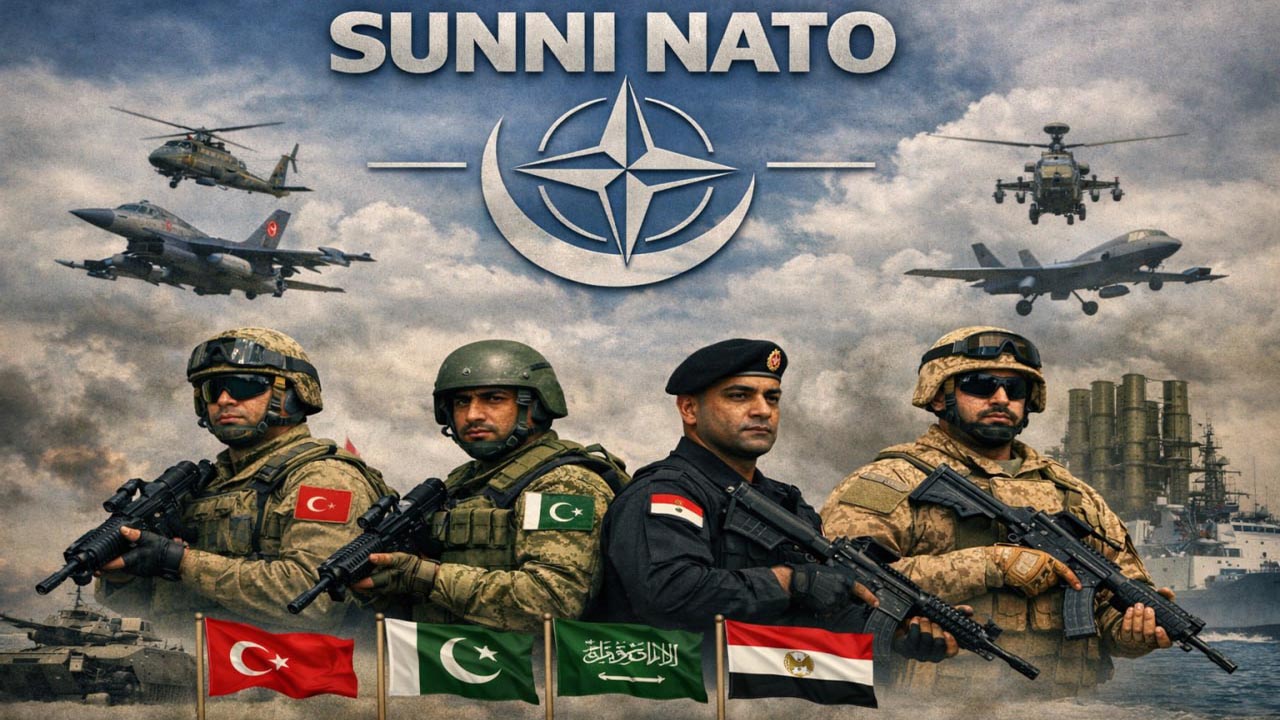
Geopolitical architecture and strategic determinants of the “Sunni NATO”

ARVAK Center comment, 02.05.2026[1]
-
The negotiation process and key contradictions
Commencing in the first quarter of 2026, international media have monitored discreet diplomatic engagements between Ankara, Islamabad, and Riyadh aimed at institutionalizing a tripartite military-political structure. Current reports show that although these countries share a need for an alliance, talks are difficult due to long-standing internal disagreements and different national goals.
A systematic review of intelligence from Ankara in January 2026 indicates that the foundational framework of the future alliance had reached a phase of de facto consensus, necessitating only finalized technical deliberations. Nevertheless, since the spring period, intelligence disseminated via Arab diplomatic channels suggests a foundational divergence in Riyadh’s perspective regarding the bloc’s structural hierarchy, which ostensibly positions Ankara as the primary hegemon. The unfolding geopolitical situation highlights Ankara’s intensified efforts to codify the nascent alliance, a pursuit that encounters Riyadh’s deliberate strategic hesitation. This cautious posture by the Monarchy is seemingly dictated by the heightening regional instability involving Tehran and the pervasive strategic uncertainty resulting from the systemic intensification of the Iranian imbroglio.
-
Turkey’s strategic motivation: searching for an alternative to NATO
A systematic review of current strategic imperatives suggests that each participant is propelled by profound motivations in contemplating the institutionalization of this coalition. Ankara, manifesting acute apprehension regarding the permanent breakdown of existing Euro-Atlantic structures and the looming specter of the bloc’s fragmentation caused by Washington’s ultimatum-driven diplomacy, is strategically compelled to spearhead the pursuit of compensatory collective security mechanisms. The potential erosion of the North Atlantic framework engenders existential risks for the Turkish leadership, primarily concerning the evaporation of the “nuclear umbrella”, the obstruction of high-tech defense-industrial synergies, and a systemic attrition of national sovereign capabilities. These dynamics are unfolding concurrently with the intensification of regional “Israeli expansionism”, which Ankara perceives as a definitive pivot in American geopolitical priorities within the Levant and beyond. Given that Turkey’s expansive military-political aspirations – stretching from the Eurasian heartland to the African continent – are presently unsupported by sufficient internal defensive assets, the political establishment views the proposed “Asian bloc” as a pivotal instrument. This initiative is designed to neutralize the strategic fallout of a Western alliance collapse and establish a new security framework that can maintain the balance of power from its former international agreements.
-
The Pakistan factor: existential challenges on two fronts
The armed conflict with New Delhi in May 2025 served as the primary catalyst for Islamabad’s integration into discussions to formally establish the coalition. This confrontation underscored a definitive transition from localized friction to a systemic broadening of the potential theater of operations. The historical old model of minor border clashes has been replaced by deep-penetration strikes utilizing aerial assets, ballistic capabilities, and long-range precision instrumentation. Such escalation has compelled the Pakistani leadership to fundamentally recalibrate its strategic posture toward India, acknowledging that internal resources are insufficient against New Delhi’s systemic military modernization and its manifest capability for enduring high-intensity conflict. Furthermore, the acute degradation of ties with Kabul has provided a critical impetus for seeking collective security synergies with Ankara and Riyadh. From Islamabad’s perspective, the Taliban-led administration in Afghanistan is not only cultivating a strategic nexus with India but is also facilitating the operations of radical insurgent elements within Pakistan’s sovereign territory, specifically targeting the stability of Pashtun regions.
The acute intensification of clashes along the Afghan-Pakistani frontier throughout the February-March 2026 period, punctuated by systematic strikes against strategic infrastructure, has illuminated Islamabad’s manifest incapacity to unilaterally pacify its western perimeter or modulate the radicalized internal dynamics of the Afghan state. Pakistan’s overarching geopolitical equilibrium currently encounters existential jeopardy, as the sovereign entity is squeezed between a very unstable neighbor and a hostile India. This precarious environment is further complicated by the proliferation of domestic religious radicalism, internal separatist tendencies, and chronic socioeconomic malaise. Within this strategic context, the institutionalization of a robust military-political coalition is perceived as an indispensable imperative for the preservation of the regional balance of power and the safeguarding of national sovereign integrity.
-
Saudi Arabia: shifting from arms imports to a collective security strategy
Riyadh’s strategic orientation toward the nascent coalition is primarily catalyzed by the intricate dynamics of its adversarial relationship with Tehran and the escalating regional imbroglio involving Israel. This pivot toward alternative collective security mechanisms is further necessitated by the fundamental change in American strategy under the Trump administration’s “New security concept”. This policy shift means Washington plans to significantly reduce its direct presence in the Middle East, forcing local countries and defense systems to take over responsibility for maintaining regional balance.
In comparison to Ankara and Islamabad, Riyadh exhibits a manifest deficit in autonomous military-industrial capabilities, having traditionally abstained from the projection of force to advance its geopolitical imperatives. Notwithstanding its preeminent position as a primary recipient of American defense exports – exemplified by the comprehensive May 2025 accords involving $140 billion in procurement and a $600 billion capitalization of the U.S. economic framework – the Monarchy encounters formidable systemic exigencies.
The failure of the intervention in Yemen and the heavy loss of military equipment caused by Tehran during the Persian Gulf escalation have shown the Monarchy’s defensive weakness. It is increasingly clear that just buying advanced weapons is not enough. The Saudi state needs its own military-industrial power to lead the region or protect itself without depending on strong, multi-country security alliances.
The pursuit of multilateral frameworks for regional equilibrium has emerged as a critical imperative for the Saudi state, particularly in light of a potential systemic recalibration of the American security footprint within the Persian Gulf theater. This strategic shift – whether driven by emerging defensive doctrines or a terminal assessment of the Iranian campaign – has prompted Riyadh to signal its readiness to deliberate on the institutionalization of a tripartite coalition aspiring to the status of an “Asian NATO”.
Riyadh’s engagement in the deliberative framework is ostensibly motivated not by immediate operational expectations, but by a strategic imperative to preserve geopolitical maneuverability and ensure a pathway to formal accession should international dynamics undergo a terminal transformation. A systematic review of expert assessments indicates that the primary catalyst for Riyadh’s inclusion was the acknowledgement that reliance upon external defensive synergies remains an existential prerequisite for the Monarchy, deeply embedded within the historical foundations of its sovereign governance.
Under this strategic framework, the Kingdom follows the historical pattern of wealthy states that, due to inherent domestic vulnerabilities, must offset their evident security gaps and pursue broader geopolitical goals by acquiring external defense and industrial resources.
-
Synergy of potential and distribution of roles in the future alliance
The new alliance project, initiated by Ankara and Islamabad, is based on the strategic use of Saudi Arabia’s colossal financial and energy reserves. According to expert assessments, the bloc’s architecture is based on the principle of each member’s complementary unique resources to maximize combined power.
Within this synergy, the distribution of roles is as follows:
- Saudi Arabia, acting as a major “security consumer”, provides its allies with access to its vast financial assets.
- Pakistan makes a key contribution through the nuclear component of its armed forces, effectively assuming the functions of a “nuclear umbrella” and transforming the alliance into a full-fledged continental and global “pole of power”.
- Turkey is taking on the role of an intellectual and technological core, ensuring the development of innovations in the defense sector and the implementation of advanced Western standards in the development of the armed forces and the overall security philosophy.
The contemporary geopolitical landscape necessitates the formulation of a comprehensive collective security framework, frequently characterized within analytical discourse as a nascent “Asian” or “Sunni NATO”. Nevertheless, the manifest acceleration of bilateral synergies does not intrinsically ensure the operational sustainability of multilateral architecture. A quintessential illustration of this dynamic is the enduring strategic nexus between Riyadh and Islamabad, which has undergone systematic evolution since the early 1950s. A pivotal juncture in this relationship was the ratification of the “Strategic Agreement on Mutual Defense” on September 17, 2025. This instrument transcends conventional defense procurement and technological transfer, institutionalizing a de jure commitment to direct kinetic intervention should the sovereign integrity of either signatory encounter an existential threat.
The military-political synergy between Islamabad and Ankara is underpinned by a strategic partnership of equivalent depth. This institutional nexus traces its genesis to the 1920s, a period wherein the Muslim constituencies of Western India – the precursors to the Pakistani state – channeled substantial financial liquidity to sustain the Turkish national liberation struggle spearheaded by Kemal Atatürk. The subsequent codification of these ties occurred in 1958 with the ratification of the foundational instruments of the Baghdad Pact (CENTO), a transformative accord that effectively institutionalized the status of both capitals as pivotal regional allies within the American geopolitical framework in Asia.
A new stage of unprecedented strengthening of ties occurred between 2017 and 2025. During this period, the parties significantly intensified their defense partnership, expanding the format of interaction through the active involvement of Azerbaijan.
However, the existence of a system of bilateral alliances does not in itself guarantee the stability of a potential “Asian NATO”. This structure does not resolve the deep tensions between Saudi Arabia and Turkey, caused by their struggle for leadership in the Sunni world of the Middle East. These differences are further exacerbated by the Qatar issue and Ankara’s desire to directly interfere in the internal affairs of Arab states.
-
Inclusion of Egypt: the geo-economic dimension of the project
The ongoing friction between Riyadh and Ankara led to Cairo’s integration into the new alliance’s discussions. Analysis suggests Saudi Arabia insisted on Egypt joining to increase the “Arab factor” within the bloc’s emerging architecture and neutralize its own manifest defensive vulnerabilities. Furthermore, Cairo’s institutionalization not only extends the coalition’s geographic perimeter but also codifies a profound geoeconomic dimension within the proposed collective structure. Expert assessments underscore that Egypt’s inclusion is based primarily on its vital location and control over the Suez Canal, a transit route whose strategic importance has grown significantly due to the irreversible instability in the Persian Gulf .
Riyadh is currently carefully developing scenarios for the strategic diversification of hydrocarbon export flows to the west, which entails redirecting the bulk of traffic to Red Sea terminals using an extensive pipeline infrastructure. In the Saudi leadership’s calculations, Cairo’s integration into the planned military-political alliance is intended not only to emphasize its sovereignty. “Arab vector”, but also to ensure comprehensive security of maritime communications. This configuration is seen as a critical factor in strengthening the Kingdom’s “western rear” amid the ongoing escalation of threats emanating from Yemen and the Persian Gulf.
The financial and economic incentives for Egypt’s integration into the alliance are clearly evident amid renewed discussions in Turkey around the Istanbul Canal project, whose implementation began in the summer of 2021. Turkish leaders appear to be seeking to create synergies between the new canal and the Isthmus of Suez, creating a global maritime transport artery. This route is intended to connect the markets of South Asia, the Indian Ocean, and East Africa with the European continent, while guaranteeing stable and efficient logistics for energy exports from the Persian Gulf to consumers in Europe.
The institutionalization of Cairo within this deliberative framework signifies the project’s transformative shift from a conventional defensive pact toward a multidimensional architecture, merging collective security imperatives with expansive geoeconomic aspirations. Egypt’s indispensable role is predicated upon its pivotal geostrategy, significant military capabilities, and the cultivation of pragmatic synergies with its regional counterparts. A critical milestone in this trajectory was the systematic normalization of relations with Ankara in 2024, which facilitated the resolution of the protracted diplomatic imbroglio following the 2013 political transition and subsequent demise of Mohamed Morsi. The accretion of Egypt’s strategic weight within the alliance’s emerging design underscores Cairo’s status as a quintessential component for the stabilization of the regional geopolitical configuration.
-
Alliance priorities and regional balance of power
Currently, the negotiation process within the said quadripartite format has acquired unprecedented momentum and entered a phase of open diplomatic activity, as evidenced by a series of meetings at the level of heads of foreign affairs agencies in Islamabad (March 29 and April 14, 2026) and Antalya (March 17-18, 2026). Despite the obvious institutionalization of interaction, the parties are showing marked restraint in official declarations, seeking to distance themselves from interpretations of this association as a military-political alliance with a pronounced anti-party orientation. Characteristic in this regard is the statement by head of the Turkish MFA Hakan Fidan, who, following the Antalya round of consultations, characterized the current dialogue solely as a “crisis consultations” mechanism. According to the Turkish Foreign Minister, the consultative agenda is driven exclusively by the necessity of managing regional pressures during the present period of tension. Consequently, he maintains that academic speculation concerning the formation of a formal partnership specifically aimed at the Jewish state remains without official validation.
A systematic review of current analytical discourse indicates that the anti-Israeli orientation of the proposed coalition remains the primary focal point for the expert community, a dynamic that compelled Hakan Fidan to provide formal strategic clarifications. Nevertheless, the unfolding geopolitical situation suggests that the “Israeli factor” does not constitute the exclusive or sufficient catalyst for the institutionalization of such an expansive military-political architecture aspiring to the status of an autonomous global pole of power. While the strategic imperative of modulating the ambitions of the Jewish state within the Levant is undoubtedly integrated into the deliberative agenda, it does not represent the sole dominant priority. The viability of this emerging coalition is inherently multifaceted, requiring the synchronization of shared resources to avert a definitive breakdown of the Afro-Eurasian security landscape, a crisis fueled by the progressive escalation of the Iranian situation. Amidst the irreversible erosion of legacy international frameworks and the de facto attrition of the North Atlantic alliance’s traditional efficacy, the macro-region encounters a profound power imbalance and the revitalization of dormant regional frictions. Within this strategic context, the pursuit of an “Asian NATO” represents a systematic attempt to codify a stable geopolitical configuration, neutralize existential threats, and exercise sovereign control over pivotal trade and energy corridors, the disruption of which would precipitate a terminal socioeconomic crisis across the Eurasian heartland.
Resume
The aspiration of Western Asia’s preeminent Sunni nations to establish a unified pole of power represents a significant global endeavor. Whether this ambitious project will achieve full realization remains an unresolved question, necessitating continued and rigorous analytical scrutiny.
[1] The original (in Rus.) was posted on our website on 01.05.2026.