
Publication
An examination of the foreign policy of the Islamic Republic of Iran towards the Republic of Azerbaijan: A constructivist analysis

Dr. Ehsan Movahedian[*]
1. Introduction
The South Caucasus region has long held a special place in Iran’s foreign policy due to its deep historical, cultural, and civilizational bonds with the country. With the dissolution of the Soviet Union in 1991 and the independence of the Republic of Azerbaijan, a new chapter in Iran’s relations with the region began. Given their shared religious, cultural, and historical affinities, a high level of cooperation was anticipated. However, their relations over the past 3 decades have been marked by significant fluctuations, and the Republic of Azerbaijan has repeatedly displayed threatening behaviors towards Iran. These include extensive security and intelligence cooperation with Israel, the establishment of Mossad espionage bases on its territory against Iran, complicity in the theft of Iran’s nuclear documents, the flight of reconnaissance drones toward the Natanz nuclear facilities (Athaari & Rahmani, 2022, pp. 66–75), and collaboration with Israel in recent attacks deep into Iranian territory.
Despite these hostile actions, Iran’s overall response has been cautious and, at times, passive. The central research question is: Why has the Islamic Republic of Iran adopted a conciliatory approach to the increasing threats from the Republic of Azerbaijan and refrained from a decisive, deterring response?
To answer this question, this study employs the theoretical framework of constructivism and drawing on findings from in-depth interviews with 10 expert specialists on the Caucasus, analyzes the causes and factors shaping Iran’s foreign policy towards the Republic of Azerbaijan. The interviewed experts unanimously agree that the Caucasus region holds intrinsic and strategic priority for Iran, and Iran seeks an active and independent role in this region, rather than reducing it to a bargaining chip in political transactions with rival powers such as Russia, Turkey, and the United States. The profound cultural, historical, and civilizational ties between Iran and the Caucasus define this region within the framework of “Cultural Iran”, necessitating Iran’s active and independent presence in the Caucasus equation.
2. Theoretical framework: constructivism and foreign policy
Constructivist theory in international relations emphasizes the role of semantic structures, identities, ideas, and the mentalities formed between actors in shaping foreign policy interests and behavior. Unlike realist theories that view interests as objective, material, and predetermined, constructivists argue that interests and identities are products of social and intersubjective interactions between actors and are constructed through this process. Alexander Wendt, one of the foremost constructivist theorists, contends that “social realities” in international relations are products of the meanings actors assign to them, and these meanings themselves derive from interactions and identity structures (Danesh Nia, 2015, pp. 68–74).
Within the constructivist framework, a country’s foreign policy towards others is based on the ideas, perceptions, and mentalities that the two sides form about each other. These mentalities, products of the history of interactions, shared experiences, mutual understanding, and identity structures, determine whether an actor constructs the other as a “friend”, “rival”, or “enemy”, and selects an appropriate behavioral pattern accordingly. In other words, “threat” is not an objective concept independent of actors’ minds but a constructed phenomenon shaped through social interactions and based on actors’ interpretations of external realities (Danesh Nia, 2015, pp. 64–68).
Regarding Iran–Azerbaijan relations, applying constructivist theory allows us to move beyond purely material and geopolitical analyses and examine the semantic, identity, and mental layers shaping the two countries’ behavior. The mentality of Iranian officials towards the Republic of Azerbaijan is a product of a combination of historical (shared civilizational memory), identity-based (religious and cultural commonalities), geopolitical (shared borders and interdependence), and strategic (the role of Israel and Turkey in Baku) factors (Afzali, Seyedi Asl, Mahmoudi, 2014, pp. 253–254). The hypothesis of this study is that, among these factors, the perception of the Republic of Azerbaijan as a “serious, strong, and imminent threat” has not yet fully formed in the mentality of the main decision-making institutions of the Islamic Republic of Iran, and this explains Iran’s conciliatory approach to Baku’s threatening behaviors.
Another important point that can be analyzed within the constructivist framework is the role of national and ethnic identities in shaping foreign policy behavior. Constructivism emphasizes that national identities are products of social and historical processes, and states can shape their strategic mentalities and behaviors through the management of identity formation processes (Moshirzadeh, 2009, p. 252). Iran’s neglect of this process in the Republic of Azerbaijan has fundamentally altered the identity equation in the Caucasus to Tehran’s detriment. Because in the absence of Iran’s effective role in the identity-building process in the Republic of Azerbaijan following independence from the former Soviet Union, countries such as Russia, Israel, and Turkey have been active in this arena.
3. Research methodology
This research employs a qualitative method based on in-depth interviews with 10 prominent experts and specialists in the Caucasus and Iran’s relations with this region. The interviewed experts include former diplomats, academic researchers, strategic analysts, and specialists with extensive experience working and researching in this field. The findings from these interviews were extracted and categorized using qualitative content analysis, and along with library resources and existing documents, they form the analytical basis of this study.
4. The importance of the Caucasus for Iran as an independent variable in foreign policy
According to the consensus of the interviewed experts, the Caucasus region holds intrinsic and inherent strategic priority for the Islamic Republic of Iran. This intrinsic importance is rooted in the deep historical, cultural, and civilizational ties that have made the Caucasus an inseparable part of “Cultural Iran”. Historically, civilizationally, and culturally, the South Caucasus republics have a particular affinity with Iran’s history and identity, to the extent that even sporadic identity and civilizational manipulations in these countries will not ultimately alter the realities concerning them. Iranian experts explicitly stated that the South Caucasus is an extension of Iran’s geopolitics and a guarantor of its territorial integrity. The importance of the Caucasus for Iran is such that negligence by the Islamic Republic of Iran could turn it into a gateway for the disintegration of Iran. Thus, the Caucasus is one of the pillars of preserving Iran’s national security; if Iran falters in defending its national interests in this region, its national security will be compromised.
Before the 2023 developments that resulted in the full occupation of Artsakh by the Republic of Azerbaijan, Iran had paid insufficient attention to these identity and civilizational manipulations and had not taken the capacities and importance of the Caucasus seriously. This situation largely stemmed from the unfamiliarity of a significant portion of the country’s officials with the historical ties between Iran and the Caucasus. Another important cause was the density of issues related to Israel in the Middle East and concern over the fate of the Shia world. However, when these concerns were extended to the Caucasus due to the Republic of Azerbaijan’s behavior in supporting Israel, Takfiri currents, and opposing Iran’s allied resistance groups, particularly in Syria, Iran’s attention was increasingly drawn to this region and the Republic of Azerbaijan. Iran realized that it could not maintain its position in the Caucasus with old, traditional methods and had to seriously heed the warnings of experts who had been alerting it since before the 2020 war.
The shift in the regional security equation in favor of the United States, Israel, and Turkey, and to the detriment of Iran and Russia, which led to numerous actions against Iran’s national interests, prompted efforts to change Iran’s traditional neutral perspective on the Caucasus region. A manifestation of this transformation is the statements of Dr. Ali Akbar Velayati, advisor to the Supreme Leader, who previously believed Iran should view Caucasus developments “through Russian eyes”. However, over the past two years, he has explicitly stated that Iran, with or without Russia’s assistance, will prevent the creation of the so called “Zangezur Corridor” (entekhab.ir, August 18, 2025) and that the so-called “Trump Path” is no different from the so called “Zangezur Corridor” (tabnak.ir, December 24, 2025). According to the interviewed experts, this systemic shift in approach within the Islamic Republic of Iran will continue in the future.
Therefore, Iran currently wishes to play the role of an active and independent actor in this region and not merely use the Caucasus as a bargaining chip in political transactions with rival powers such as Russia, Turkey, and the United States. This desire should be distinguished from Iran’s failure to achieve it. In other words, Iran has attempted to exert influence and play an effective role in the Caucasus but, for the reasons discussed below, has not succeeded.
5. Causes and factors of Iran’s conciliatory approach to threats from Baku
Despite the strategic importance of the Caucasus for Iran and the experts’ acknowledgment of this importance, the performance of Iran’s foreign policy in this region has been below expectations, and responses to threats from the Republic of Azerbaijan have been generally cautious and passive. Below, based on findings from in-depth interviews with experts, we detail the main factors behind this approach. These factors have resulted in the failure of Iranian decision-makers to mentally perceive Baku’s dangerous behaviors as a source of threat, manipulated the perceptions, images, and ideas about this country in the minds of Iranian officials in Baku’s favor, wasted opportunities, and created the current unfavorable situation for Iran in the Caucasus. These factors can be categorized as follows, although the author has listed them in order of frequency mentioned in the experts’ statements:
- A) Internal factors:
– Lack of a clear strategy and institutional rivalries within Iran
– Shortage of experts and insufficient understanding of the Caucasus region in decision-making bodies
– Influence of the pro-Baku lobby in Iran
– Neglect of the strengthening of fake nationalism in the Republic of Azerbaijan and its consequences
- B) Regional and extra-regional factors:
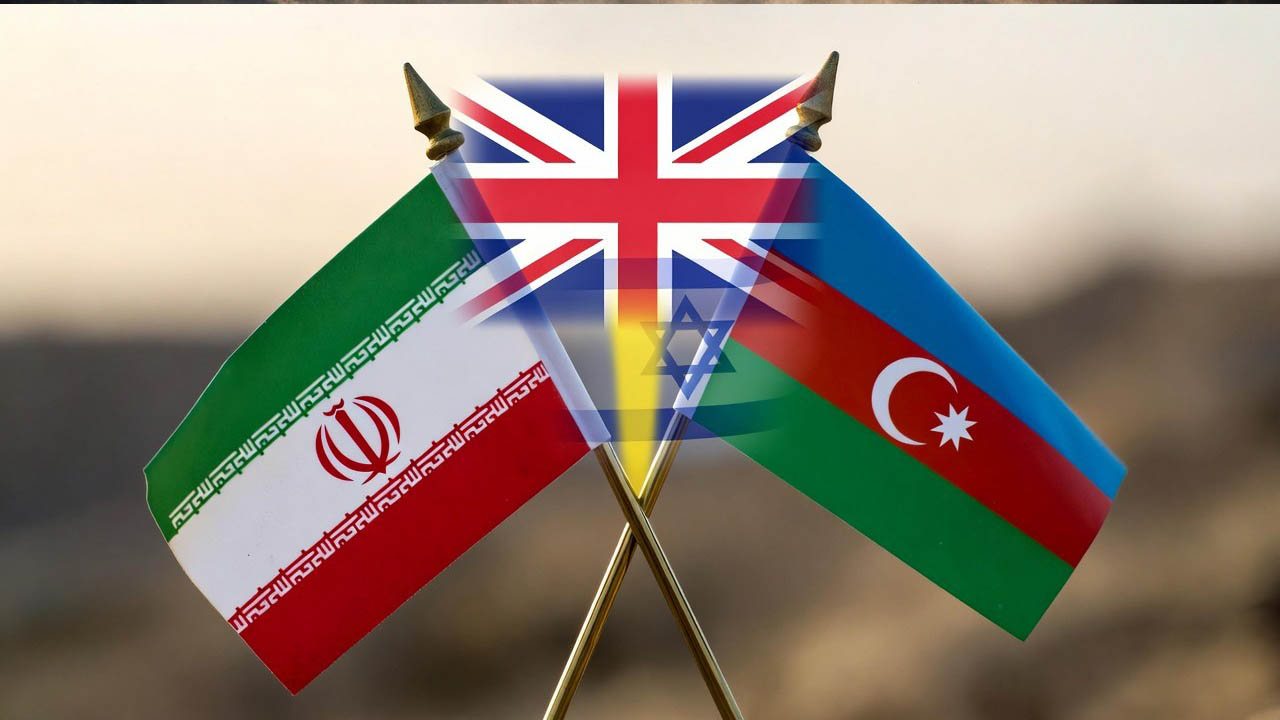
– Neglect of the expansion of Israeli and British influence in Baku
– Considerations regarding Iran’s relations with Turkey
– Avoidance of opening a new conflict front in northwestern Iran
– Considerations regarding Iran’s relations with Russia
- C) Economic and geopolitical factors:
– Dependence of transit routes on Baku
– Baku’s opportunism following Iran’s neglect in meeting Armenia’s strategic needs
– Missed opportunities due to neglect of public diplomacy and focus solely on engagement with the Aliyev government
- D) Psychological and perceptual factors:
– Exaggeration of internal risks of confronting Baku
– Baku’s opaque and complex anti-Iranian actions
– Intelligent tension management by Baku
– Underestimation of the Baku threat due to its geopolitical vulnerabilities
– Prioritizing confrontation with Israel and the United States
– Erroneous behaviors stemming from haste to compensate for backwardness in the Caucasus
These factors are elaborated below in order of frequency of mention in the statements of the 10 experts interviewed:
5-1. Lack of a clear strategy and institutional rivalries within Iran
One of the most significant factors behind the ineffectiveness of Iran’s foreign policy in the Caucasus is the absence of a defined, cohesive, and long-term strategy for this region. All interviewed experts emphasized that Iran shares important civilizational, cultural, and religious ties with the 3 countries of the Caucasus region, reaching their apex with the predominantly Shia Azeri-populated Republic of Azerbaijan. These ties have led Iran to always desire a secure, stable Caucasus free from military and security challenges. However, what has prevented the realization of this goal is that, unlike the West Asia and Arab Middle East spheres where the Islamic Republic of Iran has relatively defined doctrines and strategies, no such codified strategy exists for the Caucasus. This strategic vacuum has caused various Iranian institutions to operate simultaneously and without coordination in the region, neutralizing each other’s efforts through rivalries, duplication, and parallel work. These rivalries exist not only among various economic, political, and security institutions but sometimes even within a single institution, where proponents of two different views compete. The lack of a specific Caucasus strategy has also meant that Iran’s attention and focus have, at different times, been entirely directed towards other crisis zones over the past three decades – such as Afghanistan, the Middle East, or tensions with the United States – leaving the Caucasus on the periphery of the Islamic Republic of Iran’s foreign policy priorities. As one interviewed expert noted, “One of the problems of Iran’s foreign policy is that it does not activate itself on multiple fronts simultaneously when necessary, and when priority is given to noisier sectors, the Caucasus naturally remains on the margins”.
A negative consequence of the lack of a clear strategy on Caucasus affairs in the Islamic Republic of Iran is the personalization of actions towards the 3 countries of the region. In other words, if capable individuals with high comprehension and accurate, precise analysis of this region’s developments assume command in policymaking institutions towards the Caucasus in Iran, appropriate measures are implemented. Otherwise, confusion and weak performance regarding the Caucasus region become the dominant approach of the Islamic Republic of Iran.
5-2. Shortage of experts and insufficient understanding of the Caucasus region in decision-making institutions
In comparison to the abundance of experts and specialized institutions focused on West Asia and the Arab Middle East, the number of specialists and institutions dedicated to the Caucasus in Iran is very limited. This expertise gap, also highlighted by analysts in this field, is rooted in decades of institutional neglect and the absence of systematic planning to understand this strategic region. According to experts, the lack of sufficient expertise has led to the trivialization of threats in the South Caucasus against Iran in policymaking bodies, discord among various institutions, and an inability to deeply comprehend regional developments, resulting in historic missed opportunities. This weakness, in some instances, has led to one-sided concessions to Baku.
Due to this weakness, most Iranian officials since the revolution have lacked sufficient historical knowledge, particularly regarding Iran’s long-standing ties with the Caucasus region and have ignored the capacity of “Cultural Iran” in this area. The Caucasus forms a significant part of Iran’s history and cultural identity, but attention to these ties and efforts to strengthen the Persian language and cultural presence in this region began very late, due to expertise deficiencies and the unawareness of decision-making bodies. Attention to the deep historical, religious, and identity bonds between the two countries could have provided a platform for Iran’s cultural influence and public diplomacy, yet historical neglect of this shared heritage has ceded the space of cultural, political, and economic presence to rivals. Expert and institutional neglect has allowed systematic policies to erase Iranian identity from this region – such as the policy of combating the Persian language and Persian-speaking ethnic groups like the Tat in the Republic of Azerbaijan – to continue intensively. Even the advancement of anti-Iranian geopolitical projects like the so called “Zangezur Corridor” is a direct consequence of this weakness and neglect of Iran’s deep cultural influence in the Caucasus.
This insufficient and superficial understanding of the region causes threats from Baku to be classified as ad hoc, transient, and relatively insignificant actions, rather than an institutional and strategic threat. Consequently, Iran is caught in a “geopolitical ambush” in the South Caucasus, but due to expertise weaknesses and the lack of cohesive strategic analysis, it lacks sufficient awareness of the depth and breadth of the enemy’s designs. Baku’s long-term projects – such as forging religious identity, de-Shiafication, and altering the demographic fabric – are interpreted not as a “systematic trend” but as marginal and transient issues. As a result, the Republic of Azerbaijan comfortably advances its anti-Iranian psychological operations and identity construction, waging a full-scale hybrid war against Iran’s interests in the region.
Evidence indicates that Iran’s political, cultural, and security operatives in the Caucasus, compared to those appointed by European countries, Turkey, and the United States, have held lower levels concerning relevant backgrounds and prior experience. This disparity in the quality of diplomats and field operatives has placed Iran in an uneven competition with powers that have, for decades, purposefully invested in cultivating generations of skilled diplomats and Caucasus experts. The strategic defeat of the Islamic Republic of Iran during the Second Karabakh War was primarily due to the inability of Iranian operatives to grasp the field dynamics of the region and compete with the seasoned diplomats of rival states.
5-3. Neglect of the expansion of Israeli and British influence in Baku
According to the absolute majority of the experts interviewed in-depth, the Republic of Azerbaijan has, over the past two decades, become a base for Israeli intelligence and security activities against Iran. Mossad has established infrastructure in the Republic of Azerbaijan to facilitate espionage against the Islamic Republic of Iran. Israeli spy networks operate under the guise of agricultural, technological, and economic activities along the Iran–Azerbaijan border. This deep penetration, accompanied by the growing presence of Britain in Baku’s security and intelligence structures, has created a serious and escalating threat to Iran’s national security. Nevertheless, Iran’s response to this threat has primarily remained at the level of diplomatic warnings and expressions of concern, due to the erroneous mental constructs and norms of decision-makers.
A review of the statements and analyses of Caucasus experts indicates that this threat can be examined in 3 distinct yet intertwined dimensions: the level and scope of intelligence and security influence, its linkage with economic and military infrastructure, and finally, the weakness in Iran’s analytical and reactive apparatus.
In terms of the level and scope of influence, this penetration extends far beyond normal cooperation and encompasses “security-espionage”, “cyber, communication, and media”, and “political and diplomatic” dimensions. Mossad’s activities in Baku are not limited to Iran; rather, they have created a complex network of influence at all governance and societal levels in Azerbaijan. Hence, Israeli officials refer to Azerbaijan not merely as an ally but as an “Israeli strategic asset”. Neglect of this threat over time led to the penetration of drones and micro-drones of the Israel from the territory of the Republic of Azerbaijan into Iran’s borders and airspace during the two recent wars (the 12-day and 40-day wars), revealing unprecedented new dimensions of said threat – no longer confined to traditional espionage but encompassing complicity with Israel in aggression against Iran.
Regarding the linkage between intelligence penetration and the provision of economic and military infrastructure to Israel in the Republic of Azerbaijan, more detailed analyses have been presented. For example, the 1,770-kilometer Baku–Tbilisi–Ceyhan pipeline, which supplies 40 to 60% of the Israeli’s oil needs, is practically protected by Israeli Heron and Hermes drones, and this presence provides the necessary security cover for Mossad’s intelligence activities. Israel has drone bases in at least 4 locations in the Republic of Azerbaijan, and the use of Azerbaijani territory for spy drone flights into Iran is definitive. Israel’s first military contract with Azerbaijan was for the supply of shore-to-sea missiles, i.e. – equipping Azerbaijan for confrontation against Iran.
In contrast, the erroneous mental constructs of Iranian officials have led to a policy of “excessive restraint”, and this approach “has created an illusion among Baku officials”. Although the Islamic Republic of Iran does not seek military conflict with its neighbors, this excessive restraint has conveyed a message of weakness and indecision to Baku, emboldening Azerbaijani officials to intensify their defiance and advance in intelligence-security cooperation with Israel. At the same time, it appears that the developments resulting from the two recent wars against Iran will lead to a fundamental revision of Iran’s security and regional policies, especially in the Caucasus.
5-4. Neglect of the strengthening of fake nationalism in the Republic of Azerbaijan and its consequences
One of the most fundamental yet most overlooked factors shaping the current situation in Iran–Azerbaijan relations is Iran’s strategic neglect of the identity-building and nationalist process in that country. This neglect has had profound and lasting consequences on the mutual mentalities of the two countries and the regional equation.
Following the collapse of the Soviet Union, the Republic of Azerbaijan was in search of an independent identity. It stood at an identity crossroads: on one hand, deep cultural, historical, religious, and civilizational ties with Iran could have formed the basis of its national identity and linked it to “Cultural Iran”; on the other hand, the discourse of Pan-Turkism and Turk-centered nationalism, actively supported by Turkey, offered another path to Baku’s elites. Strengthening Iranian identity in the Republic of Azerbaijan, relying on these shared bonds, could have guaranteed the country’s return to Iran’s identity orbit and prevented the formation of an anti-Iranian nationalism there. Yet Iran neglected this crucial point.
The existing literature on Azerbaijani nationalism clearly shows that the post-Soviet national identity of the Republic of Azerbaijan is strongly anti-Iranian and predominantly Turk-centered. This identity has been constructed in various ways to portray Iran not merely as a country, but as a culture and a historical entity that is an adversary and an enemy, cast as the “other”. Today, being Azerbaijani means rejecting any link with Iran. The belief that Azerbaijanis have been, and are, victims of Iranians is instilled in children through state propaganda and brainwashing in schools. Even individuals in this country are arrested and imprisoned on charges of Iranophilia or holding mourning ceremonies for the third Shia Imam (Imam Hussein, AS), and the country’s media are saturated with negative news about Iran (hawzahnews.com, May 11, 2024). The closure of the land border between the two countries under the pretext of the coronavirus pandemic 6 years ago has also reduced cultural and economic exchanges between the two countries and facilitated the propagation and acceptance of anti-Iranian propaganda among the residents of the Republic of Azerbaijan.
The Republic of Azerbaijan ultimately derived its identity from Turkey and Israel, and a fake history was created for it. This fake history systematically seeks to deny the historical ties of this land with Iran and to magnify a Turk-centered, anti-Iranian narrative. Based on existing analyses, “the Azerbaijani government claims ownership over parts of Iran”, and these expansionist claims are promoted under titles such as “Greater Azerbaijan”. Azerbaijani nationalism is characterized by concepts such as irredentism and expansionism, and the government of the Republic of Azerbaijan has raised territorial expansionist claims against internationally recognized territories, including regions of Iran, in its media (tabnak.ir, January 23, 2024).
According to the experts interviewed, the foundations of anti-Iranian sentiments in the Republic of Azerbaijan date back to 1918, when the concept of the Azerbaijani nation north of the Aras (Araks) River was first forged under the ideology of Pan-Turkism. Political elites with Pan-Turkist leanings in this region have relied on the concept of ethnic nationalism “to foster a sense of anti-Iranian identity among Iranian Azerbaijanis”.
If the Islamic Republic of Iran had actively participated in the process of national identity formation in the Republic of Azerbaijan during the early years of its independence and strengthened shared identity bonds through cultural, media, and educational investment, the outcome of the current equation could have been entirely different. Neglect of this strategic issue created a vacuum that was filled by rival and hostile discourses – Turkey’s Pan-Turkism and Israel’s Zionism. As one interviewed expert put it, Iran not only lost the identity competition in the Republic of Azerbaijan, but before the Second Karabakh War, it fundamentally neither understood nor participated in this competition. Because it did not imagine that it would face such a challenge and threat in a predominantly Shia country with an Azeri population having deep ties to millions of people in Iran. This neglect can be considered one of Iran’s most fundamental strategic mistakes in the Caucasus, the consequences of which continue to this day. According to the experts, if genuine nationalism had been promoted in the Republic of Azerbaijan, we would today witness that country’s bond with Iran’s history and a return to Iranian identity. It is noteworthy that some Azeri officials in Iran, due to emotional and ethnic ties with the inhabitants of the Republic of Azerbaijan, are still not fully able to accept this reality.
5-5. Influence of the pro-Baku lobby in Iran
One of the important and influential factors shaping Iran’s conciliatory approach towards Baku is the existence of a powerful lobby supportive of that country within Iran’s political and economic structure. This phenomenon, known in international literature as “Caviar Diplomacy”, encompasses a network of individuals and groups seeking to influence countries’ foreign policies in favor of the Republic of Azerbaijan through various means.
In Germany, the most prominent case relates to the infamous “Azerbaijan Laundromat” scandal, which led to the conviction of several high-ranking Bundestag politicians. Axel Fischer, a member of the Christian Democratic Union party in Germany, was accused in January 2026 of receiving tens of thousands of euros from Azerbaijan’s influence network, in exchange for providing Baku with confidential parliamentary documents and voting in its favor. He was ultimately sentenced to 14 months’ suspended imprisonment, a two-year ban from public office, and a €12,000 fine (Dowsett, occrp.org, 2026).
Eduard Lintner of the Social Democratic Party of Germany also confessed to receiving several million euros from the Aliyev government between 2008 and 2016, spending part of it to buy votes in favor of Azerbaijan in the Parliamentary Assembly of the Council of Europe (PACE). He was sentenced to 9 months’ suspended imprisonment and a fine (OCCRP, occrp.org, 2025).
In the United States, a significant case in this regard concerns Henry Cuellar, a Democratic Representative from the state of Texas. He and his wife Imelda Cuellar were charged in May 2024 with receiving at least $360,000 in bribes from companies affiliated with the Azerbaijani government. The charges include money laundering, conspiracy to violate the Foreign Agents Registration Act (FARA), and bribery of a public official. This case is considered one of the largest foreign influence scandals in the U.S. Congress in recent years (mirrorspectator.com, 2024).
In Iran, this phenomenon also exists. Some of these individuals align with Baku merely because of ethnic affiliations and cultural and linguistic sympathies, while others have specific material and economic interests in this alignment. This lobby, utilizing its influence in economic, political, and media structures, has prevented Baku from being recognized as a threat and a hostile force within the structure of the Islamic Republic of Iran. This influence network obstructs consensus-building for dealing appropriately with Baku and even drafting a specific strategy for the Caucasus region to secure Iran’s national interests, in order to pass off its personal interests and views as national interests to the various political, military, security, economic, and cultural bodies that make decisions regarding the Caucasus.
The influence of the Baku lobby exists at 4 structural layers: military and political (individuals with a religious guise and claims of loyalty to the Islamic Republic who, in practice, support the interests of Turkey and the Republic of Azerbaijan), media (experts who write articles favorable to Baku and Turkey in newspapers and publications), elite (individuals who engage in decision-making), and internet trolls (character assassins of national activists supporting Iran’s national interests).
According to the interviewed experts, the Baku lobby employs methods such as creating costs and problems for well-intentioned experts and forces in the Caucasus field, sending and leaking information, downplaying and censoring realities to prevent Tehran’s decisive decisions and to avoid any surprise, inverting realities, psychological operations, etc. The ultimate result of these actions is the blockage of decision-making channels in Tehran regarding Baku.
A key action of this lobby is fabricating fake narratives. In 2020, they claimed that Karabakh was Islamic soil and that Iran should be pleased with its capture by the Republic of Azerbaijan. The reality, however, was that a territory belonging to Armenians was given by the Aliyev government to Israel to establish a “corridor” to threaten Iran’s interests. The Baku lobby then falsely claimed there was no corridor and that it was merely a dispute between the two countries, Armenia and Azerbaijan, that had already been resolved. Then they falsely claimed this “corridor” was Russian and had nothing to do with the United States. When experts warned that the so called “Zangezur Corridor” was essentially a NATO “Turan Corridor”, they again denied the matter. Now that Trump has personally entered the Caucasus to create the “Trump Path” against Iran, these individuals have fallen silent. Their aim is to ensure that Iran lacks sufficient time to act and is caught off guard in the Caucasus due to its engagement with the U.S. and Israel, economic pressure, and separatist movements on the country’s various borders.
Another important psychological operation by the Baku lobby in Tehran is warning officials about a “war trap”. This lobby claims that Iran should not, by protesting the anti-Iranian actions of the Aliyev government, set the country on a path of tension and war with the Republic of Azerbaijan and create new costs for the country. The goal is to keep Iran’s military and security institutions passive, allowing the Aliyev government to achieve its objectives in the Caucasus without the slightest cost or concern about a strong and stern reaction from Iran. Israel and Turkey play a direct role in ideation for the Baku lobby in Iran.
According to the experts, the Pan-Turkist lobby is no longer effective in reducing the intensity of Iran’s actions against the Israeli regime in the Republic of Azerbaijan; Iran will not tolerate Baku’s cooperation with Israel and will take necessary actions in this regard. However, the Baku lobby is intensely striving to keep all of Iran’s corridor and transit routes in the northwest of the country dependent on itself for the transfer of goods and energy, and to complicate the creation of routes independent of Baku towards Russia via the Caspian Sea, as well as routes via Armenia and Georgia. The attack on Iran’s Anzali port in the recent war, insistence on routing the Russia–Iran gas pipeline through Azerbaijan, opposition to building a second border bridge between Iran and Armenia over the Aras (Araks) River, obstruction of the development of the Iran–Armenia border terminal, and efforts to create and consolidate the so called “Zangezur Corridor” and the “Trump Path” to weaken the North–South Corridor from Iran towards the Caucasus countries – these are among the actions of this influence lobby.
The Baku lobby also promotes the idea among Iran’s Azeris that Iran and the Axis of Resistance have been weakened in the battle with the U.S. and Israel, and therefore Iran’s Azeris should join the “Turkic world” to pave the way for the gradual infiltration of the U.S., Turkey, and Israel into Iran’s Azeri regions and transform the so called “Zangezur Corridor” into an internal corridor within the so-called “Turkic world”, facilitating these countries’ access to Central Asia to threaten the interests of China and Russia and advance the Abraham Accords to increase Israeli influence and presence in the region. To achieve these goals and the formation of a “Turkic world”, the Azeri ethnic group must be emptied of its Iranian racial, cultural, and religious identity to be separated from Iran. At the same time, the absolute support of the people of Iran’s Azeri provinces for the country during the two recent wars showed that these goals have not yet been achieved. Nonetheless, it is expected that with increased media activity in Iran, exposing the destructive role of the Aliyev government and its lobby in Iran to the general public – especially in the Azeri provinces – sensitivity to this issue in government bodies will also increase. It is also essential to discuss in the media the economic and political benefits of expanding Iran’s presence in the South Caucasus region, which can, in some respects, serve a function similar to the Strait of Hormuz for Iran. In wartime conditions against Iran, such a presence would harm the interests of Britain and Israel in the field of energy transit and block the aerial and land corridors used by Iran’s enemies and rivals.
5-6. Considerations regarding Iran’s relations with Turkey
Experts believe that the Islamic Republic of Iran has no desire for a direct confrontation with Turkey over the Republic of Azerbaijan. As Baku’s main ally and a NATO member, Turkey enjoys considerable influence in that country, and any serious confrontation by Iran with Baku could lead to tension with Ankara, which would entail heavy costs for Iran. These concerns intensified especially after the war waged by the United States and Israel against Iran, which led to Iran striking U.S. interests in the Arab countries on the southern rim of the Persian Gulf. Moreover, Iran and Turkey share common interests on critical issues such as weakening Kurdish influence along their borders, and this convergence of interests increases Iran’s motivation to avoid tensions with Turkey.
While Tehran’s strategic reservations towards Ankara stem from a deep understanding of power asymmetry and the heavy costs of direct confrontation, Iran’s avoidance of creating tension with Turkey does not mean overlooking its red geopolitical lines. Iran considers any geopolitical change in the Caucasus a red line, a position that is unalterable. From this perspective, Iran firmly opposes the creation of communication corridors envisioned by Turkey – designed without coordination with Tehran, such as the so called “Zangezur Corridor” or the NATO “Turan Corridor” – as a direct threat to Iran’s national security. In other words, Iran’s strategic patience towards Ankara is never passivity but a calculated formula for managing conflicts in the short term while preserving leverage to defend vital interests in the long term. Of course, Ankara, by promoting Pan-Turkism among Iran’s Azeris to establish cultural, identity, civilizational, and religious authority over this segment of Iranians, and by making accusations of “Iran obstructing the opening of communication lines”, seeks to justify its geopolitical projects and exert pressure on Tehran.
In this complex equation, the role and influence of certain other regional actors – especially Pakistan – also merit consideration. Although Pakistan, due to its close relations with Iran and Turkey, has the potential to play a mediating role in disputes, given Ankara’s geopolitical weight and the depth of its strategic cooperation with Baku, Islamabad’s role is far more limited and situational compared to Turkey’s. Given the influence of the Turkish factor, Tehran’s approach towards Baku will be a combination of smart deterrence, strategic patience, and utilization of diplomatic and economic capacities to maintain the balance of power in the region.
5-7. Avoidance of opening a new conflict front in Northwestern Iran
After having two wars imposed on it by the United States and Israel, and extensive efforts to ignite a civil war within the country, the Islamic Republic of Iran faces security challenges on 3 main fronts, painting a picture of strategic encirclement. On the western front, the northern borders of Iraq, linked with Syria, have become an area of competition for Kurdish proxy groups supported by the United States, Israel, and some other major powers like France. Concern over the activities of these terrorist groups and attempts to transfer tensions to Iran’s western land borders has placed the country in a state of permanent alert.
Simultaneously, on the southern front, the Persian Gulf region and the Strait of Hormuz have become the epicenter of direct confrontation between Tehran and Washington. The U.S. naval blockade, designed to disrupt Iran’s oil exports and impose economic pressure, has backfired on the White House due to a spiral increase in oil prices and its destructive impact on the U.S. economy ahead of the mid-term congressional elections. The Supreme Leader of the Islamic Revolution, emphasizing the U.S. withdrawal from the region and designing new management frameworks for the Strait of Hormuz, has effectively seized the initiative on this front and is working to shape a future for the Persian Gulf without the presence of foreign forces. However, Trump, who needs to achieve a win in his battle against Iran and sees a maximum reduction in Iranian oil exports to create domestic economic pressure and street unrest in Iran as a prelude to a new attack, aims to make Iran’s southern borders also insecure. Meanwhile, reports have been published about terrorist movements by some Baloch groups on Iran’s eastern borders and the presence of U.S. military forces in Turkmenistan, whose capital is a short distance from Iran’s borders.
In such turbulent conditions, despite the release of news and information about the presence of hostile security and military forces within the territory of the Republic of Azerbaijan, Iran does not wish to open a 4th front on its northwestern borders with this republic. Because entering a full-scale conflict with Azerbaijan, which has a mutual defense pact with Turkey, could have consequences for Tehran. Avoiding an escalation of tensions on the Azerbaijani borders and focusing existing resources on managing the crises on other borders is an unavoidable necessity for the survival of Iran’s national security.
Under these circumstances, opening a new front in the northwest of the country and entering a serious conflict with the Republic of Azerbaijan could exert additional pressure on Iran’s military, security, and economic capabilities. According to experts, Iran currently prefers to avoid escalating tensions on new fronts and concentrate its resources on managing the existing crises.
5-8. Dependence of Iran’s transit routes on Baku
The war in Ukraine and Western sanctions against Russia have practically transformed the North–South Corridor into a vital artery for the transfer of essential goods and weaponry between Iran and Russia, with the Caspian Sea becoming a secure space beyond Western surveillance. Under these conditions, the Republic of Azerbaijan seeks to emerge as the pivotal connecting point of this corridor, so that communication between Iran and Russia passes through its territory. Evidence suggests that Iran’s transit routes to Europe and Russia have become heavily dependent in recent years on passage through Turkey and Azerbaijan, placing Tehran in a vulnerable position vis-à-vis political and security pressures from these two countries – especially as the transit route from Iran to Armenia has not yet been fully widened and reconstructed, and for a large portion of this mountainous road, truck speeds exceeding 40 kilometers per hour are impossible. The Israeli attacks on Anzali port in March 2026, which targeted missile-launching vessels, command headquarters, and port infrastructure, were not merely a military operation against Iran but were designed to disrupt the direct Caspian Sea transit corridor between Iran and Russia and send a direct message to Moscow about the high cost of cooperating with Tehran. Russia also reacted to these attacks, describing Anzali port as a vital and strategic center for the trade and logistics of essential goods, its security directly tied to Moscow’s interests.
What exacerbates this vulnerability is the targeted efforts to limit alternative routes. Iran and its allies have become a platform for resisting the dominant Western hegemony, and Israel and Ukraine, in cooperation with Baku, are managing the trade routes between Iran and Russia in such a way that they operate exclusively through the territory of the Republic of Azerbaijan. The attacks on Anzali port in March 2026 can also be analyzed within this framework – to restrict the transit route between Iran and Russia solely to passing through Baku’s territory. At the same time, Baku and Ankara insist on the implementation of the so called “Zangezur Corridor”, a lifeline which, if realized, would not only sever Iran’s direct connection with Armenia but also eliminate East Azerbaijan province from the Ankara–Baku transit routes, effectively transforming Tehran’s dependence on Turkey and Azerbaijan into an irreparable vulnerability. This pattern indicates that the enemy seeks to neutralize any opening in the siege by tying it to a new, fragile link.
This situation – limiting the sanctions-circumvention routes to one or two key points in the Caucasus geography – constitutes a clear strategic vulnerability for the Islamic Republic of Iran. To escape this trap, the necessity of diversifying alternative routes is no longer a mere economic choice but an undeniable security imperative. Under current conditions, the North-South Corridor is excessively fragile, and any tension in relations with Baku or attacks on the port infrastructure of Iran and Russia could disrupt Iran’s supply chain of essential items and military equipment. Tehran’s long-term policy lies not in orbiting around a single axis but in laying the foundation for a network of complementary routes. Iran must actively seek to revive alternative logistical hubs through its eastern partners, southern ports, and even by opening new passageways in the northeastern geography. This diversification of security-economic corridors is the key to neutralizing reciprocal pressure levers and shifting the game from the current state of vulnerability to sustainable deterrence in the regional equations of the Caucasus.
5-9. Considerations regarding Iran’s relations with Russia
Russia, despite its less-than-favorable relations with Ilham Aliyev, President of Azerbaijan, has always viewed Iran in the South Caucasus not as an equal partner but as a rival. This perspective is rooted in long-standing historical rivalries and arises from the fact that both countries perceive increasing their own influence in this sensitive region as dependent on diminishing the other’s influence. Naturally, this Russian view is not exclusive to Iran; Moscow is equally sensitive to the growing presence of the United States, Turkey, and European countries in the South Caucasus, interpreting any increase in their role as a decrease in its own. Under current conditions, Moscow, despite its concerns over the Aliyev government’s rapprochement with the United States and the signing of significant memoranda of understanding with Washington in various economic and security fields, does not welcome decisive, unilateral action by Iran against Baku.
From the Kremlin’s perspective, any direct conflict between Iran and the Republic of Azerbaijan would be an additional nuisance factor added to a complex equation, potentially disrupting Moscow’s exclusive influence in the Caucasus – a legacy dating back to the Soviet era. In the Caucasus equation, Russia seeks to maintain its role as the sole regulator and main arbiter, viewing any military action or other tension-creating move in this region by Tehran as a factor that would sideline itself. It would prefer Iran to act merely as a proxy force for Moscow in the Caucasus, selling its interests to Iran in a way that Tehran perceives them as its own interests and acts solely along those lines.
This delicate Russian maneuvering has imposed limitations on the options available to Tehran in the South Caucasus. Despite the strategic and expanding relations between Iran and Russia in other areas, such as military cooperation and partnership within organizations like BRICS and the Eurasian Economic Union, when it comes to the Caucasus, the friction of interests between the two sides becomes apparent. These considerations have prevented Iran from taking decisive action against Baku without considering the potential costs imposed by Moscow, forcing it to always align its calculations with the Kremlin’s “red lines”. A clear testament to this is the disagreement between the two sides over the dangers of the so called “Zangezur Corridor”. Iran views this project as a conspiracy to eliminate itself from the Caucasus equation and encircle it territorially, declaring explicitly that it will thwart it even without Russia’s cooperation. In contrast, Russia believes that given its influence and leverage in the Caucasus, even if this corridor is created, it will be able to benefit from it and manage the dangers and challenges arising from U.S. attempts to infiltrate the South Caucasus through this route.
Despite these challenges, in a significant development, the traditional view of some high-ranking figures of the Islamic Republic, such as Ali Akbar Velayati, regarding the challenges of engagement with Russia in the South Caucasus appears to have undergone a change. Velayati, who in the 1990s, as the then Minister of Foreign Affairs, emphasized the necessity for Iran to view the Caucasus through Russian eyes, has today reached the conclusion that the threats arising from the creation of the so called “Zangezur Corridor” and Israeli influence in the Republic of Azerbaijan target Iran’s national security to such an extent that it can no longer wait for Russia’s cooperation or lack thereof. In his recent positions, Velayati has explicitly stated that Iran, with or without Russia’s help, will not allow its northwestern borders to be ignored in the threatening schemes of the new Silk Road. This evolution in Velayati’s perspective signifies a deep paradigm shift: the Caucasus, for Iran, is no longer a shared backyard with Russia but a frontline. Iran has come to the conclusion that, in this complex chess game, it must no longer coordinate its stances with anyone to protect its interests.
Of course, these views do not imply Iranian hostility toward Russia in the Caucasus region. Iran is well aware that to advance its interests in the South Caucasus, it must cooperate and engage with Russia, which has been present in this region for centuries. However, this engagement will not mean the absolute acceptance of Russian views regarding the Caucasus countries, and Iran is no longer merely a subordinate to the opinions of Russian diplomats on this matter.
5-10. Exaggeration of internal risks of confronting Baku
According to a number of experts, concern over the internal consequences of confronting the Republic of Azerbaijan’s anti-Iranian actions in the Azeri-populated areas of Iran is another factor that, in recent years, has reinforced the policy of appeasement and restraint from decisive confrontation with the Republic of Azerbaijan in some circles in Tehran. However, the experts who highlighted this point emphasized that such a concern has no field reality and is rooted in incitement by Pan-Turkist currents and media outlets affiliated with Baku. The lobby supporting Ilham Aliyev has consistently propagated the notion that any military or political tension between Tehran and Baku will immediately lead to unrest in the streets of Tabriz, Urmia, and Ardabil, seriously challenging Iran’s “national unity”. This narrative peaked in 2020, concurrent with the Second Karabakh War, which ended in a victory for the Republic of Azerbaijan and the retreat of Armenia. At that time, media close to Baku attempted to portray that Aliyev’s symbolic success in the war could trigger a wave of ethnic solidarity in northwestern Iran.
Field evidence, however, especially in recent months and following the two full-scale wars by the United States and Israel against Iran, clearly demonstrates the opposite. The few gatherings that took place in 2020 in cities like Tabriz in support of Baku not only never expanded but were, in practice, marginalized. In contrast, during the two recent wars, broad segments of Iran’s Azeri-speaking population participated nightly in nationwide rallies in support of the Islamic Republic, expressing their anger at the hostile actions of the Aliyev government. These people witnessed how enemy drones and missiles crossed Iran’s airspace from the borders of the Republic of Azerbaijan and even flew over the cities and villages where they reside. Furthermore, public awareness of the existence of Israeli military installations on Azerbaijani soil and cross-border threats from the northwest has shifted the previously positive view of the northern neighbor to one of pessimism and explicit criticism.
According to these experts, cultivating the notion of using the Azeri-populated areas as a pressure lever against Iranian authorities is a psychological tactic and a media infiltration operation aimed at paralyzing Iran’s will for decisive action. However, field reality shows that the national and religious identity of the Azeri people of Iran functions far more strongly than mere Pan-Turkist sentiments, and such ideas find no purchase among ordinary people, being injected mostly by certain local officials with ethnic attitudes. The direct experience of foreign threats – such as violations of airspace, Baku’s military cooperation with Israel, and allowing hostile drones to pass – has led people across Iran to conclude that the Aliyev government’s cooperation with Israel is a genuine threat to the security of all of Iran, particularly the northwestern region. Thus, concern over an “internal reaction” is nothing but a pretext and cannot remain a deterrent factor for Iran’s foreign policy towards Baku; for the Azeri people of Iran have themselves been at the forefront of demanding a decisive response to aggressors and have been significant guardians of the homeland’s borders throughout successive centuries.
5-11. Baku’s opaque and complex anti-Iranian actions
Unlike Arab countries, whose anti-Iranian actions are usually transparent, overt, and traceable, the hostile behaviors of the Republic of Azerbaijan against Iran are often hidden in layers of secrecy, indirect, and accompanied by specific complexities. This opaque nature of Baku’s anti-Iranian actions ties Iran’s hands from dealing with them decisively and prevents Iranian policymakers from reaching a clear and firm decision to counter. The use of proxy elements, covert intelligence operations, and exploitation of the complex geopolitical landscape of the Caucasus are among the methods Baku employs to advance its anti-Iranian objectives without creating an open confrontation.
In effect, the Republic of Azerbaijan’s strategy towards Iran is based on a multi-layered game. While maintaining a diplomatic façade and official relations, Baku fuels anti-Iranian activities through parallel institutions and informal networks. This behavioral duality has prevented Iran from defining clear red lines for Baku, as every hostile action is shrouded in layers of denial and complexity.
Baku knows well that a direct and open conflict with Iran, which holds a favorable position in terms of military and economic power, would be detrimental to its geopolitical and economic interests; hence, it has always sought to gain the maximum concession at the lowest cost through marginal provocations not deemed overly dangerous, gradually testing the potential to violate Iran’s red lines.
The guiding force for Baku in this regard is Israel, whose influence in the Aliyev government has reached significant depth in the military, security, and economic domains, and this very fact is one of the most important covert threat components against Iran’s national interests in the Caucasus region. What makes the situation more complex is that the effects of these relations flow in the subterranean layers of the regional equation, making it difficult to prove Baku’s direct trail in some anti-Iranian actions. To manage tensions with Iran, Baku sometimes even disseminates aggressive fake news against the country to force Tehran into passivity and silence in the face of its unfriendly behavior.
For instance, news occasionally surfaces about the arrest of Azerbaijani citizens for connections with Iran, promoting Shia teachings, attempting actions such as drug trafficking, and attacks on the Baku–Tbilisi–Ceyhan (BTC) pipeline, the Israeli embassy in Baku, and Jewish synagogues. In response, Iran, to preserve the remaining openings in bilateral relations and given its numerous concerns in foreign policy and international relations, usually pays little attention to these accusations or offers diplomatic responses. Iran’s restraint is also based on the consideration that Baku is the hub of a covert alliance with Iran’s regional rivals and extra-regional enemies, and therefore a decisive, symmetrical response from Tehran could carry consequences and costs; thus, Iran prefers an asymmetric response.
Another reason for this approach is that Baku, with massive investments in Persian-language media and social networks, seeks to create the psychological and identity atmosphere it desires against Iran in the Caucasus region and even within Iran, without directly attributing anti-Iranian actions to itself. This hybrid war imposes heavy costs on Iran’s national security without the primary source being clearly attributable to Baku.
A summary of expert opinions indicates that the complexity and opaque nature of the Republic of Azerbaijan’s anti-Iranian activities represent a conscious and systematic strategy. By creating strategic ambiguity and hiding its actions in complex diplomatic and security layers, Baku has managed to retain the initiative in bilateral tensions and place Iran in a position of indecision and doubt. Overcoming this challenge requires the precise identification and neutralization of Baku’s hidden influence networks and the design of a smart, asymmetric response strategy capable of targeting these complex and opaque layers. One method Baku uses to advance its anti-Iranian objectives without an open confrontation is exploiting the complex geopolitical space of the Caucasus and employing proxy groups such as Takfiris and Wahhabis with layers of covert influence; conversely, to neutralize the possibility of an Iranian response and cement a space of indecision, Baku also speaks of the possibility of Iran’s utilization of radical proxy networks against Baku – which itself is indicative of the increasing complexity of covert competition in this region.
5-12. Underestimation of the Baku threat due to its geopolitical vulnerabilities
Some experts believe that, given the geographical and geopolitical conditions of the Republic of Azerbaijan, the prevailing perception among a significant portion of Iranian officials is still that the Baku threat should not be taken seriously. The reasoning of these officials is that Iran can, anytime it wills, prevent the widespread occurrence of threats from Baku. Azerbaijan’s economic vulnerability, cultural and religious ties with Iran, and its landlocked geopolitical position have reinforced the perception that the threat from this country will never become a serious and major threat to Iran. This perception has reduced the motivation for a preemptive and decisive confrontation with Baku’s threats.
Officials holding this view argue that the Republic of Azerbaijan is not a major player and, given its limited population and size, lacks the capacity to confront major actors. This perspective, by belittling Azerbaijan’s capabilities, is considered one of the root causes of Iran’s disregard for its threats and leads to a failure to take the level of future threats as seriously as necessary.
Of course, the general consensus of the experts explicitly stated that the notion that “the threat posed by a small, landlocked country like the Republic of Azerbaijan against Iran is insignificant” is a deep-seated miscalculation and indicative of the contradiction between a realistic view and passive approaches in Iran’s foreign policy. This is because the Republic of Azerbaijan constitutes a potential threat to Iran’s territorial integrity, manifested in areas of ethnic issues and Pan-Turkism, hybrid and intelligence warfare, as well as transit corridors like the so called “Zangezur Corridor”, which could complete Iran’s geopolitical encirclement. Experts believe that the continuation of this strategic negligence has placed Iran in a passive position and will provide a platform for the advancement and infiltration of enemies.
5-13. Prioritizing confrontation with Israel and the United States
Among many influential Iranian officials, there is a perception that the main enemies are Israel and the United States, and the strategic level of Iran’s response should be focused on “disciplining” these two actors. According to this view, the Republic of Azerbaijan is “nothing” compared to these two powers, and with the disciplining of Israel and the United States, Baku will automatically be regulated and cease its audacity. This logic has resulted in the response to Baku’s mischief being largely confined to the confidential level, or limited to military maneuvers, and even when made public, it has been a limited and controlled action. However, given the transformations in the international system and the transition to a multipolar world order, the notion prevailing in some decision-making circles in Iran that the key to all regional equations lies with the two main actors, i.e., Israel and the United States, and that unlocking that main lock will also open the “small Baku lock”, is erroneous. Over these years, Baku has crafted a more complex lock, the key to which lies directly in Tehran, not Washington or Tel Aviv, and Iran itself must wisely and directly manage its relations with Baku.
However, this approach faces a fundamental flaw: experience has shown that, relying on Israeli and Turkish support, Baku will not cease its behavior without direct and proportionate punishment. By ignoring the Baku threat with such justification, Iran has effectively allowed it to become a regional base for Zionism, to take over the task of supplying energy to Israel, to seek Iran’s geopolitical suffocation through the creation of the so called “Zangezur Corridor” or the NATO “Turan Corridor”, to allocate cyber and radar bases to Israel, and to wage psychological warfare for the disintegration of Iran.
According to some experts, the approach of “waiting for Baku’s automatic regulation after regulating relations with the United States and disciplining Israel” has become Iran’s greatest strategic weakness. Under these conditions, Baku has managed to solidify the military-intelligence presence of Israel and, without fear of direct and proportionate punishment, to design its most audacious anti-Iranian games. The neglect of the reality that, in the era of international system transition, anti-Iranian threats are no longer directly issued by major powers (Israel and the United States) but are executed by regional allies under their cover, has placed Iran in a passive position, leaving space for the maneuvering and audacity of smaller players like the Aliyev government.
5-14. Intelligent tension management by Baku
The behavioral pattern of the Aliyev government towards Iran is itself another significant factor in Tehran’s failure to seriously confront Baku’s hostile actions. Ilham Aliyev and his government, with precise knowledge of the tastes, sensitivities, and strengths and weaknesses of Iranian officials and public opinion in Iran, strive to manage their crisis-creating actions in such a way that Iran’s anger does not exceed the threshold for decisive and harsh action. In other words, Baku meticulously manages the process of tension-creation with Iran to prevent it from spiraling out of control and causing serious harm to itself. This smart management of the tension level has always kept Iran’s reactions at a level below the threshold for a decisive military confrontation.
According to experts, Baku’s foreign policy is based on “smart balancing” between major powers and neighbors; Ilham Aliyev simultaneously uses relations with Tel Aviv and Tehran as two playing cards, and by calibrating the level of tension with Iran, seeks to turn these tensions into tools to advance his geopolitical projects, such as the so-called “Zangezur Corridor”, and to attract further Israeli support. Although the capacities of the Republic of Azerbaijan are by no means comparable to those of Iran, a thorough examination of Tehran’s calculations by Baku and its resort to Iran’s policy of “appeasement” and “strategic patience” has allowed Baku to continue its excessive demands without fearing a harsh response. Of course, it seems unlikely that this policy will persist in the near future if Baku’s anti-Iranian behaviors continue.
For instance, despite Baku’s emphasis on advancing the anti-Iranian identity-building project in the Azeri-populated provinces of Iran and fueling ethnic and “Pan-Turkist” discourses, Aliyev is simultaneously careful to ensure that these verbal and media tensions do not cross the threshold of provoking Iran and lead to a military reaction. With calculated provocative actions, Aliyev attempts to force Iran into reactions that he can exploit to his advantage on the international stage.
Aliyev’s provocative speeches at gatherings of Turkic-speaking countries about the necessity of defending the rights of Iran’s Azeris and the so-called cultural oppression by the Islamic Republic of Iran are precisely designed at a level that does not overly provoke Iran yet keeps it in a passive position. This policy, though, is more than a simple tactic; Aliyev uses each of these hostile steps as a winning card at the negotiating table with the West and Israel to extract concessions.
According to the experts, the behavioral pattern of the Aliyev government towards Iran can be termed the “Water Snake Strategy”: repeated, painful bites, but never deep enough to provoke a deadly reaction from the opponent.
5-15. Erroneous behaviors stemming from haste to compensate for backwardness in the Caucasus
Iran’s historical delay in seriously entering the Caucasus equation following the collapse of the Soviet Union, combined with its extensive focus on the West Asia region and resolving its super-challenges with the United States, and then its attempt to rapidly compensate for this backwardness – especially after the full occupation of the Karabakh region by the Republic of Azerbaijan – has sometimes led to the adoption of coercive and hardline approaches by Iran towards some Caucasian countries. This is despite the fact that Iran should have pursued slow, steady, and institutionalized moves in this region, rather than suddenly and hastily taking action because its interests were endangered. This haste has, in some cases, backfired, taking gradual and sustainable opportunities for influence out of reach.
This situation, rooted in decades of missed opportunities and the absence of a long-term strategy, has drawn serious criticism from analysts. Some experts believe that “we had no plan or codified program for this region over the past 30 years, and we lost golden opportunities in past years”. This very haste has caused Iran’s foreign policy towards Armenia and Azerbaijan to be, at times, completely contradictory and uncoordinated.
The result of these rushed and sometimes coercive behaviors is that Iran has fallen into a “geopolitical ambush” in the Caucasus, and through uncalculated actions, it aids in consolidating the position of rivals and auctioning off its national interests. Consequently, during and after the Second Karabakh War, Iran was unable to secure its national interests and security, and valuable opportunities, especially to counter the creation of the so called “Zangezur Corridor”, slipped out of Iran’s reach.
Therefore, a change in Tehran’s approach is an urgent necessity to ensure that the strategic defeat resulting from historical delay in the Caucasus is not compounded by nervous, rushed reactions. Because this vicious cycle of “passivity-haste” not only fails to secure national interests but also deepens the crises facing Iran in the South Caucasus.
5-16. Baku’s opportunism following Iran’s neglect in meeting Armenia’s strategic needs
Iran’s historical delay in meeting the economic, commercial, and security needs of Armenia – its main ally in the South Caucasus – has had profound strategic consequences. These delays in policymaking and implementation, described as stemming from “slow bureaucracy, weak transit infrastructure, and the absence of a codified plan”, have led Armenia to seek to meet its needs from other sources and countries, including Azerbaijan, diminishing Iran’s role and opportunities for influence.
One of the most prominent examples of this inefficiency is the lack of progress in Iran’s project to construct an oil refinery in Armenia’s Syunik Province. Due to Iran’s procrastination and failure to act in a timely manner, the golden opportunity to build this refinery – which, given Armenia’s absolute dependence on imports of petroleum products, was vitally important – was lost, and this strategic project may be awarded to other countries. Had this refinery been built by Iran, the surplus gasoline produced in Armenia could have been sent back to Iran, partially compensating for the energy imbalance in the northwestern provinces.
Furthermore, the inability to supply gasoline and other strategic industrial and food products needed by Yerevan in a timely fashion dealt another blow to the fabric of bilateral relations and Iran’s influence in the Caucasus. This neglect opened space for other regional and extra-regional actors (including Russia, Turkey, and even Azerbaijan) to penetrate and meet Armenia’s basic needs. By filling the vacuum left by Iran, these rivals have gradually solidified their foothold in Armenia’s economy. The imminent opening of the Armenia–Turkey border will further diminish the economic opportunities facing Iran in Yerevan.
The delay in constructing a second border bridge between the two countries over the Aras (Araks) River is another example of this inefficiency. At a time when regional economic corridors have become an arena of competition among major powers, slowness in developing border crossings sidelines Iran from the most important regional transit projects. The modernization and completion of the North–South Corridor is one of the most important axes of cooperation between Iran and Armenia, along with the establishment of free trade zones on the common border. In practice, the failure to complete these projects on time has resulted in schemes such as the so called “Zangezur Corridor” – designed to eliminate the Iran-Armenia border – being pursued more aggressively by rivals.
The absence of a strategy and a codified plan for the Caucasus region, the lack of suitable trade infrastructure, substandard transit roads, and weak public information dissemination are among the most significant challenges hindering the expansion of commercial relations between Tehran and Yerevan. These combined factors have limited the space for Iran’s influence in Armenia, allowing other regional and extra-regional actors, such as the Republic of Azerbaijan, more room to maneuver in advancing their objectives in the South Caucasus. As a result, Iran’s breathing space in the South Caucasus and vis-à-vis actors like Baku has become more constrained.
5-17. Missed opportunities due to neglect of public diplomacy and focus solely on engagement with the Aliyev government
One of the serious weaknesses of Iran’s foreign policy towards the Republic of Azerbaijan has been the neglect of public diplomacy and the necessity of establishing direct contact with the people of that country. The absence of a codified policy in this area has allowed Israel and its Western allies, through gradual infiltration of Baku’s media, universities, and schools, to create an anti-Iranian mindset among the new generation of that country’s elites and citizens. This atmosphere has turned public opinion in Baku against Iran to some extent, resulting in Iran lacking strong supportive groups and a reliable social base for any action in that country. By keeping the land borders closed under the pretext of the coronavirus pandemic over the past 6 years, Baku has also been able to minimize people-to-people contacts with Iran while simultaneously expanding its anti-Iranian propaganda in cooperation with Israel and Britain. The Islamic Republic of Iran should have, regardless of bureaucratic constraints, utilized methods based on public, media, and cultural diplomacy, as well as the capacity of the private sector in the economy, which, due to its agility, could advance official policies and, by conveying realities to Iranian decision-makers, prevent appeasement against Baku’s anti-Iranian policies.
The extent and depth of Israeli influence in the media and public sphere of Azerbaijan is such that experts consider the creeping, multi-layered infiltration of Israel in the media, schools, universities, and NGOs as the factor orienting the mindset of the young Azeri generation to perceive Iran not as a neighbor with deep civilizational ties, but as a “security threat”. Despite the acceptance of extensive Iranian assistance by Baku in various military, security, and economic fields, especially during the First Karabakh War, the media apparatus of Ilham Aliyev has in the subsequent years concealed or downplayed this assistance and replaced it with a fabricated narrative of Iranophobia.
Parallel to this war of narratives, the closure of land borders under the pretext of COVID-19 also dealt a fatal blow to Iran’s public diplomacy. This 6-year restriction minimized people-to-people contacts, which could have served as a shield against anti-Iranian propaganda.
Experts trace the root of Iran’s passivity in the field of public diplomacy to the lack of a “precise and scientific structure” in the country regarding foreign policy and geopolitical issues. In their view, the discord among institutions and the trivialization of threats have obliterated Iran’s historical opportunities to influence public opinion across the Aras (Araks) River and have been the main obstacle to the formation of a pro-Iran social base in Azerbaijan. Therefore, Iran must, by understanding the necessity of applying public diplomacy alongside official measures, present an accurate, reality-based narrative of its positions; the absence of this narrative has cleared the field for the hostile narrative-building of Baku and Tel Aviv.
The collective views of these experts indicate that the weakness in public diplomacy is the missing link in Iran’s strategy towards Azerbaijan. The severance of people-to-people contacts, the dominance of Israeli-Western narratives in Azerbaijan’s media sphere, and the inability to correctly represent the assistance provided and civilizational bonds have all combined so that, regardless of diplomatic relations, public opinion in Azeri society has gradually distanced itself from Iran. The solution to this problem lies in going beyond classical diplomacy and making smart investments in “soft power” by utilizing cultural, media, and private sector capacities.
The weakness of Iran’s public diplomacy in the Republic of Azerbaijan has given the government of that country a great sense of freedom to advance its policies against the Shia population there. Iran, which is also concerned about additional pressure on these individuals and potential harm to the Shias of the Republic of Azerbaijan, and for whom the protection of these individuals is a priority, is forced to act with caution.
6. Discussion and analysis: the non-construction of the Baku threat in the mindset of Iranian decision-makers
Reviewing the above factors, one can understand why the threat from the Republic of Azerbaijan has not yet been constructed as a serious, urgent, and strategic threat in the mindset of the main decision-making institutions of the Islamic Republic of Iran. A combination of internal factors (lack of strategy, insufficient understanding, lobby influence, neglect of identity-building and fake nationalism), regional and extra-regional factors (considerations regarding Turkey and Russia, neglect of the expansion of Israeli and British influence in Baku), economic and geopolitical factors (transit dependency and Baku’s opportunism following Iran’s neglect in meeting Armenia’s strategic needs), and psychological and perceptual factors (underestimation of Baku’s capability, Aliyev’s pattern of tension management, prioritizing Israel and the U.S.) have all contributed to forming an image of Baku in the minds of Iranian decision-makers that is far from that of an “existential threat” or even a “first-tier strategic threat”.
Constructivist theory aptly explains why this perception has formed. According to this theory, “threat” is not an objective reality independent of actors’ minds but a phenomenon constructed through the process of social interactions, the interpretation of information, and the formation of collective mentalities. In the case of Iran–Azerbaijan relations, the semantic and identity structures formed between the two sides – including a shared cultural heritage, religious ties, Iran’s history of supporting Baku in the First Karabakh conflict, and the perception of Baku as a small, vulnerable country, etc. – have prevented Baku’s hostile actions from being interpreted and understood within the framework of a “strategic threat”. In other words, the mindset of Iranian decision-makers has constructed Baku’s actions more as the “sporadic mischief” of a small neighbor, rather than the “systematic threat” of a strategic enemy. Even the presence of Israel in this country has not yet created a fundamental change in this mental construct, although the Aliyev government’s cooperation with Israel in the two recent wars against Iran has triggered some alterations in this construct.
At the same time, one of the most important findings of this study from a constructivist perspective is that Iran’s neglect of the fake, anti-Iranian identity and civilization-building process in the Republic of Azerbaijan by rival and hostile actors – especially Israel, Britain, and Turkey – has essentially eliminated the possibility of Iran being constructed as a “friend” and “natural ally” in the mindset of the Azerbaijani elite and society. Conversely, the 3 aforementioned countries, through their active presence in the national identity-building process in that country, succeeded in cementing Iran as the “other” in Azerbaijan’s national mentality. This identity transformation, in turn, has provided the mental and semantic basis for Baku’s hostile behaviors towards Tehran; behaviors that, otherwise and given the deep cultural and civilizational ties, could have either not formed or been far more limited.
7. The role of the Baku lobby in managing the gap between field reality and the system’s perception
One of the important findings of this research is the role of the pro-Baku lobby in managing the gap between field reality and the perception of the Islamic Republic’s system. However, it is essential to clarify that the influence of this lobby should not be overestimated or exaggerated. According to experts, historically, the bulk of Iran’s trade with the Caucasus countries – including trade with Armenia – has been conducted by Azeri-speaking Iranian merchants and businessmen, due to the shared border of Armenia and Azerbaijan with the provinces of East Azerbaijan, West Azerbaijan, and Ardabil. This indicates that economic activities in this domain are predominantly natural, trans-ethnic, and based on economic interests, not necessarily political and directive.
The influence of the Baku lobby among the ordinary people of Iran’s Azeri-populated areas is very negligible and limited to certain elites and officials; this lobby has failed to inject its perceptions into the masses. The reason for this failure is the developments of the last two decades, especially the anti-Iranian actions of the Aliyev regime after the 2020 Karabakh war, which, despite its ostensible slogans of supporting the rights of Iran’s Azeris, has been unable to gain their trust or sympathy due to extensive cooperation with anti-Iranian forces and countries like Israel. While Iran’s Azeris and the people of the Republic of Azerbaijan share significant cultural, linguistic, and religious affinities, the people of Iran’s Azeri regions offer absolutely no defense or support for Baku’s political structure. The perception that the Baku lobby seeks to create – suggesting political solidarity between Iran’s Azeris and the Aliyev regime – is fundamentally false.
Therefore, the Pan-Turkist current in Iran is an inauthentic, borrowed, invasive, and repudiated phenomenon among the majority of the Iranian people, whose heart beats beyond Iran’s borders in the Republic of Azerbaijan and Turkey, and is managed and directed by Britain and Israel. The majority of Azeris inside Iran are not only not a point of vulnerability or threat regarding a tendency toward Pan-Turkism but, given the repeated threats to Iran’s national security from the Republic of Azerbaijan in the two recent wars, have also become proponents of reclaiming the Azeri-populated areas north of the Aras (Araks) River for Iran.
Support for the Islamic Republic of Iran’s system in the Azeri-populated areas and the rate of military attacks and threats to these areas has been no different from other parts of Iran. The efforts of Pan-Turkist currents and Baku agents to promote an ethno-centric discourse in Iran’s Azeri regions, aiming to lay the groundwork for separatism and autonomy, have also failed, encountering serious resistance from the people and the system. During the Second Karabakh War (2020), the management of public opinion in Iran’s Azeri regions was not handled well, and the issue was dealt with locally; local figures played an excessive role in shaping the official discourse and gained a large share in Iran’s foreign policy decision-making at that juncture. This experience demonstrated that too much weight should not be given to Friday prayer leaders and local individuals in steering foreign policy, as foreign policy requires a strategic, national, and trans-local perspective, not ethnic and regional sentiments and affiliations. Neglect of this crucial matter leads to the infiltration of unqualified individuals into decision-making spheres, resulting in the presentation of incorrect analyses, erroneous decisions, and ultimately mistaken actions contrary to national interests.
Nonetheless, due to its influence in certain organizations and institutions, and in instances where it has been aware of the Aliyev government’s plans, this lobby has succeeded – through precise planning and activation of its political, security, cultural, and media network – in creating surprises against Iran’s interests. A clear example of this lobby’s failure to impose its will was the IRGC military exercise in the northwestern borders in 2022, which, despite the claims and hype of the Baku lobby, was conducted without any particular problems. However, due to the limited number of Caucasus experts and analytical infrastructure in this field, along with some other problems, the Islamic Republic’s system has not been able to counter this hype in a timely manner. A clear example of the Baku lobby’s success was the exploitation of the attack on the Azerbaijani embassy in Tehran in 2023, which allowed Baku, due to the shock and surprise this event caused within the Islamic Republic’s system, to successfully advance its plan to normalize relations with Israel, forcing Tehran into passivity in the face of this hostile action.
Following the 2023 developments and the full occupation of Karabakh by Baku, accompanied by the intense activation of Takfiri groups and Israeli agents in this region against Iran, efforts have begun to change the peripheral and instrumental view of the Caucasus in Iran’s decision-making structure. A clear example of this shift in approach is the evolution in the view of Ali Akbar Velayati, advisor to the Supreme Leader. Velayati, who in the 1990s believed Iran should “view the Caucasus through Russian eyes”, now explicitly states that Iran, with or without Russia, will prevent the creation of the so called “Zangezur Corridor”, as this scheme threatens the national security of Iran and the region. This change in approach indicates an upward trend in the perception of threat from Baku among the Iranian elite, although this trend is still in its early stages.
8. Iran’s red lines regarding the so called “Zangezur Corridor” and the outlook for geopolitical developments
One of the most pivotal issues in Iran–Azerbaijan relations in recent years has been the dispute over the so called “Zangezur Corridor”. This corridor, aiming to create a communication route between the mainland of the Republic of Azerbaijan and Nakhchivan via Armenian territory, is of vital geopolitical importance for Iran. Analyzing Iran’s positions on this matter requires a precise distinction between its economic and security dimensions.
Iran’s red lines on the so called “Zangezur Corridor” have not changed since the proposal of this plan. If the issue is solely the establishment of transit communications between Nakhchivan and the main territory of the Republic of Azerbaijan, Iran welcomes this. Economic plans that contribute to peace and stability in the Caucasus region are desirable from Iran’s perspective and can lead to the development of regional cooperation. Iran has repeatedly emphasized that it has no objection to legal transit routes under the national sovereignty of the regional countries.
However, if these communication plans are intended to fuel geopolitical rivalries and bring extra-regional powers into the Caucasus to pursue their specific objectives in this region, Iran will strongly oppose them, as its national security would be jeopardized. Ali Akbar Velayati, senior advisor to the Supreme Leader, has explicitly described the so called “Zangezur Corridor” as “a geopolitical scheme led by the U.S. and Israel to undermine Iran’s national security”, and has asserted that “Iran’s national security is our red line”. According to him, “the main goal of these plans is to weaken the Axis of Resistance, sever Iran’s connection with the Caucasus, and impose a land siege on Iran and Russia in the south of the region” (en.interaffairs.ru, Aug 11, 2025).
Recent developments have shown that actions with an economic façade are underway in the region, pursuing other objectives. Specifically, the continuation of the so called “Zangezur Corridor” path within Armenian territory has been proposed in the form of the TRIPP plan or the “Trump Path for International Peace and Prosperity”, with U.S. mediation in the initial peace agreement between Armenia and the Republic of Azerbaijan. What concerns Iran is the long-term U.S. presence in the region to manage this route and the potential for it to become a geopolitical tool to limit Iranian and Russian influence in the Caucasus. Iran has declared from the outset that it will not accept transit schemes designed with the aim of “changing the geopolitics of the region and undermining the national sovereignty of countries” (en.mehrnews.com, Jul 27, 2025).
Nonetheless, experts believe that these disputes are unlikely to lead to a large-scale military conflict. There are several reasons for this assessment. First, the United States, especially after the experience of Iran’s recent confrontations in the Persian Gulf and the proof of its deterrence capability, will not dare an extensive military presence near Iran’s borders in the Caucasus. America no longer takes such a risk and will not place its forces within the range of Iranian missiles and drones in the region, a fact that geopolitically works heavily in Iran’s favor. Second, the regional countries themselves – the Republic of Armenia and the Republic of Azerbaijan – will not take such a risk either. Given the bitter experiences of past conflicts and their awareness of the consequences of a military conflict in the region, these countries will exercise caution to avoid entering a space where they could be harmed during potential settlements between major powers. The national interests of these countries dictate avoiding becoming an arena for proxy confrontation among major powers.
Regarding the Republic of Azerbaijan, evidence suggests that this country has also made adjustments to its stances. Regional countries, including Turkey and the Republic of Azerbaijan, are currently attempting to portray regional communication and corridor projects as purely economic and connectivity-focused. Turkey and Baku no longer emphasize, nor desire, the U.S. presence in these projects as they did in the past. The reason for this shift in approach is that Ankara and Baku have come to realize well that the U.S. presence incites geopolitical rivalries and heightens the sensitivities of Russia and Iran in the region. Turkey, in particular, after its recent conflicts with Israel in Syria, has developed new considerations in its regional policy and has become more cautious regarding welcoming a U.S. presence in the Caucasus.
Baku has also shown signs of a change in behavior and perception. For example, Baku authorities did not provide news coverage for statements by Israeli security bodies that claimed certain Iranian activities in the Republic of Azerbaijan against Israel. One of the reasons for this change in behavior and the adjustment of Baku officials’ perception has been Iran’s military and strategic successes in the two recent wars with Israel. These successes have demonstrated to Baku that Iran has the capacity for a decisive response to threats, and past calculations about Iran’s weakness are no longer valid. Baku officials are now more cautious in their dealings with Iran, paying greater attention to the fact that provoking Iran could entail heavy costs for them. However, given the continuation of conflict conditions between Iran and the United States, we must still wait for a definitive judgment on the future of these two countries’ engagements in the South Caucasus and how the Republic of Armenia and the Republic of Azerbaijan will behave in this regard.
9. Future outlook: increasing threat perception and potential shift in Iran’s approach
Given the ongoing trends in Iran–Azerbaijan relations, it can be predicted that Iran’s perception of Baku as a threat will increase in the future. The growing influence of Israel and Britain in the security, intelligence, economic, and cultural structures of the Republic of Azerbaijan has numerous manifestations: from the establishment of Mossad bases on Azerbaijani soil for operations against Iran to extensive military cooperation and the sale of advanced Israeli weaponry to Baku. Over the past decade, Baku’s anti-Iranian behaviors have encompassed a broad spectrum: from complicity in the theft of Iran’s nuclear documents and the flight of reconnaissance drones towards the Natanz facilities, to overt collaboration with Israel in recent attacks deep inside Iranian territory. These actions, together with the continuation of hostile policies and attempts to limit Iran’s influence in the Caucasus, are gradually transforming Baku’s image in the mindset of Iranian decision-makers from a “troublesome neighbor” to a “strategic threat”. The intensity of these anti-Iranian actions has reached a level where the previous constructs and norms that prevented Iran from confronting Baku will evolve to the detriment of the Republic of Azerbaijan.
Within this framework, one can expect that, proportional to Baku’s escalating tension-creation against Iran, Iran’s reaction to this country will become sharper and more decisive. The recent statements by Manouchehr Mottaki, former Minister of Foreign Affairs and current Member of Parliament, who addressed the Republic of Azerbaijan with a warning and decisive tone, are a sign of this shift in approach. The system of the Islamic Republic of Iran, especially after the experiences of the two recent wars, is seriously examining its foreign and security policy approaches, and the trend of countering influence-peddling lobbies and currents is intensifying.
It is possible that, should Baku’s anti-Iranian behaviors continue, and a potential future battle occur, Iran will make a firm decision to punish this country. From a strategic logic standpoint, if Iran is concerned about the opening of a new front from the northwest, it should, immediately after the initial formation of a conciliation with the United States and before the definitive end of the war – under conditions where Israel’s hands are tied from supporting Baku – inflict damage on this country’s interests, whether overtly or covertly. Evidence suggests that in recent weeks, some practical obstacles to countering Baku’s anti-Iranian warmongering have been removed, and the necessity for such action has become increasingly apparent. Therefore, just as the assessment of relations with the UAE ultimately led to a decision for a decisive confrontation with that country due to its deep strategic cooperation with Israel and the United States, the continuation of tension in the region and Baku’s behavior in cooperating with Israel in 3 domains of energy, goods transit, and provision of infrastructure may ultimately lead to its punishment as well. At the same time, the possibility exists of punishing this country through indirect, proxy methods in the final days and hours of the war after conciliation with enemies, under conditions where the U.S. and Israel’s hands are tied from a reciprocal response and disrupting the agreed-upon terms.
A key point in analyzing the future of Iran–Azerbaijan relations is the impact of the outcomes of regional battles on Iran’s position in the Caucasus. If Iran achieves a final victory in the current battle with the United States and Israel, a new space will be created in Iran’s favor in the Caucasus, significantly strengthening Iran’s agency and influence in this region. The 12-day war between Iran and Israel in June 2025 “sent shockwaves beyond the Middle East” and “elevated the South Caucasus from a regional crossroads to a key element in the global strategic equation”. Iran’s success in this battle will mean solidifying its deterrence position and raising the cost of adventurism for actors like the Republic of Azerbaijan. An Iranian victory, while enhancing the country’s overall deterrence, will also expand Iran’s diplomatic and strategic maneuvering space in the Caucasus and provide the possibility for a more active pursuit of national interests in this region.
10. Conclusion
This study, employing the constructivist theoretical framework and based on in-depth interviews with 10 prominent Iranian experts on the Caucasus, has analyzed the foreign policy of the Islamic Republic of Iran towards the Republic of Azerbaijan. The research findings reveal that Iran’s conciliatory and passive approach to the increasing threats from Baku is rooted in the fact that the Republic of Azerbaijan has not yet been constructed as a strategic and imminent threat in the mindset of Iran’s main decision-making institutions. The factors identified in this research – ranging from the lack of a clear strategy, insufficient understanding of the region, and historical neglect of the identity-building process in the Republic of Azerbaijan, to the influence of the pro-Baku lobby, considerations of relations with Turkey and Russia, economic dependencies, and the specific pattern of tension management by the Aliyev regime – have all been instrumental in shaping this mentality and approach.
One of the pivotal findings of this study is the identification of Iran’s neglect of strengthening nationalism in the Republic of Azerbaijan as a fundamental strategic error. Despite possessing deep cultural, identity, religious, and civilizational bonds with the Caucasus region, Iran not only lost the identity competition in the Republic of Azerbaijan but essentially did not participate in it. Consequently, the Republic of Azerbaijan formed its national identity centered on Turkey and Israel, based on an anti-Iranian narrative, and drifted away from Iran’s identity orbit. This identity transformation has provided the mental and semantic foundations for the current hostile behaviors of Baku against Tehran.
The role of the pro-Baku lobby in managing the gap between field reality and the system’s perception is notable, yet it should not be exaggerated. This lobby has no influence among ordinary people, and support for the Islamic Republic’s system in Azeri-populated areas and other regions of Iran has been uniform. The attempt to promote an ethno-centric discourse in these areas has failed, and the notion of political solidarity between Iran’s Azeris and the Baku regime is fundamentally incorrect. Nevertheless, this lobby holds some degree of influence among elites and certain officials and has, at times, managed to affect the decision-making process through hype.
Regarding the so called “Zangezur Corridor”, Iran’s red lines remain firm: purely economic and communication plans that contribute to regional stability and peace are welcomed by Iran; however, any scheme with hidden geopolitical goals that threatens Iran’s national security will face Tehran’s decisive opposition. These disputes are unlikely to lead to military conflict, as major powers and regional countries are all aware of the consequences of such a conflict and prefer to avoid escalating tensions.
However, evidence points to an increasing trend in the perception of threat from Baku among the Iranian elite. The shift in approach by officials like Ali Akbar Velayati, and the decisive warnings of figures such as Manouchehr Mottaki, signify a gradual but meaningful transformation in the mindset of Iranian decision-makers. Given the increasing influence of Israel and Britain in Baku, the continuation of this country’s anti-Iranian behaviors, and bitter past experiences, it can be predicted that, in the absence of a fundamental change in Baku’s behavior, Iran’s reaction in the future will be more decisive and sharper. The system of the Islamic Republic of Iran is undergoing a serious examination of its policies, and experience has shown that this system, when a threat crosses the threshold of its strategic tolerance, does not shy away from decisive punitive action. Iran’s ultimate victory in the battle with the United States and Israel will significantly strengthen its sphere of action and presence in the Caucasus, tilting the regional equations in Tehran’s favor.
[*] Dr. Ehsan Movahedian is a well-known Iranian international relations scholar and lecturer at Allameh Tabataba’i University (ATU) in Tehran, where he specializes in international affairs and South Caucasus geopolitics. A PhD graduate in international relations from Allameh Tabataba’i University, he has been extensively cited and interviewed by various international media outlets for his in-depth analyses of regional dynamics, particularly concerning Armenia, Azerbaijan, and Iran. He advocates peace, sovereignty, and balanced cooperation in the region. He criticizes Azerbaijan’s use of ultimatums in peace talks, warning that external interference risks turning the South Caucasus into a “geopolitical playground”. Movahedian also opposes projects like the “Zangezur Corridor”, viewing them as threats to Iranian security and regional sovereignty.
Persian references
- Afzali, Rasoul, Seyedi Asl, Seyed Mohammad, Mahmoudi, Abolghasem. “Explaining Iran-Azerbaijan Relations with a Constructivist Approach”, Central Eurasian Studies Quarterly, Vol. 7, No. 2, October 2014.
- Athaari, Seyed Asadollah, Rahmani, Fatemeh. “An Examination of Iran-Azerbaijan Relations; Challenges and Opportunities”, National Interest Studies Quarterly, Vol. 7, No. 30, Winter 2022.
- Danesh Nia, Farhad. “Alexander Wendt’s Constructivism: Refraining from the Theoretical Impases of International Relations and Achieving a Middle Ground”, Contemporary Political Essays, Vol. 6, No. 2, Summer 2015.
- Moshirzadeh, Homeira. (2009). “Identity and the Conceptual Domains of International Relations”, Politics Quarterly, Vol. 39, No. 4, pp. 251–269.
- Tabnak, “Azerbaijan TV: Tabriz, Urmia, Ardabil, Zanjan, and Khoy are Azerbaijani soil!” <https://www.tabnak.ir/fa/news/1283011>
- Hawzah News, “Head of the Islamic Union of African Students: 5,000 men and women imprisoned in the Republic of Azerbaijan for being Shia / Absolute ban on hijab and mourning for the Lord of Martyrs (AS) in Azerbaijan”, <https://www.hawzahnews.com/news/1153647>
- Tabnak, “Velayati: The so-called ‘Trump’ plan is no different from the Zangezur Corridor”, <https://www.tabnak.ir/fa/news/1346093>
- Entekhab, “Velayati, Advisor to the Leader of the Revolution: Iran, with or without Russia, will prevent the construction of the American corridor in the Caucasus / Is the South Caucasus a no-man’s land for Trump to rent? / We will not allow NATO to approach Iran’s northern borders”, <https://www.entekhab.ir/fa/news/879255>
English references
- Dowsett, James. “Former German MP Gets Suspended Sentence for Azerbaijani Bribes”, <https://www.occrp.org/en/news/former-german-mp-gets-suspended-sentence-for-azerbaijani-bribes>, January 23, 2026.
- “Zangezur Corridor US project targeting Iran, Russia”, <https://en.mehrnews.com/news/234775/Zangezur-Corridor-US-project-targeting-Iran-Russia>, Jul 27, 2025.
- Mirror-Spectator. “Charges against a congressman Lay Bare foreign government influence attempt”, <https://mirrorspectator.com/2024/05/06/charges-against-a-congressman-lay-bare-foreign-government-influence-attempts/#single_discover>, May 6, 2024.
- “Former German MP Affirms Indictment Accusing Him of Taking Bribes from Azerbaijan”, <https://www.occrp.org/en/news/former-german-mp-affirms-indictment-accusing-him-of-taking-bribes-from-azerbaijan>, May 30, 2025.
- The International Affairs. “View from Tehran: Zangezur corridor a U.S. project targeting Iran, Russia”, <https://en.interaffairs.ru/article/view-from-tehran-zangezur-corridor-a-u-s-project-targeting-iran-russia>, August 11, 2025.
- Note: The names of the Iranian experts with whom interviews of 40 to 90 minutes were conducted are kept confidential at their request and are not publicly listed in this article.