
Publication
“Triumf” in Turkish-Russian relations

ARVAK Center comment, 11.02.2026 [1]
1. Crisis of Turkey’s air defense systems and the search for an alternative within NATO
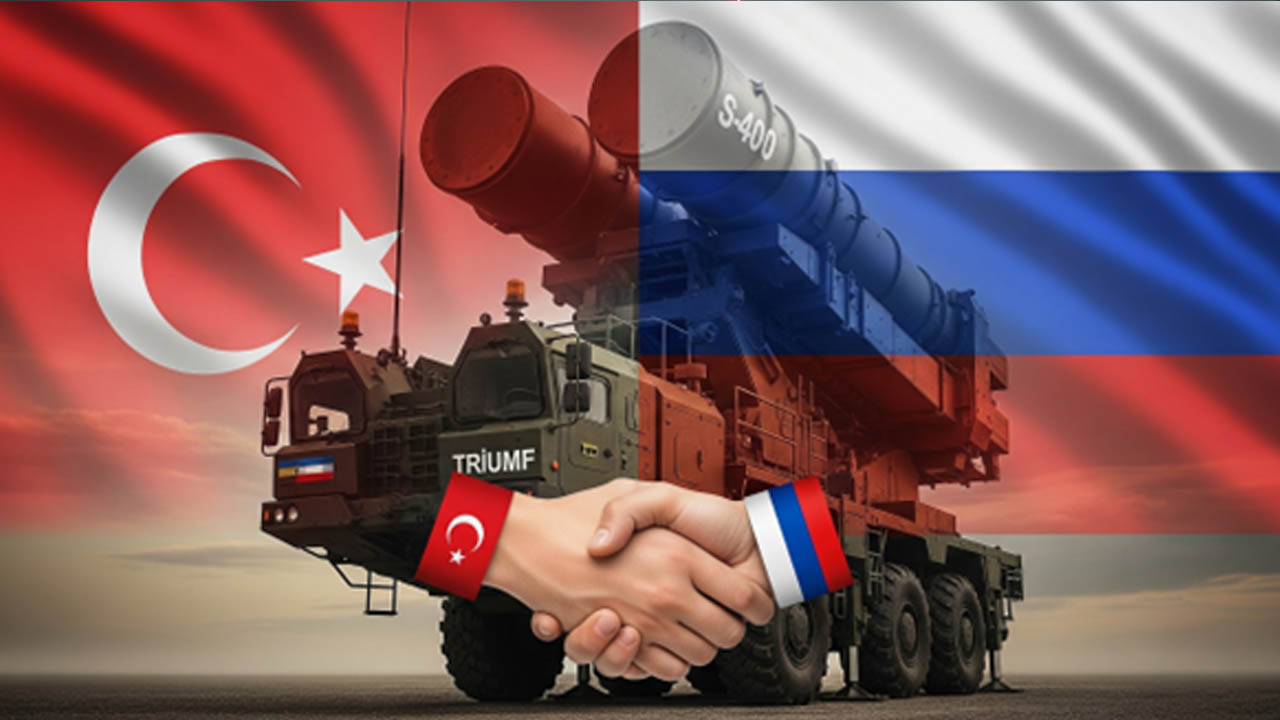
On 12.17.2025, it became known that Turkey was going to return to Russia the S-400 “Triumph” air defense systems purchased from it 10 years ago. According to Bloomberg, this topic was touched upon by Recep Tayyip Erdogan at a meeting with Vladimir Putin in Ashgabat on 12.12.2025 [1]. The administration of the Turkish president, as well as representatives of the Turkish Ministry of Defense, refuse to comment on this information, while the Kremlin generally denied information about the presidents’ negotiations on this topic. Meanwhile, according to Western sources, Ankara turned to Moscow with an initiative to terminate the S-400 deal long before the presidents’ meeting in Turkmenistan.
The history of Turkey’s forced acquisition of Russian-made air defense batteries dates back to 2007, when Ankara, wishing to modernize and thicken its entire air defense system, turned to the United States with a request for the supply of new Patriot systems at favorable prices. Turkey believed that the main NATO ally would not refuse such a service, especially against the background of V. Putin’s high-profile statements in Munich, in which he actually for the first time in the history of post-Soviet Russia publicly challenged the unipolar security system in the world [2]. Ankara considered the trend of a cardinal revision of the Russian Federation’s foreign policy as a convenient excuse to restore its former role in NATO, which is of exceptional importance for the military-political block in light of the confrontation with the USSR, being confident in a positive resolution of the issue.
-
Political background of the S-400 deal
The Americans, however, did not meet Turkey halfway on the issue of modernizing the air defense system, as a result of which Ankara demonstrated an unprecedented step for a NATO member country, resorting to the help of Beijing and signing a contract with it in 2013 for the purchase of Chinese HQ-9 complexes, which are essentially a copy of the Russian S-300 [3]. In 2014, Turkey, under pressure from NATO allies, terminated this deal and was forced to accept a compromise proposal for the purchase of European SAMP/T systems. However, an attempted coup d’état in July 2016, which Erdogan blamed on NATO allies, thwarted this deal as well. Ankara’s relations with the United States and European countries cooled sharply and, on a number of positions, even took the form of open political confrontation.
As a result, Turkey demonstratively went for a rapprochement with the Russian Federation, one of the results of which was the contract signed in 2017 for the purchase of Russian S-400 “Triumph” systems. Deliveries of 4 divisions were carried out in record time, and in 2019, S-400s were on combat duty in this NATO country [4].
Turkey’s unprecedented behavior for a NATO member became a reason for the U.S. military-political establishment to declare a demarche to Ankara in the sphere of defense cooperation. In December 2020, Washington imposed sanctions on the Presidency of Defense Industries (SSB) of the Republic of Turkey in accordance with Section 231 of the Countering America’s Adversaries Through Sanctions Act (CAATSA) “for knowingly engaging in a significant transaction with Rosoboronexport (ROE), Russia’s main arms export entity, by procuring the S-400 surface-to-air missile system” [5].
-
Tools of American pressure
The main loss for Turkey from the entry into force of these sanctions was its final exclusion from the program for the production and supply of new-generation F-35 fighters to U.S. allies, which started back in 2002. The reason for this decision was the incompatibility of the NATO fighter and the Russian air defense system on a single defense platform, as well as the risks of technical access of the Russian Federation to American technologies. Turkey’s participation in this program was frozen back in 2019, but CAATSA sanctions gave legal grounds for Ankara’s removal from the list of beneficiaries of the international platform for the development of the F-35. Washington even refused to return the advance payment to Ankara for several F-35 aircraft that were supposed to go on combat duty in the Turkish Air Force straight from the assembly line [6]. At the same time, Ankara also faced obstacles created by the American military-political establishment in the implementation of the already signed contract with Lockheed Martin for the supply of 40 modernized F-16 Block 70 fighters [7, 8].
-
Crisis of multi-vector policy
Until the start of the Russian SMO in Ukraine in 2022, the Turkish authorities successfully maneuvered between the interests of the collective West and the Russian Federation, on the one hand demonstrating to NATO allies the ability to provide for their own defense needs without critical dependence on the North Atlantic Alliance, and on the other hand involving Moscow in a field of broad cooperation in the spheres of energy (Akkuyu NPP, TurkStream), military-political interaction (Syria, Nagorno-Karabakh), and trade and economic ties. Such maneuvering was largely due to the S-400 deal, which in the eyes of the West signaled Ankara’s ability to conduct a more independent defense policy in the region, and in the Russian elites instilled hope for the realism of the forecasts of Eurasianism ideologues about Turkey’s withdrawal from the “burdensome” NATO patronage. From this point of view, the acquisition of S-400 systems was not so much a measure of military-defense importance as a political action necessary for R. T. Erdogan to turn his country into a full-fledged subject of geopolitical processes in the logic of the trends of the new reorganization of the global order.
However, the Ukrainian conflict, as well as the events in Syria, Gaza and around Iran, narrowed Turkey’s field of maneuver, which found itself on the line of a major geopolitical fault. The consolidation of Western countries around the idea of pressure on Russia through the Ukrainian agenda forced Ankara to significantly curtail its partnership with Moscow, which had involved Turkey in a risk zone. In addition, Ankara faced its own lag in the field of high-tech weapons in conditions where the war in Ukraine stimulated the dynamics of the NATO military-industrial complex and the rearmament of the alliance countries. While in the field of unmanned aviation, shipbuilding and missile weapons, the Turkish MIC has achieved significant success and criteria of basic self-sufficiency in recent years, in the field of development or acquisition of modern models of manned aviation, the country faced certain difficulties. Ankara’s statements about attempts to compensate for the exclusion from the F-35 program by purchasing a batch of Chinese 5th generation J-31 fighters or Russian Su-57s [9] looked more like a demonstration of resentment towards the U.S. than real practical intentions, especially considering that these models were still in the development stage, and also obviously had basic incompatibility with the defense system of Turkey, built on NATO standards.
Ankara’s announced plans to replenish or replace its aging fleet of F-16 aircraft with Chinese-Pakistani 4th generation JF-17 Thunder fighters with similar combat characteristics and functionality also looked not entirely convincing [10]. The process of studying these models and negotiations on their purchase hung for a long time, since Ankara did not lose hope that the United States would still remove the political and bureaucratic obstacles and accelerate the delivery of the new F-16 Block 70 to Turkey.
And, finally, Turkey experienced great financial, technological and production difficulties in connection with the implementation of the project to develop a domestic 5th generation fighter KAAN [11]. R. Erdogan’s loud statements about the prospects of this program, which should bring Turkey into the ranks of world leaders in the production of modern models of manned aviation, did not correlate with reality. The Turkish General Staff understood that the KAAN project could at best reach the finish line of full-scale production by the mid-2030s, while the F-35 is a long-functioning program, the products of which are used by a significant part of the U.S. allies, including Greece and Israel, which compete with Turkey in the region.
Presumably, it was the Turkish General Staff, the Ministry of Defense and institutes working in the field of analysis of national security problems that pushed the country’s authorities to get out of the stalemate with the F-35 by decisively rejecting the S-400. Turkish generals and experts convinced R. Erdogan that the military-defensive significance of such an initiative is much weightier than the political ambitions and priorities in accordance with which Ankara at one time sacrificed participation in the F-35 program. Especially since in recent years Turkish specialists have managed to develop and launch into production a fairly effective analogue of the S-400 system – the domestic long-range anti-aircraft missile system SIPER 2 [12].
-
Turkey’s rearmament dilemma
Turkey has found a way to compensate for its former dependence on supplies of Russian, American or European air defense systems of this class, which cannot be said about the situation with manned fighter aviation. The process of further marginalization of Turkey and its displacement from the defense-industrial programs of NATO had to be stopped, and R. Erdogan found it necessary to make a sacrifice in the form of terminating the deal with Russia on the S-400 – one of the few remaining factors binding Ankara’s partnership relations with Moscow.
Secret negotiations between the U.S. and Turkey regarding the termination of the S-400 deal in favor of the acquisition of the F-35 intensified after D. Trump’s return to the White house. R. Erdogan considered it necessary for Turkey to avoid conflict with Washington under D. Trump, striving not to escalate the already tense American-Turkish relations.
In addition to the benefits in terms of high-tech development and equipment of the fighter fleet of the Turkish AF, the termination of the S-400 deal would also help Ankara smooth over the sharp corners across the entire spectrum of American-Turkish relations that have become complicated in recent years. In this sense, the political value of this initiative for Turkey is no less than its military significance. Observing the radical actions of D. Trump on the international stage and his categoricalness in matters of choosing allies and designating enemies in bypass of the generally accepted traditional practice, Ankara realized: the temporary window for maneuvers between the U.S. and the Russian Federation is closing. Turkey had to finally make its choice, sacrificing relations with Russia.
-
Revision of relations with the RF
Back in early December 2025, the U.S. Ambassador to Turkey, Tom Barrack, stated that Ankara was ready to give up the Russian air defense system in favor of lifting restrictions under the CAATSA Act on Turkey’s participation in the F-35 program [13]. The Turkish authorities did not comment on this statement at the public level, but a week later, President R. Erdogan, in a private conversation with V. Putin, voiced Ankara’s final decision.
It should be assumed that the Turkish initiative became a very serious blow to the international reputation and pride of Moscow, despite the statements of some Russian officials that Turkey’s rejection of S-400 systems allegedly would not affect the further relationship between Moscow and Ankara [14]. Even more doubtful were the assessments of some Russian military commentators who believed that the return of the S-400 was even beneficial for Moscow, since these 4 batteries could be hastily put on combat duty in the west of the Russian Federation to strengthen the country’s layered defense against missile and drone strikes from Ukraine.
The return of air defense batteries is fraught with negative consequences for the RF from political, military and economic points of view. It will finally fix the defeat of the Russian strategy to withdraw Turkey from the orbit of U.S. influence, create the prerequisites for NATO to strengthen its southern flank and, finally, damage Russia’s reputation in the global arms market. Russian air defense systems are one of the few high-income items of the Russian military-industrial complex, and the Turkish initiative may affect the fate of already executed contracts, as well as current negotiations regarding the supply of Russian air defense systems to third countries. In addition, it should be noted that the Turkish side insists that the RF return all the money paid for them. We are talking about the amount of $2.5 billion. According to Bloomberg, Ankara told Moscow that, if necessary, it is ready to receive this amount not in cash tranches, but to set it off against payment for oil and gas supplied by Russia. These conditions are of an unprecedentedly tough nature. They demonstrate Ankara’s readiness to completely ignore Moscow’s interests and disregard the established level of bilateral trust.
-
Reputational risks for Moscow
Moreover, it can be assumed that Ankara, together with Western partners, resorts to elements of outright blackmail in order to terminate the deal exclusively on its own terms. The fact is that the day before the mentioned meeting of R. Erdogan with V. Putin in Turkmenistan, Russian media, citing an unnamed diplomatic source, reported that the EU was ready to buy out all the S-400 “Triumph” complexes acquired by Turkey for their subsequent transfer to Ukraine [15]. Thus, if we believe in the reliability of this information, the West preferred to help Turkey terminate the deal, and without financial damage to it. The calculation is based on the fact that the rumor about the intentions to transfer the S-400 complexes to Kyiv will make Russia more compliant in the matter of returning to the Turkish side the entire amount received at one time for the air defense systems. On the other hand, such a media “leak” may contribute to a further deterioration of Russian-Turkish relations, once again bringing the Ukrainian factor, painful for Moscow, into their agenda.
Until now, there is no data in open sources on how V. Putin reacted to R. Erdogan’s proposal and what measures have been or will be taken by the Kremlin in the context of the Turkish initiative. The story with the S-400 has become a high-profile political problem and a marker of the true state of affairs in Turkish-Russian relations, to which many Russian politicians and experts predicted a promising future just a few years ago.
-
Conclusion
In essence, Russia found itself in a position of a political-diplomatic dilemma, being forced due to blackmail to either recall its anti-aircraft missile systems from Turkey and return the money for them, or for the sake of saving its reputation to push back the fulfillment of the Turkish proposal for an indefinite time, making Ankara some solid concession in other areas of interest. And it is not yet completely clear whether Moscow’s decision on an additional contribution of $9 billion to the project for the construction of the Akkuyu NPP in Turkey can be considered such a concession, as was officially stated by the Russian authorities exactly two weeks after R. Erdogan expressed to V. Putin the decision to terminate the deal on the S-400 “Triumf” [16].
References
[1] “Erdogan Asks Putin to Take Back Missiles to US Favor”. Bloomberg, 17.12.2025, https://www.bloomberg.com/news/articles/2025-12-17/erdogan-asks-putin-to-take-back-missiles-in-bid-to-win-us-favor (download date: 06.02.2026).
[2] «Выступление и дискуссия на Мюнхенской конференции по вопросам политики безопасности». Kremlin.ru, 10.02.2007, http://kremlin.ru/events/president/transcripts/24034 (download date: 06.02.2026).
[3] А. Ермаков, «Турецкий пат». Kommersant, 07.10.2025, https://www.kommersant.ru/ doc/8098720 (download date: 06.02.2026).
[4] «Эрдоган заявил, что покупка С-400 у РФ была вызвана отказом США продать ЗПК Patriot». Интерфакс, 30.09.2021, https://www.interfax.ru/world/794407 (download date: 06.02.2026).
[5] CAATSA Section 231 “Imposition of Sanctions on Turkish Presidency of Defense Industries”. U.S. Department of State, 14.12.2020, https://2017-2021-translations.state.gov/2020/12/14/caatsa-section-231-imposition-of-sanctions-on-turkish-presidency-of-defense-industries/ (download date: 06.02.2026).
[6] «Консультации продолжаются»: США не желают возвращать Турции средства, потраченные на закупку F-35». Военное обозрение, 19.10.2019, https://topwar.ru/188223-konsultacii-prodolzhajutsja-ssha-ne-zhelajut-vozvraschat-turcii-sredstva-potrachennye-na-zakupku-f-35.html (download date: 06.02.2026).
[7] «Bloomberg: Турция пытается договориться с США о продаже истребителей F-16». Overclockers.ru, 07.11.2025, https://overclockers.ru/blog/Nacvark/show/242706/Bloomberg-Turciya-pytaetsya-dogovorit-sya-s-SShA-o-prodazhe-istrebitelej-F-16 (download date: 06.02.2026).
[8] «Поставка США новых F-16 Турции может затянуться на несколько лет, пишут СМИ». РИА Новости, 12.02.2024, https://ria.ru/20240212/f16-1926776245.html (download date: 06.02.2026).
[9] «Турция рассматривает возможность покупки китайских истребителей J-31 вместо российских Су-57». Armiys.az, 11.16.2019, https://armiya.az/ru/news/147060 (download date: 06.02.2026).
[10] «Пакистан и КНР способны дать крылья турецкой авиации». Независимая Газета, 14.12.2023, https://www.ng.ru/world/2023-12-14/1_8903_aviation.html (download date: 06.02.2026).
[11] И. Стародубцев, «Турецкие оценки реалистичности массового производства истребителя KAAN». Институт Ближнего Востока, 10.03.2024, https://www.iimes.ru/?p=106754 (download date: 06.02.2026).
[12] «Турция произвела первые стрельбы зенитной ракетой SIPER 2». Военное oбозрение, 26.08.2023, https://topwar.ru/224681-turcija-proizvela-pervye-strelby-zenitnoj-raketoj-siper-2.html (download date: 06.02.2026).
[13] «Посол США рассказал о желании Турции отказаться от российских ПВО». Lenta.ru, 05.12.2025, https://lenta.ru/?error=sso_error&state=61b637a3-dbfb-4153-b252-cd15e34c10c9 (download date: 07.02.2026).
[14] «В Кремле оценили последствия возможного возвращения Турцией С-400». РБК, 18.02.2025, https://www.rbc.ru/politics/18/12/2025/6943d8709a7947e82b5b101e (download date: 07.02.2026).
[15] «ЕС хочет выкупить у Турции С-400 для передачи Киеву, сообщил источник». РИА Новости, 11.12.2025, https://ria.ru/20251211/s-400-2061265447.html (download date: 07.02.2026).
[16] Е. Белкова. «В Турции заявили, что Россия выделила $9 млрд на строительство АЭС «Аккую». Forbes, 27.12.2025, https://www.forbes.ru/biznes/553029-v-turcii-zaavili-cto-rossia-vydelila-9-mlrd-na-stroitel-stvo-aes-akkuu (download date: 07.02.2026).
[1] The original (in Rus.) was posted on our website on 10.02.2026.