
Publication
The Afghan-Pakistani conflict against the backdrop of the Iranian agenda

ARVAK Center comment, 09.03.2026 [1]
-
Escalation on the Afghan-Pakistani border: regional context
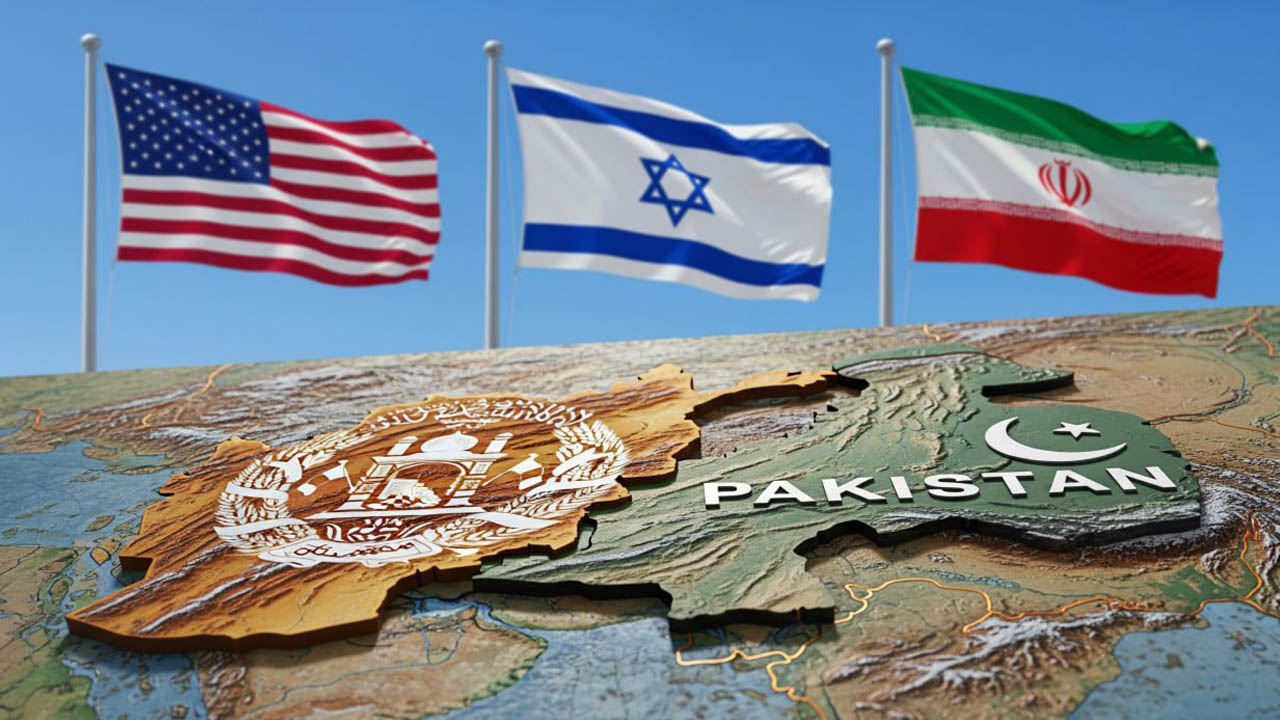
The intense military operations, initiated on the morning of February 28, 2026, by the United States of America and Israel against the Islamic Republic of Iran, have overshadowed another geographically close military conflict – the Afghan-Pakistani one. Meanwhile, this conflict is presumably directly related to the events around Iran, and the consequences of its potential escalation could significantly affect the overall security balance in the vast Central Asian region.
The escalation of tension on the Afghan-Pakistani border followed a series of terrorist acts that occurred in February in Islamabad and Khyber Pakhtunkhwa province. Pakistani authorities accused the extremist movement “Tehrik-i-Taliban Pakistan” (TTP), affiliated with the Afghan Taliban, of organizing these incidents.
On February 21, 2026, Islamabad carried out airstrikes on the alleged bases of the said group on the territory of Afghanistan. In response, on February 26, 2026, Kabul initiated a large-scale ground military operation against Pakistan along almost the entire length of the so-called “Durand Line”. As of now, the clashes show signs of a full-scale war involving artillery, aviation, and long-range missile systems. A key indicator of the critical nature of the situation may be the fact that the Taliban armed forces launched missile attacks against a nuclear test site in Khyber Pakhtunkhwa province and the Pakistan Military Academy in Abbottabad – the primary military training establishment of the Islamic Republic of Pakistan.
-
Causes of the status quo violation: external factor
Thus, the truce reached between Kabul and Islamabad in 2025 through the mediation of Turkey and Qatar has been violated. In this context, the fact that the activation of hostilities on the Afghan-Pakistani border occurred just two days before the start of the U.S.-Israeli campaign against Iran deserves attention. It is also noteworthy that the terrorist acts organized by “Tehrik-i-Taliban Pakistan”, which became the catalyst for the outbreak of the conflict, were carried out during a period of intensive negotiation process on the Iranian issue, as well as the accompanying active redeployment of American Navy and Air Force groups to the Middle East. Taking into account the objective desire of Islamabad and Kabul to maintain a fragile truce before the February series of terrorist attacks on Pakistani territory, the assumption of a possible external initiation of this provocation seems justified.
Considering the mutual desire of Islamabad and Kabul to uphold a tenuous ceasefire preceding the series of terrorist attacks on Pakistani territory in February, the hypothesis of a potential external instigation of this provocation appears warranted.
-
The transformation of the “Taliban”: ideological divergence
Despite Islamabad’s claims of the affiliation of “Tehrik-i-Taliban Pakistan” with the Kabul government, represented by the military-political elite of the Afghan wing of the Taliban movement, a direct link and coordination between these two structures are not currently evident.
In its nascent period in the mid-1990s, the movement of “madrasa students” among the Pashtuns living on both sides of the Afghan-Pakistani border – the Taliban movement – was a monolithic organization. Its activities in both Afghanistan and Pakistan were coordinated from a single center located in the Pakistani city of Quetta, where the headquarters of the organization’s founder, Mohammed Omar, and his associates, who later became part of the Taliban’s Supreme Consultative Body – the “Rahbari Shura” (Supreme Council), was located.
After the Taliban movement came to power in Kabul and its activities shifted to the realm of state policy, the movement’s leadership underwent a gradual transformation of political thinking and ideology. Pakistan, whose special services, according to experts, facilitated the creation of this group, lost influence over its Afghan leadership. In turn, the Taliban government and its military structures significantly weakened control over the Pakistani “branch”, which gradually acquired the status of an independent structure. Under these conditions, contacts between “Tehrik-i-Taliban Pakistan” and external forces and special services of states seeking to assert their interests and participation in processes in the key Central Asian region became practically inevitable. The Pakistani wing of the Taliban formally maintained ties with the central bodies in Kabul and benefited from their patronage to some extent, which, however, does not hypothetically exclude the possibility of “Tehrik-i-Taliban Pakistan” carrying out independent actions that often contradict the interests of the central bodies in Kabul. At the same time, the involvement of the Taliban government in Afghanistan in the February terrorist acts on Pakistani territory should not be completely ruled out.
-
Threat to logistics corridors and Beijing’s interests
Regardless of who is the true initiator and orchestrator of the escalation on the Afghan-Pakistani border (the Kabul government or the special services of third countries), it is clear that the new hot phase of this conflict has destabilized the “Iranian rear” immediately before the start of the confrontation against Tehran, provoked by Washington and Tel Aviv. In essence, this is about blocking land routes from China to Iran, along which military goods and food – the deficit of which has been felt by the country’s population due to another sharp surge in inflation in recent months – were supplied to the Islamic Republic of Iran until recently. Given that the approaches to the Persian Gulf have been blocked by the U.S. Navy in the Indian Ocean for a long time and Iran is deprived of the opportunity for full-fledged communication with one of its key geostrategic allies – China, the significance of the Afghan-Pakistani routes leading from the Islamic Republic of Iran to the PRC has critically increased for Tehran in recent months. Currently, they are virtually inaccessible due to intense fighting, the geographical scope of which is expanding daily.
The present situation may indicate not only a potential undermining of Iran’s supply routes but also a deliberate blocking of the hypothetical possibility for China to directly deploy its military forces to aid Tehran, should the development of the conflict between Iran and the U.S. and Israel and the emerging new circumstances push Beijing to make such decisions.
Thus, the Afghan-Pakistani conflict has posed a problem of communication disruption for the IRI and the PRC, which could potentially negatively affect Tehran’s ability to withstand a prolonged military strike by the U.S.-Israeli tandem.
-
Risks of destabilizing the regional balance
The Afghan-Pakistani conflict affects Beijing’s geostrategic interests even without its direct correlation with the Iranian agenda. Hostilities on the Afghan-Pakistani border threaten the security of China’s large-scale energy and logistics projects in the region, in particular, the railway route within the framework of the “China–Pakistan Economic Corridor” (CPEC) program. This route is intended to connect Chinese Kashgar (Xinjiang Uyghur Autonomous Region of the PRC) with the Pakistani port of Gwadar on the coast of the Indian Ocean. This strategically important corridor for the PRC and Pakistan runs along the entire Afghan-Pakistani border and in close proximity to the “Durand Line”, where the fiercest clashes between the armed forces of Islamabad and the Taliban are recorded. The threat to the security of this corridor, for the construction of which Chinese state funds, as well as private and investment companies, have allocated at least $50 billion, cannot but cause concern in Beijing, as well as the fate of Chinese projects for the development of copper mines and rare earth metal deposits on the territory of Afghanistan.
Given Beijing’s close interaction with the Taliban in Kabul and Islamabad, as well as the presence of complex strategic and geo-economic interests in both countries, Beijing cannot afford sharp actions regarding the outbreak of the conflict. Open support for either side is ruled out, and covert political-diplomatic maneuvering in the interests of one of the two partners seems unlikely. Any mistake in this direction could lead to a devaluation of the PRC’s influence and, ultimately, to the loss of control over the region, which Beijing has sought for many years to turn into a reliable platform for access to the Near East and the western part of the Indian Ocean, thereby building an alternative to its sea routes in the Indo-Pacific region, which are under threat.
It is obvious that Beijing is carefully analyzing the motives and tracing the causal links of the new round of conflict between Kabul and Islamabad, striving to develop clearly reasoned proposals for its settlement. For now, the Chinese Ministry of Foreign Affairs has limited itself to a statement on 27.02.2026, which contains a call for both sides to exercise restraint and maintain calm.
A quick activation of the PRC authorities on the Afghan-Pakistani front should be expected, as Beijing’s time and resource possibilities for resolving the situation in the specified region are diminishing. Iran is already in a zone of increased tension, and predicting the duration of its resistance to external pressure is not possible. On the other hand, a number of analysts predict the imminent resumption of activity by the radical Islamist group “Vilayat Khorasan” (also known as “ISIS Khorasan”) in Afghanistan, which went underground after defeat by the Taliban and is likely striving to take advantage of the current situation for revenge.
According to a number of international media outlets, there is also information that a significant part of the extremists released from Kurdish prisons in Syria is currently being transferred to Afghanistan with the aim of expanding the geography of destabilization. Furthermore, in the near future, a mass activation of the Baloch people may occur in southern Iran and Pakistan, who will declare their readiness to begin an armed struggle for independence. Thus, a unique opportunity is being formed for the special services of certain interested Western countries and India to provoke a large-scale and bloody war of all against all in the region, during which Islamist groups, separatist movements, tribal, and clan associations will recall old “grievances” and once again assert claims to their large and small shares in the regional distribution of influence.
China faces a serious and dangerous challenge. It is being forced to shift its attention from the Iranian agenda to the Afghan-Pakistani problem. However, in such a case, the loss of Iran by Beijing in the foreseeable future will again provoke destabilization in the specified region, as it will allow unfriendly forces to closely approach the territory that is of strategic importance for ensuring the security of the PRC’s continental rear from the west. Experts find it difficult to give precise forecasts but expect the preparation and, possibly, the implementation of non-standard response actions by the PRC.
[1] The original (in Rus.) was posted on our website on 04.03.2026.