
Publication
The Abrahamic Accords as an element of Israel’s anti-Turkish strategy

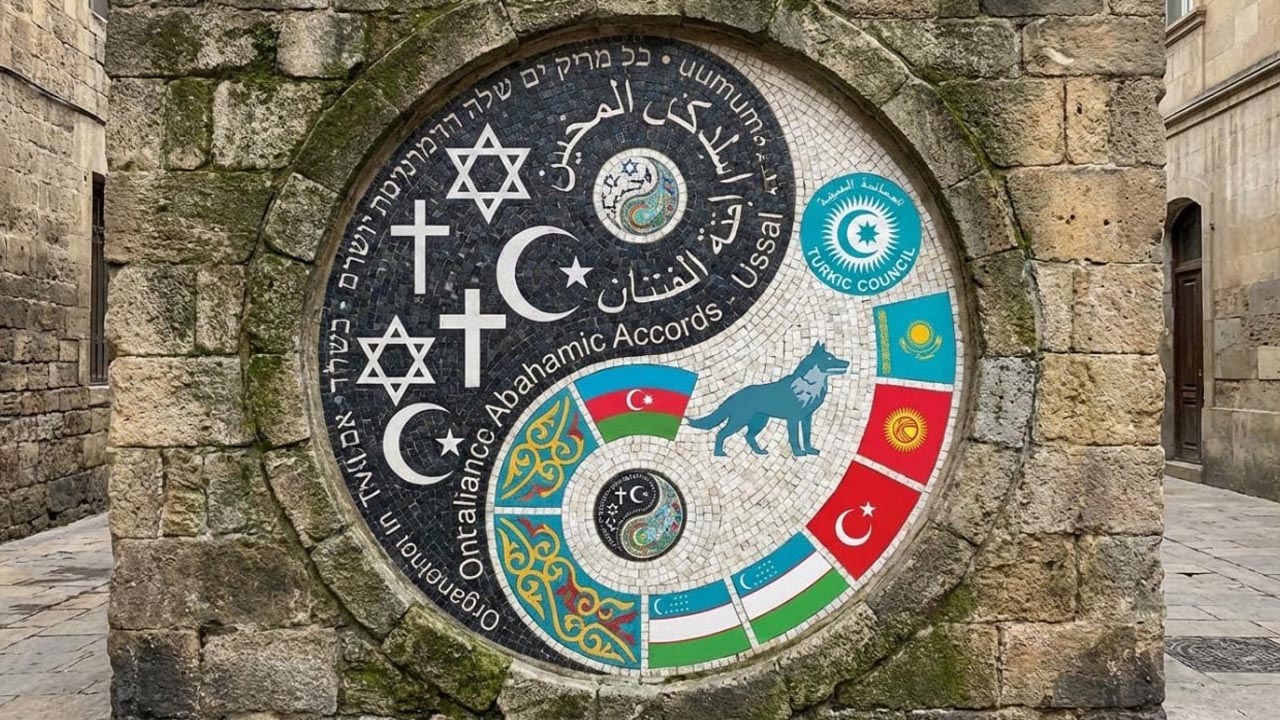
ARVAK Center comment, April 04, 2026[1]
Determinants of the military-political confrontation between Ankara and Tel Aviv
The rivalry between the Republic of Turkey and the State of Israel for regional ascendancy in the Middle East and Central Asia is, according to expert assessments, inexorably transitioning into a paradigm of military-political confrontation. This development is fundamentally conditioned by the respective ambitions and long-term strategic objectives of both nations concerning the establishment of the balance of power within the region. Consequently, military-political establishments in both Ankara and Tel Aviv no longer conceal the perspective that the phase of direct collision between them is merely a forthcoming eventuality.
Turkish President Recep Tayyip Erdoğan has repeatedly asserted that Israel’s conduct in the region increasingly mirrors the methodology employed by “Nazi Germany” and, consequently, necessitates suppression at an early stage. On July 28, 2024, he issued a threat to “enter Israel and liberate Jerusalem”. Concurrently, Israeli politicians are progressively articulating at the public level the notion that Ankara constitutes the principal impediment to the “path to peace that Tel Aviv endeavors to establish throughout the Middle Eastern region”. The most recent instance of this position was the assertion regarding the high probability of an Israeli-Turkish conflict, voiced by former Israeli Prime Minister Naftali Bennett at the Jerusalem Conference of American-European Organizations on March 18, 2026. Bennett explicitly stated that Turkey represents a “new Iran”, and that Israel can no longer disregard this fact. The statement by the former prime minister, known for his anti-Turkish stance, combined with analogous remarks by other Israeli political figures and the impactful report of the “Nagel Committee” published on January 7, 2025, indicates that this is not merely the emotional rhetoric of a private individual, but rather a conceptual decision by the Israeli military-political establishment, which is being conveyed to the populace through a politician who is not formally an officeholder but possesses intimate knowledge of the government’s and security forces’ strategies.
The Iranian conflict as a determinant of regional power regrouping
The coordinated media appearance of this topic is evident, notwithstanding the fact that the former prime minister frequently critiques B. Netanyahu for what N. Bennett considers an inadequate response to the challenges facing Israel. In his address at the Jerusalem Conference, Bennett particularly underscored the imperative for Israel to resolve the matter with Turkey following the settlement of the situation with Iran, given that Ankara is already establishing an anti-Israeli Sunni axis in the region, paralleling the Iranian Shia axis. It should therefore be concluded that an armed conflict with Iran represents an intermediate phase in the processes leading Ankara and Tel Aviv toward the eventual stage of confrontation. Nonetheless, the military, politico-diplomatic, and moral-psychological potential with which both sides approach the critical threshold of direct confrontation will precisely depend on the outcome of the Iranian campaign.
In the analytical sphere, skeptical evaluations concerning the high probability of a Turkish-Israeli confrontation are becoming increasingly infrequent. This shift is attributable not merely to the aggressive rhetoric of representatives within the military-political establishments of the two regional powers, but rather to the observable actions undertaken by Ankara and Tel Aviv in the region, which experts interpret as indicative of multi-layered preparation for conflict. Concurrently, it is particularly noteworthy that the parties are implementing virtually symmetrical measures in the organization of their respective strategic positions.
Geostrategy and mirror projection of power
The confrontation between Turkey and Israel is scaling across the following functional directions:
- Regional borders: Turkey is interested in maintaining tension on Israel’s land borders with Lebanon and Syria; Tel Aviv, in turn, actualizes the Greek and Cypriot factors, contributing to the growth of escalation on Turkey’s maritime borders in the Eastern Mediterranean.
- Coalition building: Ankara is forming a Sunni axis with Islamabad and Riyadh; Tel Aviv mirror-images this by building a military-political alliance with New Delhi and Athens.
- Logistical corridors: Turkey strives for control over the resources of the Persian Gulf via the “Development Road” route (through Iraq), while Israel lobbies for the competing IMEC
- Expansion in the Red Sea: Ankara expands its military presence in Somalia; Israel marks its own interests through the recognition of Somaliland’s independence with the prospect of establishing its own naval bases.
In this context, particular focus should be directed toward the ideological underpinnings of the ambitious geostrategic initiatives of both powers, which are constructed upon identical principles. Whereas Turkey has adopted the concept of neo-Ottoman revisionism and the restoration of the “glorious times” of the Ottoman Caliphate as the basis for its regional hegemony in the Middle East, Israel has predicated its own claims to the region upon the doctrine of “Great” or “Greater Israel”, which is derived from sacred historical teachings and the putative historical right of Jews to substantial territories within the Middle East.
Integration platforms: OTS vs. the “Abraham Accords”
The most significant dimension of this competition is the pursuit of allied frameworks based on an ethno-civilizational foundation. In this regard, two key initiatives are relevant: integration processes among Turkic-speaking nations under the aegis of Turkey (Organization of Turkic States, OTS), and the “Abraham Accords”, which cultivate a favorable regional environment for Israel.
The fact that Israel, significantly lagging behind Turkey in the pace of establishing mechanisms for consolidating the “Abraham Union”, has commenced proactive measures to attract candidate nations already integrated into the Turkic integration project is noteworthy in this context. Initially, the concept of the “Abraham Accords”, much like the Turkic integration project, was predicated upon the ethno-linguistic and sacred-historical commonality shared by Semitic peoples and states. The designation of the initiative, utilizing the name of Abraham, the “forefather of nations” revered in biblical tradition as the ancestor of both Jews and Arabs, was intended to symbolize the genetic affinity of these populations, as well as the convergence of their religious cults through a singular biblical Abraham’s heritage. The principal objective of this initiative was to preclude the consolidation of the Arab world into an anti-Israeli front and to neutralize the potential for the League of Arab States to formulate a unified stance on the Palestinian issue.
It was posited that the Accords would initiate substantive politico-diplomatic, economic, and cultural-civilizational engagement between Israel and Arab nations, elevating the quality of bilateral relations to the level of a close partnership comparable to Israel’s existing relationships with Jordan and Egypt. The United States of America, specifically the D. Trump administration, assumed the intermediary role in promoting this initiative, successfully securing the consent of the United Arab Emirates and Bahrain to join the “Abraham Accords” in 2020. Subsequently (2020–2021), through further efforts by the U.S., Sudan and Morocco also acceded to the “Abraham Accords”. It is noteworthy that the “Abraham Accords” are cited in the “U.S. National Security Strategy” of 2025 as one of the most significant, if not the preeminent, frameworks for cooperation in the Middle East.
Expansion of the “Abraham Platform” into the Turkic realm
Initially, the “Abraham Platform” did not contemplate extending beyond the confines of the Arab or, conventionally speaking, the Semitic world. However, subsequent to the events of October 2023, which inaugurated the Israeli operation “Iron Swords”, the potential geographic scope of its coverage underwent revision. Specifically, in deliberations by Israeli and American politicians concerning the imperative of expanding the initiative, Turkic nations have become more frequently cited. This development coincided chronologically with a new phase of heightened radicalization in Ankara’s rhetoric directed towards Tel Aviv, stemming from the situation in Gaza, as well as the intensification of the Turkish government’s activities in Syria that run counter to Israeli interests, following the establishment of a new administration in Damascus at the close of 2024.
Specific positions of Kazakhstan and Azerbaijan
Since the middle of 2025, Donald Trump began to articulate openly the desirability of involving Azerbaijan and the Turkic republics of Central Asia in the “Abraham Accords”, an initiative that the Government of Israel had already placed on the agenda of its relations with Baku and Astana from the beginning of the year. Despite reiterated public declarations by Israeli politicians that the strong bilateral relationship between Tel Aviv and Baku does not necessitate supplementary allied frameworks, the Israeli authorities have, in fact, initiated discussions on this matter with the Azerbaijani side and, according to various reports, continue to attempt to influence the republic’s elites toward accession to this initiative.
In contrast to Azerbaijan, Kazakhstan accepted the proposal of the “American-Israeli partners” without significant difficulty, as repeatedly and officially confirmed by the country’s president, Kassym-Jomart Tokayev, throughout 2025. His latest public affirmation was delivered in November 2025 during a meeting with D. Trump in Washington, which the American president received with satisfaction as evidence of the potential for expanding this framework beyond the confines of the Arab world.
Kazakhstan’s affirmative response to the aforementioned initiative is, according to analysts’ assessments, primarily predicated upon Astana’s pursuit of a multi-vector foreign policy, alongside the imperative to counterbalance the growing Turkish influence in Kazakhstan. This influence has intensified following the activation of multi-level processes of Turkic integration in Central Asia under the aegis of the Organization of Turkic States (OTS) geopolitical project. Kazakhstan exhibits prudence regarding Turkey’s informal leadership within the OTS and its endeavors to transform the Turkic integration project from a framework of close cultural and geo-economic cooperation into a geostrategic and military-political alliance, consolidated by the ultra-nationalist ideology of Pan-Turkism. Notwithstanding the high caliber of bilateral relations with Turkey, Kazakhstan views the “Turan” doctrine with considerable apprehension and consequently perceived the potential for its accession to the “Abraham Platform” as an additional mechanism for mitigating geopolitical risks.
In contrast to Astana, the other Turkic republics of Central Asia (Turkmenistan, Uzbekistan, Kyrgyzstan) currently exhibit a comparatively reserved stance regarding the initiative to establish specific relations with Israel. Evidently, this position is dictated by an unwillingness to undertake such a responsibility, given the geographical proximity to the Afghan-Pakistani region, an area characterized by instability and susceptibility to radical Islamic influence.
Meanwhile, Baku has adopted a wait-and-see stance and endeavors, despite noticeable American-Israeli pressure, not to contravene the logic of Turkish-Azerbaijani allied relations. Turkey’s influence on Azerbaijan is profound and multifaceted, which, alongside challenging relations with Iran, serves as a primary rationale for Baku’s attempts to distance itself from the “Abraham Accords” initiative. According to expert assessments, the “Abraham Platform” presents I. Aliyev with a considerable number of benefits, including the guaranteed loyalty of Washington, which could subsequently facilitate the transition of Azerbaijani power within the same family. Conversely, however, adherence to the Accords is associated with the risk of forfeiting military-political support from Turkey and a potential escalation of Islamist sentiment within the republic, which has accumulated in the social environment over decades of authoritarian-secular regime governance.
Resource asymmetry and the strategy of erodent Turkic monolithicity
Regardless of the decisions individual countries of the Turkic commonwealth reach regarding the “Abraham Accords”, the very discourse surrounding their incorporation into the foreign policy agendas of these states engenders displeasure in Ankara. This is attributable to the fact that this process undermines the principle of the Organization of Turkic States (OTS)’s monolithic unity and casts doubt upon the imperative of unquestioning solidarity among their positions on salient matters of regional and global geopolitics. Ankara has historically regarded and continues to regard the ethno-political landscape of the Turkic world as a theatre for its own geopolitical engagement and arbitration, whereas Tel Aviv endeavors to establish its interests within this domain, thereby contributing to the fragmentation of this unified construct.
In executing these actions, Israel, drawing parallels with the examples cited previously, mirrors Turkey’s strategy within the Arab milieu, where Ankara forges alliances with Qatar and Syria and actively seeks opportunities for rapprochement with Iraq, Egypt, and Saudi Arabia. Consequently, Israel seeks to destabilize integration processes within the Turkic world as a countermeasure to Turkey’s geopolitical maneuvers, which are aimed at managing dynamics within the Semitic environment and impeding the Jewish state’s objectives of recalibrating sentiments within the genetically linked, yet politically adversarial, consortium of Arab nations. It is evident that Turkey’s profoundest irritation stems from the circumstance that Tel Aviv achieves its aims through the deployment of minimal resources. In contrast to the commitments undertaken by Ankara, such as the provision of investment programs, security assurances, and the expensive projection of soft power toward its allies, Israel binds its “Abraham partners” through agreements that, in the judgment of numerous analysts, remain in an “amorphous” state. Nevertheless, even acknowledging their abstract and presently ambiguous potential for substantial content, these agreements already yield maximal efficacy for Tel Aviv, as they are fundamentally underpinned by the authority and guarantees of the United States.
Perspectives for regional parity and the role of the U.S.
The mutual interference of Turkey and Israel in the integration processes of the Turkic and Arab-Semitic geographical spaces constitutes another clear indication of their impending confrontation. The accumulated contradictions and elements of conflict in the relations between the two Middle Eastern powers are too extensive and diverse to be disregarded, precluding a peaceful normalization such as occurred in the 1970s, and again in the early 1990s and 2000s. During those periods, the United States of America facilitated de-escalation, guided by the parity of its interests concerning its two key regional allies. Presently, this parity is clearly disrupted. Should the outcome of the Iranian confrontation ultimately convince the U.S. of the “prospects” of the regional reliance on Israel, Turkey will need to prepare for a period of adversity.
Conversely, should the campaign against Iran yield the opposite result, Israel will face the challenge of confronting dominant Turkish power with significantly less external support.
[1] The original (in Rus.) was posted on our website on 26.03.2026.