
Publication
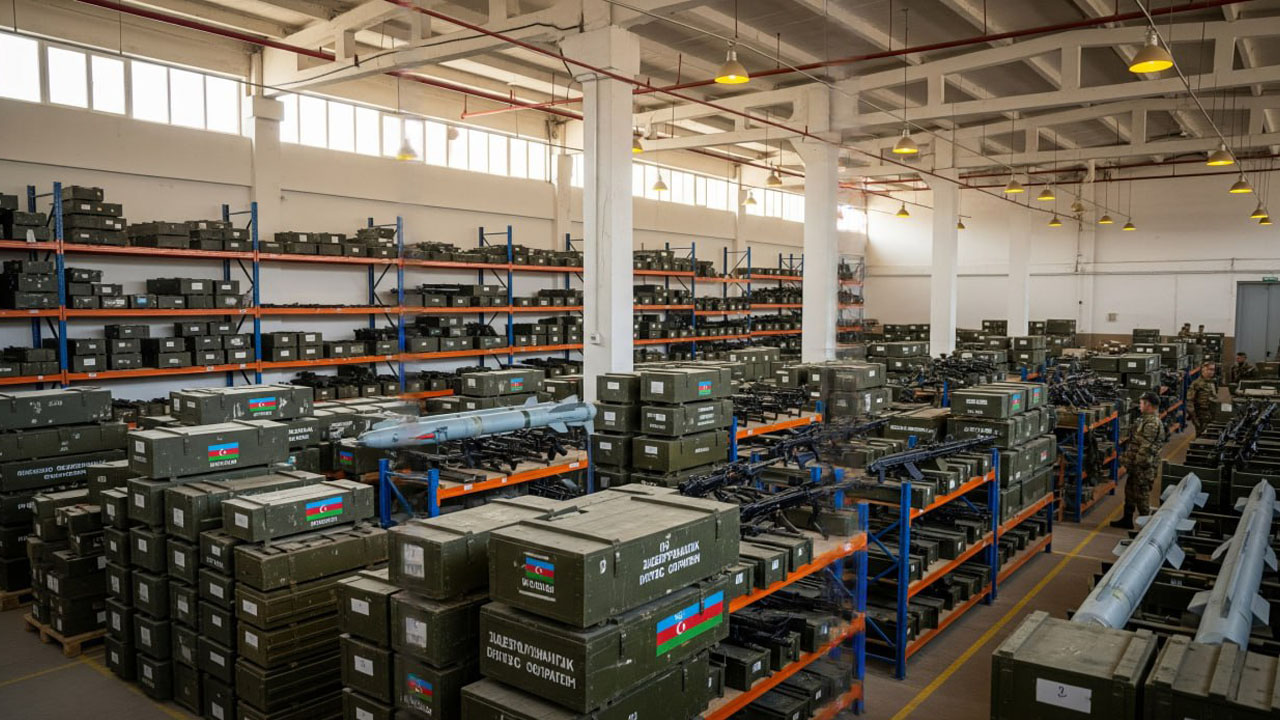
Militarization as an instrument of the AzR geopolitical positioning

ARVAK Center comment, 22.12.2025 [1]
On August 12, 2025, the president of the AzR, Ilham Aliyev, paid an official visit to Bratislava, where he held bilateral talks in an expanded format with the president of the Slovak Republic, Peter Pellegrini [1]. The basis of the close relations between the two countries is energy and the sphere of the military-industrial complex (MIC), and the negotiations were mainly conducted regarding the increase of gas supplies by Azerbaijan to Slovakia and the deepening of cooperation in the field of production and purchase of weapons. Following the results of the new agreements in this sphere, a “Protocol of Intent on Cooperation between the Ministry of Defense Industry of the Republic of Azerbaijan and the Ministry of Defense of the Slovak Republic” was signed in Bratislava [2], the details of which are not disclosed; however, the Slovak president to a certain extent explained what might be at stake. According to him, Bratislava not only plans to continue exporting weapons to Baku but is also preparing to set up joint production of military production in Azerbaijan with the prospect of their sale to third countries [3]. P. Pellegrini also suggested that Baku intends to acquire from Bratislava new divisions of Slovak automatic artillery systems, an armament in which the Azerbaijani defense department has expressed interest. It is likely this refers to the Zuzana-2 self-propelled howitzers, which are currently in use in both Ukraine and Cyprus [4].
Thus, Azerbaijan is increasing purchases of weapons from Slovakia, expanding the nomenclature of its artillery units and rocket systems. In 2024, Baku already received the first batch of L45-Dita self-propelled howitzers of 155 mm caliber ordered from Bratislava [5]. Before that, in the period of 2012–2018, Azerbaijan purchased several divisions of the RM-70 rocket system and Dana self-propelled howitzers of joint Czech-Slovak production, using an illegal scheme for their acquisition and delivery. At that time, Israel acted as the buyer of the Czech-Slovak units (official EU policy excluded the possibility of transferring European weapons to any of the parties to the Armenian-Azerbaijani conflict), which, in turn, forwarded them to Azerbaijan through its Ovda air force base [6]. The disclosure of this scheme caused a scandal in Prague and Bratislava, which, however, was hushed up, and after the military campaigns in Nagorno-Karabakh in 2020 and 2023, Slovakia carried out deliveries of weapons to Azerbaijan directly – on a “legal” basis.
The example of Slovakia shows that Baku does not intend to reduce the scale of purchases of weapons of various types even after the “military-force resolution” of the conflict with Yerevan over Nagorno-Karabakh and the onset of the “era of peace” with Armenia, which Azerbaijani authorities regularly declare. Another piece of evidence of the ongoing process of militarization of the republic is the largest arms deal of Azerbaijan in recent years, concluded with Pakistan. At the beginning of 2024, it became known that Baku purchased from Islamabad 16 multi-role fighters of Chinese-Pakistani production JF-17 BLOCK III, and in May 2025 it ordered 24 more such combat machines [7]. The total volume of the deal amounted to $4.2 billion, which is an unprecedented sum for Baku in terms of a one-time acquisition of one type of weapon. The military parade in Baku on 11.08.2025 showed that the first batch of Pakistani fighters has not only been mastered by pilots and specialists of the Azerbaijani Air Force, but also, possibly, is already on combat duty [8].
Another large-scale acquisition of Azerbaijan in the field of military purchases was the long-range anti-aircraft missile system produced by the Chinese company China Aerospace Science and Industry Corporation (CASIC) HQ-9BE. The amount of the deal is not disclosed, and at the moment only at least two launchers are known, which were first identified on November 4 of this year at the rehearsal of the aforementioned military parade [9].
There is no open information about other major acquisitions of Azerbaijan in 2025 in the defense sphere, which, in the opinion of experts, is due to Baku’s unwillingness to disclose all its deals after the victory in the 2020 Karabakh war. However, if one takes into account the monitoring data of the Stockholm International Peace Research Institute (SIPRI) on Azerbaijani arms contracts for import for the period 2021–2023 [10], as well as the published rating of the Center for Analysis of World Arms Trade (CAWAT) for the period 2021–2024, the inertia of the growth of arms purchases by Baku in 2025, in particular from such countries as Turkey and Israel, should not have weakened. Based on a cross-check of data from Azerbaijani, Turkish, and Israeli media, it can be concluded that intensive deliveries of weapons to Azerbaijan continued both under previously concluded and under new contracts. In particular, it may be about a wide range of unmanned aviation, aerial bombs, and armored vehicles purchased from Turkey, as well as satellite tracking systems, drones, anti-aircraft missiles, and optical-electronic reconnaissance systems ordered from Israel.
In general, the dynamics of the growth of Azerbaijan’s defense budget, in which the expenditure item for the import and acquisition of weapons from its own defense industry is the costliest, continues. After the 2020 Karabakh war, the country’s defense budget has been steadily growing, even taking into account average annual inflation rates [11]. This trend will continue in 2026, as the government of Azerbaijan has already approved plans to increase the defense item in the budget by $187 million, which is 4% more than the expenditures of the current year [12]. Baku also has experience in reshaping the already approved budget of the country in favor of increasing defense expenditures. The last time this took place was in 2024, when at the peak of tensions in relations with Russia regarding the AZAL airliner that crashed on 12.24.2024, I. Aliyev ordered an urgent review of defense expenditures for 2025 in connection with the escalation of tension in relations with the RF.
It cannot be excluded that the government of the republic may act in a similar way this year, increasing the planned expenditures on “strengthening defense capability”. Politicians and experts in Azerbaijan associate the growth of defense expenditures in 2026 with, allegedly, risks of a resumption of the conflict with Armenia, where, according to the results of the June 2026 parliamentary elections, political forces oriented toward “revenge” may come to power. However, objectively, this is a very weak argument that does not correlate with the real state of affairs in Armenia and is, rather, a propaganda thesis of Baku. It can be assumed that one of the true reasons for the new growth of defense expenditures against the background of the “process for establishing peace with Armenia”, which, in turn, significantly reduced the 2026 defense budget [13], is the lifting by Washington of restrictions on the supply of American weapons to Baku. Following the results of the meeting on August 8, 2025, in Washington (DC) between the leaders of the USA, Armenia, and Azerbaijan, Donald Trump announced the repeal of the 907th Amendment to the “Freedom Support Act” [14], which not only served as a barrier against providing free military aid to Azerbaijan, but also hindered Baku’s access as a buyer to a wide range of products of the U.S. MIC. In early December 2025, the bill signed by president D. Trump on the full repeal of the 907th Amendment was already presented to the U.S. House of Representatives, and Azerbaijani experts assume that Baku will certainly use the opportunity to replenish its arsenals with American analogues [15].
The analysis of Azerbaijan’s high volume and rate of arms procurements warrants consideration beyond a simple mechanical “buildup of armaments”; it may also encompass the necessary replenishment of depleted stockpiles and the replacement of obsolete equipment and ammunition. Baku has maintained strict confidentiality regarding its losses in materiel and expended ordnance during the 44-Day War in Nagorno-Karabakh. Nonetheless, expert consensus suggests that the consumption of ammunition and losses of equipment were substantial, necessitating their replenishment through new acquisitions.
Equally significant is the reported process of transferring substantial stocks of military equipment (primarily of Soviet and Russian origin) to Ukraine, as extensively documented in international media [16]. Furthermore, some Ukrainian experts, during a period of heightened Russian-Azerbaijani tension in the summer of this year, hypothesized that Baku might have opened, or already established, a conduit to supply Kyiv with a wide array of weaponry. This alleged transfer includes outdated or non-NATO standard equipment models (a category from which the Azerbaijani army is currently transitioning), such as tanks, artillery, and piloted aircraft [17].
This perspective merits serious attention, as the described hypothetical mechanism would enable Azerbaijan to address two objectives concurrently: one political and one related to defense. By monetarily transferring weapons to Ukraine, Baku would undermine the interests of Moscow, with whom it currently experiences significant contradictions and conflict. Simultaneously, this action would accelerate the process of rearmament, fostering the prospect of fully equipping its military with NATO-standard materiel and ammunition.
A comprehensive analysis of the ratio between Azerbaijan’s defense expenditure and its overall state budget warrants the characterization of the current trajectory as a policy of “persistently accelerating militarization”. In 2026, the military budget of Azerbaijan will reach a record 21% of the total budget of the country. Thus, the specific weight of expenditures on defense and security in the state budget expenditures over the last 5 years (2022–2026) in absolute terms will increase 1.8-fold [18]. These indicators are exceptionally high, signifying an increased strain on the nation’s economy and its social sphere. However, Baku, experiencing serious problems with inflation, unemployment growth, and stagnation in the field of oil production – the main item of budget revenues – nevertheless does not intend to stop the growth of militarization. Although the government of this country has already announced plans to significantly reduce defense expenditures by 2029–2030 [19], these declarative intentions cannot be realized without taking into account the geopolitical situation of the following years, which are unpredictable by definition. Most likely, Azerbaijan will act in this regard in a mode of situational context and correct the dynamics of militarization taking into account the geopolitical situation around it and its changes.
In the meantime, the course of events in the region and the world forces Baku to increase the military budget and be active on the world arms market. The crisis in relations with the RF, uncertainty on the Ukrainian geopolitical track, the threat of a new escalation around Iran, the “Turan” project persistently pushed by Turkey and certain Western centers, in which Baku is assigned one of the key roles, force Azerbaijan to prepare for various scenarios in the region and challenges caused by the difficult relations of Baku with some of its neighbors. The range and types of weapons purchased by Azerbaijan in recent years suggest that Baku seeks to ensure the maximum possible potential for actions of a defensive and offensive nature on land, in the air, and at sea, taking into account various features of the landscape, climatic, and weather conditions. This is also evidenced by dozens of tactical and strategic drills conducted annually by the Azerbaijani army both at the individual level and within the framework of joint programs with allies (mainly with Turkey) [20].
Another marker of the universalization of the combat potential of the army and the entire defense system of the republic is the policy of diversification of arms supplies and cooperation in the field of the MIC. Baku imports military products from more than 10 countries and tries not to limit itself to one-time deals with them, thereby converting long-term defense interaction into political capital and the possibility of expanding partnership in other important areas. Simultaneously, this contributes to minimizing dependence on a specific supplier and flexibility of Azerbaijan’s position in the context of establishing prices for arms supplies. Diversification of defense cooperation until now largely allowed Baku to balance between the interests of its main allies and partners in the defense sphere – Turkey and Israel – and receive their advanced developments in the field of military technologies. Even taking into account the aggravation of relations between these two countries on a whole range of issues, on the Azerbaijani track their disagreements, at least at this stage, have not transformed from competition into enmity. The military parade on August 11, 2025, in Baku showed how profitable for Azerbaijan was maneuvering between the interests of Tel Aviv and Ankara, providing an opportunity to acquire advanced technologies and products of the Israeli MIC [21]. This also motivates Turkey not to lag behind Israel and share with Azerbaijan a wide range of its military products and technological developments. The latest example of this policy was the opening on December 12, 2025, by the leading company of the Turkish MIC, MKE, of its enterprise in Azerbaijan [22]. On the same day, Turkish Defense minister Yaşar Güler stated in Ankara that his country will continue to provide “beloved” Azerbaijan with support in the field of military-educational and training programs, as well as in the field of the defense industry within the framework of the concept “One nation, two states, one army” [23].
Summarizing what has been stated, it can be concluded that Azerbaijan does not yet demonstrate signs of reducing the rates of armament and strengthening the armed forces. Possibly, against the background of the demilitarization of Armenia and the calls of Yerevan to force the conclusion of a comprehensive peace, such behavior of Baku suggests Azerbaijan’s dissatisfaction with the existing status quo in the South Caucasus. In a broader context, it can be assumed that there is a preparation of Baku for processes of a more large-scale order.
After the defeat of Armenia in the 2020 war and the forceful liquidation of the Nagorno-Karabakh Republic, Azerbaijan effectively applied for the status of an important player in the region where the interests of world and regional powers intersect. This status itself implies the involvement of Baku in a complex geopolitical game with an inevitable choice of allies and, accordingly, rivals among the actors of regional competition, fraught with transformation into military confrontation. In this context, the militarization of Azerbaijan can be considered as a forced measure to maintain its status. And it cannot be considered unprecedented in its scale, if one takes into account that the main potential rivals of Baku – Russia and Iran – are currently the world leaders in terms of building up their combat arsenals and strengthening their armed forces.
References
[1] «В Братиславе состоялась встреча президентов Азербайджана и Словакии в расширенном составе». Oxu.AZ, 08.10.2025, https://oxu.az/ru/politika/v-bratislave-sostoyalas-vstrecha-prezidentov-azerbajdzhana-i-slovakii-v-rasshirennom-sostave (дата обращения: 11.12.2025).
[2] «В Братиславе подписан ряд документов между Азербайджаном и Словакией». Armiya.az, 09.12.2025, https://bit.ly/4addkvM (дата обращения: 11.12.2025).
[3] «Словакия хочет продавать оружие Азербайджану, но не только…». Haqqin.az, 08.12.2025, https://haqqin.az/newsarchive/368438 (дата обращения: 11.12.2025).
[4] «Zuzana – словацкая самоходная артиллерийская установка». Взгляд, 23.10.2024, https://vz.ru/information/2024/10/23/1293809.html (дата обращения: 11.12.2025).
[5] «Первая партия самоходных гаубиц L-45 DITA калибра НАТО поступила в Азербайджан». MUSAVAT, 09.10.2024, https://musavat.com/ru/news/pervaya-partiya-samohodnyh-gaubic-l-45-dita-kalibra-nato-postupila-v-azerbajdzhan_1100327.html?d=2 (дата обращения: 11.12.2025).
[6] «Словакия, фактически поставившая артиллерию Азербайджану, притворяется невинной». Hetq.am, 14.10.2023, https://hetq.am/ru/article/161308 (дата обращения: 11.12.2025).
[7] «Азербайджан заказывает еще 14 истребителей JF-17 на 4,2 миллиарда долларов?». Haqqin.az, 27.05.2025, https://haqqin.az/news/349402 (дата обращения: 11.12.2025).
[8] «Истребители JF-17 впервые показаны на военном параде». Moderator.az, 08.11.2025, https://moderator.az/ru/aktual/925151/istrebiteli-jf-17-vpervye-pokazany-na-voennom-parade/ (дата обращения: 11.12.2025).
[9] «Азербайджан получил ЗРК HQ-9BE китайского производства». «Центр анализа мировой торговли оружием», 05.11.2025, https://armstrade.org/includes/periodics/ news/2025/1105/134588459/detail.shtml (дата обращения: 11.12.2025).
[10] «Военные заказы и закупки Азербайджана в 2021–2023 гг.». Hetq.am, 04.05.2024, https://hetq.am/ru/article/166236 (дата обращения: 12.12.2025).
[11] «Азербайджан – Военные расходы (1992–2024 Данные». Trading Economics, https://ru.tradingeconomics.com/azerbaijan/military-expenditure; «Определен военный бюджет Азербайджана на 2025 год». Armiya.az, 16.10.2024, https://bit.ly/48XsR0A (даты обращения: 12.12.2025).
[12] «Азербайджан увеличит военный бюджет почти на 4% в 2026 году». SOVA, 16.09.2025, https://sovanews.tv/2025/09/17/azerbajdzhan-uvelichit-voennyj-byudzhet-pochti-na-4-v-2026-godu/ (дата обращения: 12.12.2025).
[13] «Власти Армении в 2026 году сократят оборонный бюджет». Armenia Today, 25.09.2025, https://armeniatoday.am/armed-forces-ru/963994/ (дата обращения: 12.12.2025).
[14] «США приостановили действие 907-й поправки в отношении Азербайджана». Armenia Today, 15.08.2025, https://armeniatoday.am/world-ru/944008/ (дата обращения: 12.12.2025).
[15] «907-я поправка отменяется: какое оружие Азербайджан закупит у США?». Modern.az, 11.12.2025, https://modern.az/ru/aktual/549813/907-ya-popravka-otmenyaetsya-kakoe-oruzhie-azerbaydzhan-zakupit-u-ssha/ (дата обращения: 12.12.2025).
[16] «Азербайджан и НАТО поставляют Украине оружие по сложному контрабандному маршруту». Голос Армении, 24.09.2025, https://www.golosarmenii.am/азербайджан-и-нато-поставляют-украин/ (дата обращения: 12.12.2025).
[17] «Азербайджан рассматривает снятие эмбарго на оружие Киеву: какую технику может получить Украина». 24 Канал, 11.08.2025, https://24tv.ua/ru/pomoshh-ukraine-ot-azerbajdzhana-kakoe-oruzhie-mozhet-peredat-baku-perechen-24-kanal_n2891378 (дата обращения: 12.12.2025).
[18] «Бюджет Азербайджана на 2026 год: оборона и безопасность получат рекордные 8,7 млрд манатов». Media.az, 05.11.2025, https://media.az/economy/byudzhet-azerbajdzhana-na-2026-god-oborona-i-bezopasnost-poluchat-rekordnye-8-7-mlrd-manatov (дата обращения: 12.12.2025).
[19] «Азербайджан сократит оборонный бюджет до $4,69 млрд к 2023 году». Царьград, 16.10.2025, https://tsargrad.tv/novost/azerbajdzhan-sokratit-oboronnyj-bjudzhet-do-469-mlrd-k-2030-godu_1407056 (дата обращения: 12.12.2025).
[20] «Алиев похвалился: Азербайджан и Турция за этот год провели 25 военных учений». EADaily, 07.10.2025, https://eadaily.com/ru/news/2025/10/07/aliev-pohvalilsya-azerbaydzhan-i-turciya-za-etot-god-proveli-25-voennyh-ucheniy (дата обращения: 13.12.2025).
[21] Э. Аракелян, «Баку-2025: израильская оружейная витрина». CIVILNET, 10.11.2025, https://www.civilnet.am/ru/news/984895/баку-2025-израильская-оружейная-витрина/ (дата обращения: 13.12.2025).
[22] «Ведущая компания ВПК Турции открыла предприятие в Азербайджане». Sputnik Армения, 12.12.2025, https://am.sputniknews.ru/20251212/veduschaya-kompaniya-vpk-turtsii-otkryla-predpriyatie-v-azerbaydzhane-96823819.html (дата обращения: 13.12.2025).
[23] «Яшар Гюлер: Надеемся, Азербайджан и Армения подпишут мирное соглашение в ближайшее время». Oxu.az, 26.11.2025, https://oxu.az/ru/politika/yashar-gyuler-nadeemsya-azerbajdzhan-i-armeniya-podpishut-mirnoe-soglashenie-v-blizhajshee-vremya (дата обращения: 13.12.2025).
[1] The original (in Rus.) was posted on our website on 17.12.2025.