
Publication
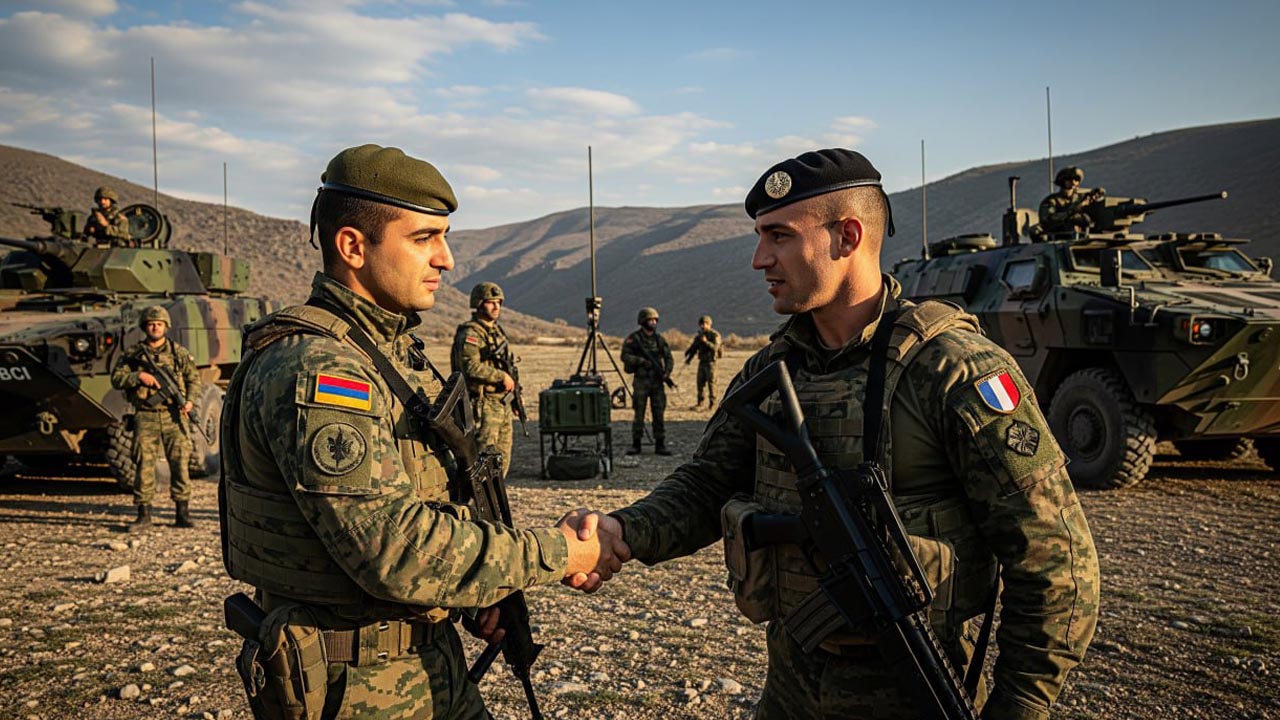
Armenia–France defense cooperation։ strategic realignment in the South Caucasus

Harutyunyan T.[1]
-
Introduction
The geopolitical landscape of the South Caucasus has undergone a profound transformation since the 2020 Artsakh war, reshaping Armenia’s security architecture, and strategic orientation. The country’s traditional reliance on Russia as its primary defense guarantor has become untenable, particularly due to Moscow’s preoccupation with the war in Ukraine and its shifting partnerships with Azerbaijan and Turkey. In this context, Armenia has sought new strategic partnerships to diversify its defense ties and enhance national security. Among these emerging relationships, France has assumed a prominent role, offering not only advanced military technologies but also diplomatic support in European and international institutions.
The Armenia–France defense partnership represents both a military and political recalibration of Yerevan’s foreign policy. Through arms acquisitions such as CAESAR self-propelled artillery systems[2], GM200 radar units[3], Mistral surface-to-air missiles[4], and Bastion armored vehicles[5], Armenia has initiated a gradual shift toward Western defense standards and operational interoperability with European systems. These transactions signify more than procurement – they demonstrate a shift toward defense modernization and strategic alignment with NATO-compatible partners.
Simultaneously, the broader geopolitical developments of 2024–2025 have added new layers of complexity to this partnership. The 12-day Iran–Israel war in 2025[6] has led Tehran to adopt a more restrained policy in the South Caucasus, weakening its previously assertive stance on maintaining the territorial status quo. In parallel, the US–Azerbaijan–Armenia “TRIPP corridor”[7] declaration has redefined Armenia’s regional role, providing Azerbaijan with a transit route to its exclave of Nakhijevan. While hailed by Western mediators as a step towards regional settlement, this agreement has raised serious concerns about Armenia’s loss of sovereign control over parts of its southern border, the potential weakening of its strategic leverage with Iran and India, and its exclusion from the North–South logistics corridor.
Within this shifting environment, France has positioned itself as Armenia’s most active European partner [1], combining defense cooperation with diplomatic advocacy in multilateral formats. Paris’s engagement – driven by both civilizational and strategic imperatives – aims to balance Turkish influence in the South Caucasus and reinforce France’s standing as a security actor beyond Europe’s immediate periphery. However, the nature of this cooperation also underscores Armenia’s growing dependency on external actors and the diminishing autonomy of its defense decision-making process. Although France has become Armenia’s most vocal European ally since 2022, the outcomes of this engagement have proven paradoxical – combining symbolic diplomatic support with limited strategic benefit on the ground.
This paper analyzes the evolution of Armenia–France military cooperation in light of these regional transformations. It explores how French defense support contributes to Armenia’s modernization efforts, assesses the geopolitical trade-offs of this partnership, and evaluates whether alignment with Western defense frameworks can sustainably enhance Armenia’s security amid mounting regional pressures.
2. Literature review
Research on Armenia’s defense strategy has traditionally emphasized its historical dependence on Russia and the collective security framework of the Collective Security Treaty Organization (CSTO) (National Security Strategy of the Republic of Armenia, 2020 [2]). The 2020 Artsakh War, however, exposed the limitations of this arrangement and triggered a reorientation of Armenia’s strategic partnerships. Analysts have since focused on how Armenia seeks to diversify its security relationships through cooperation with Western powers, particularly France, and emerging actors such as India [3], [4].
France’s evolving role in Armenian security
France’s role in Armenia’s defense posture has expanded from symbolic political support into tangible military cooperation. Historically, France was the only Western state to openly criticize Turkish involvement in the 2020 Artsakh conflict, advocating for a diplomatic resolution within the OSCE Minsk Group framework. Scholars and policy observers have underscored that this position established a foundation for subsequent defense engagement [5].
Recent analyses highlight the growing material dimension of the partnership. Reports confirm France’s supply of CAESAR 155mm self-propelled howitzers, GM200 radar systems, Mistral short-range air defense missiles, and Bastion armored vehicles to Armenia [6], [7], [8]. These procurements mark Armenia’s first significant acquisitions from a NATO member state and signify a clear strategic pivot away from post-Soviet defense dependence.
Strategic implications for defense transfers
According to security observers, the CAESAR and GM200 systems represent more than hardware transfers – they embody France’s intent to introduce NATO-compatible standards and operational interoperability to the Armenian Armed Forces. The precision strike capability and high mobility of CAESAR, proven in the war in Ukraine, provide Armenia with modern artillery effectiveness [9], while the GM200 radars significantly improve airspace monitoring and early warning capabilities. Such systems improve Armenia’s ability to detect, track, and respond to threats in a volatile security environment.
At the same time, analysts note that France’s assistance extends beyond technology transfers. Through defense training and maintenance programs facilitated by French defense contractors such as Thales[8], Safran[9], Arquus[10], and Nexter[11], Armenia gains access to Western operational doctrine and logistical standards. The 2024 defense-industry delegation from France to Yerevan – comprising representatives from MBDA[12], Nexter, Arquus, Safran, PGM[13], and Thales Group – further indicated the potential for industrial cooperation and technology localization [10].
Shifting regional context
Post-2024 developments have significantly altered the strategic calculus of Armenian–French defense cooperation. The Iran–Israel 12-Day war in 2025 weakened Tehran’s influence in the South Caucasus and curtailed its active balancing role, previously seen as vital for Armenia’s security posture [11]. Simultaneously, the “TRIPP corridor” agreement – brokered by the United States between Armenia, Azerbaijan, and Turkey – has raised concerns about Armenia’s diminishing control over its southern borders. This emerging reality underscores the paradox of Armenia’s defense diversification: while Western cooperation enhances its capabilities, geopolitical concessions constrain its sovereignty.
Scholars of small-state security have observed that such asymmetrical partnerships often provide short-term defense gains but risk long-term dependency [12]. Armenia’s reliance on France, a NATO member with global strategic obligations, may thus introduce vulnerabilities if Paris’s regional engagement fluctuates due to competing European or Middle Eastern priorities. In particular, we have already witnessed such a situation when, in 2022, Armenia recognized Artsakh as part of Azerbaijan in Prague, with French mediation [13].
Research gap
While policy reports and media analyses document the operational and technological dimensions of French arms deliveries, there remains limited scholarly assessment of how these transfers reshape Armenia’s defense doctrine, diplomatic positioning, and industrial capacity. Most existing analyses treat Armenia’s Western pivot as a reaction to Russian inaction during the 2020 war, but fewer studies explore how sustained cooperation with France might influence Armenia’s internal defense reforms or its broader foreign policy strategy.
This study attempts to fill this gap by combining available open-source data, policy reports, and defense publications to examine how French cooperation is impacting Armenia’s modernization trajectory and regional strategic balance.
3. Methods
This study employs a qualitative analytical approach[14], combining document analysis, secondary data review, and comparative assessment to evaluate the evolution and implications of Armenia’s defense cooperation with France. The methodological design prioritizes credibility, triangulation, and interpretative depth, enabling a comprehensive understanding of both the material and strategic dimensions of bilateral relations.
Data collection
Primary sources include official statements and press releases from the Armenian Ministry of Defence, the French Ministry for the Armed Forces, and the French defense industry consortiums Nexter, Thales, and Safran. Supplementary materials were gathered from verified defense news outlets, including Army Recognition, The Defense Post, and Politico, which provide detailed accounts of France’s arms transfers and industrial visits to Armenia.
Secondary data include academic studies and policy analyses from institutions such as the Carnegie Russia Eurasia Center, the Center for European Policy Analysis (CEPA), and the Davis Center for Russian and Eurasian Studies. These sources contextualize France’s engagement within the broader geopolitical reconfiguration of the South Caucasus. Additional relevant data were obtained from investigative media platforms (Hetq, CivilNet) to cross-verify procurement timelines, delivery phases, and statements from both French and Armenian defense officials.
Analytical framework
The research applies a thematic and comparative analysis to interpret the collected data. Themes were identified around three primary axes:
- Military-technical cooperation (procurement, training, and system integration).
- Industrial collaboration (technology transfer, defense-industry linkages, and local production prospects).
- Strategic and geopolitical implications (Armenia’s shifting alliances and regional positioning).
This structure allows for a nuanced examination of the bilateral relationship beyond simple arms trade, focusing on how defense cooperation influences Armenia’s autonomy, modernization efforts, and strategic posture. The study refrains from overemphasizing abstract theoretical frameworks, prioritizing instead the concrete outcomes of policy implementation and defense collaboration.
Integration of AI tools
For textual synthesis, refinement, and analytical coherence, this research utilized OpenAI’s GPT-5 (ScholarGPT) as a digital research assistant. The model was employed exclusively for data structuring, language refinement, and synthesis of verified open-source materials. All factual content and references were derived from publicly available, verifiable sources. The integration of AI aimed to enhance consistency, readability, and analytical clarity without influencing the interpretative conclusions of the study.
Reliability and source verification
To ensure data reliability, multiple forms of cross-verification were applied. Procurement details and system deliveries were corroborated across at least two independent sources before inclusion. Authoritative outlets such as Army Recognition, The Defense Post, and official ministerial releases were prioritized. Analytical reports were assessed based on institutional reputation and publication recency.
The qualitative methodology employed here thus balances depth and validity, situating Armenia–France military cooperation within the evolving regional dynamics of 2024–2025. It enables a multidimensional understanding of how material transfers, defense-industrial cooperation, and diplomatic engagement intersect to shape Armenia’s new security trajectory.
4. Results
The findings reveal that Armenia’s defense cooperation with France has become one of the most consequential aspects of its broader strategic realignment following the 2020 Artsakh War. This collaboration encompasses the modernization of Armenia’s armed forces, the development of defense-industrial cooperation, and the enhancement of operational readiness through Western-standard training and technology integration. Together, these elements represent a substantive move away from post-Soviet military dependency and toward a diversified security model that incorporates European expertise and systems.
4.1 Modernization of the Armed Forces
France’s contribution to Armenia’s defense modernization is visible across multiple operational domains.
According to several sources, France has provided CAESAR 155mm self-propelled howitzers, GM200 radar systems, Mistral short-range air defense missiles, and Bastion armored vehicles to Armenia. These acquisitions are pivotal to reshaping Armenia’s artillery and air defense capabilities.
The CAESAR artillery system, renowned for its accuracy, mobility, and NATO interoperability, represents Armenia’s first integration of a high-caliber Western platform. Its long-range precision strike capability provides a vital counterbalance to Azerbaijan’s drone and artillery advantage, demonstrated during the 2020 conflict [14]. Meanwhile, the GM200 radar enhances Armenia’s air surveillance network by detecting and tracking aircraft, drones, and low-altitude threats – an essential upgrade from the country’s Soviet-era radar systems [15].
The Mistral short-range surface-to-air missiles, developed by MBDA, contribute to Armenia’s layered air defense architecture, providing effective protection against drones and low-flying aircraft. Bastion armored vehicles, delivered in 2023, improve troop mobility and survivability in vulnerable frontlines.
Collectively, these systems have transformed Armenia’s battlefield awareness, responsiveness, and deterrence posture. They also represent a symbolic transition toward NATO-compatible standards and interoperability with Western systems – a major milestone in Armenia’s defense evolution.
These defense acquisitions, though strategically valuable, have unfolded alongside diplomatic processes mediated by France that have reduced Armenia’s bargaining power in the regional conflict. Thus, the modernization of Armenia’s armed forces has coincided with the erosion of its geopolitical leverage.
Table 1. Armenia–France Defense Cooperation: Systems Acquired or Under Negotiation (2020–2025)[15]
| System / Equipment | Type / Function | Manufacturer / Origin | Delivery / Status (as of 2025) | Operational / Strategic Impact |
| CAESAR 155mm Self-Propelled Howitzer | Long-range mobile artillery system | Nexter Systems (France) | First batch delivered in early 2024; additional units under production | Greatly enhances Armenia’s mobile artillery capability and precision fire support; aligns forces with NATO-standard artillery systems. |
| GM200 Medium-Range Radar | Air surveillance and target acquisition radar | Thales Group (France) | Delivered with CAESAR systems (2024); full integration expected by mid-2025 | Improves situational awareness, early warning, and coordination with short-range air-defense assets. |
| Mistral 3 Surface-to-Air Missile System | Short-range air-defense system | MBDA (France) |
Procurement agreement signed late 2023; deliveries expected by late 2025 | Strengthens low-altitude air-defense coverage; enhances deterrence against drone and helicopter incursions. |
| Bastion Armored Personnel Carrier (APC) | Protected mobility for infantry | Arquus Defense (France) | Initial batch of vehicles delivered in 2023; further orders under negotiation | Improves mobility and survivability of troops, particularly in border and mountainous regions. |
| Safran Optics and Night Vision Devices | Reconnaissance and targeting enhancement | Safran Electronics & Defense | Procurement ongoing (2024–2025) | Enhances night combat effectiveness and precision targeting for artillery and infantry units. |
| Thales Communication & Command Systems | Secure tactical communication network | Thales Group (France) | Negotiation phase (2024–2025) | Integrates command, control, and communication systems; enables coordinated multi-domain operations. |
| Training and Technical Assistance Programs | Officer training, maintenance, and interoperability | Ministry of Armed Forces of France; École de Guerre (Paris) | Ongoing since 2023 | Builds human capital and interoperability with European forces; critical for sustaining newly acquired systems. |
| Joint Industrial Cooperation Talks (MBDA, Nexter, Safran) | Technology transfer and co-production discussions | French defense consortiums | Active negotiation (2024–2025) | Aims to establish maintenance and assembly capabilities in Armenia; supports defense-industrial base development. |
4.2 Operational readiness and training
Beyond hardware, the Armenia–France defense partnership includes comprehensive training, logistics, and maintenance cooperation. French defense specialists have conducted workshops and tactical training programs for Armenian artillery and radar operators, focusing on the operation of CAESAR and GM200 systems. These initiatives have strengthened the professional capacity of the Armenian armed forces, promoting a shift toward modern command and control procedures and integrated defense management [16].
The collaboration also includes joint exercises and knowledge transfer involving personnel from both countries. Training activities emphasize situational awareness, advanced targeting, and mobile deployment – key elements of Western military doctrine. The exposure of Armenian officers to NATO-standard operating procedures has contributed to the gradual transformation of the Armenian military culture, moving it closer to the standards required for international interoperability.
4.3 Industrial and technological cooperation
Armenia’s defense-industrial sector has also benefited from its cooperation with France. In 2024, representatives from major French defense firms – MBDA, Nexter, Arquus, Safran, PGM, and Thales Group – visited Yerevan to explore opportunities for industrial collaboration. Discussions focused on technology transfer, joint ventures, and local production of selected components for radar, optics, and communications systems.
These initiatives aim to elevate Armenia’s military industry by fostering innovation, creating skilled jobs, and reducing long-term dependency on foreign imports. Cooperation with Thales and Safran in avionics and radar technology, in particular, could help Armenia develop its domestic defense electronics sector. While progress remains incremental, such partnerships lay the groundwork for Armenia to integrate into broader European defense supply chains.
However, the geopolitical environment complicates industrial cooperation. The U.S.-brokered “TRIPP corridor” declaration, which envisions a new transport route connecting Azerbaijan to Nakhijevan through southern Armenia [17], has reignited debates about Yerevan’s sovereignty and control over its borders. Some analysts argue that this agreement – though presented as a normalization measure – could weaken Armenia’s strategic leverage and make it more reliant on external actors for political guarantees. As a result, while French defense investments continue, they now operate within a more uncertain and politically constrained environment.
4.4 Geopolitical and strategic implications
The findings also underscore the broader geopolitical implications of French involvement. France’s engagement is motivated by both regional stabilization and strategic competition with Turkey. Paris has sought to balance Ankara’s influence in the South Caucasus by supporting Armenia diplomatically and materially. French President Emmanuel Macron’s consistent advocacy for Armenian sovereignty in international forums has further consolidated France’s role as Armenia’s principal European backer.
Nevertheless, the 2025 Iran–Israel conflict and the subsequent Iranian retrenchment in the South Caucasus have altered the regional equilibrium. With Tehran adopting a more cautious stance, Armenia has lost an important regional counterweight to Azerbaijani and Turkish pressure [18], [19], [20]. In this vacuum, France’s role has grown, but it also highlights the asymmetric nature of Armenia’s current partnerships – where external actors increasingly shape Yerevan’s security decisions.
From a structural perspective, Armenia’s alignment with France improves its defense capacity but simultaneously deepens its political dependence. The current phase of cooperation therefore demonstrates a dual outcome: short-term military strengthening coupled with long-term strategic vulnerability.
5. Discussion
The findings demonstrate that France’s engagement with Armenia has produced measurable advancements in the latter’s defense modernization, yet the partnership remains deeply conditioned by broader geopolitical realignments. The cooperation embodies both the opportunities and limitations of Armenia’s post-2020 search for strategic diversification – a process increasingly shaped by competing regional and global interests.
5.1 Modernization and strategic realignment
Armenia’s acquisition of CAESAR howitzers, GM200 radars, Mistral systems, and Bastion armored vehicles represents a qualitative leap in its defense capabilities. These systems provide Armenia with the tools for greater operational autonomy and deterrence capacity, particularly against low-intensity aerial and artillery threats from Azerbaijan. However, these upgrades also signify a strategic realignment that carries both military and political implications.
By embracing Western-standard systems, Armenia is embedding itself within a European defense ecosystem dominated by NATO technologies, procedures, and logistical dependencies. This modernization expands Armenia’s strategic options but simultaneously limits its room for maneuver vis-à-vis its traditional partners – especially Russia, which has historically framed Armenia’s security architecture. The resulting dual alignment dilemma[16] – between historical dependency and Western integration – defines the transitional nature of Armenia’s current defense policy.
Table 2. Armenia’s Military Capabilities: Pre-2020 vs. Post-2025 (Impact of France Cooperation)[17]
| Capability Area |
Pre-2020 (Before France Cooperation) | Post-2025 (With France Cooperation) | Strategic / Operational Impact |
| Artillery Systems |
Predominantly Soviet-era D-30, D-20, 2А36 Giatzint B, 2S3 Akatsiya and 2S1 Gvozdika systems with limited range and low mobility. | Integration of CAESAR 155mm self-propelled howitzers, offering 40+ km range, high mobility, and NATO-standard precision. | Modernized long-range firepower; enhanced counter-battery and precision-strike capability. |
| Air Defense | Predominantly outdated OSA-AKM, Igla, Strela-2 and Strela-10 systems; poor radar coverage and coordination. | Introduction of Mistral 3 SAM systems and GM200 radar networks, providing multi-layered short- and medium-range coverage. | Improved early warning, enhanced protection against drones and low-altitude threats. |
| Armored Mobility |
Reliance on aging Soviet BTR, BRDM and BMP vehicles with limited protection. | Delivery of Bastion APCs (Arquus) with improved armor, mobility, and digital communication integration. | Strengthened troop survivability and operational mobility in mountainous terrain. |
| C4ISR (Command, Control, Communications, Intelligence, Surveillance, Reconnaissance) | Fragmented and mostly analog systems with minimal integration across branches. | Adoption of Thales tactical communication systems and network-centric command modules (under negotiation). | Enhances coordination, reduces response time, and enables multi-domain situational awareness. |
| Training and Doctrine |
Soviet-style command structure; limited exposure to Western operational doctrines. | Expanded French-Armenian training programs for officers and NCOs, including tactical leadership and logistics courses. | Institutional shift toward flexible, mission-command approaches aligned with European standards. |
| Defense Industry Base |
Minimal indigenous capacity; heavy reliance on imports and Russian supply chains. | Negotiations with MBDA, Nexter, and Safran for local assembly and maintenance partnerships (2024–2025). | Gradual development of maintenance autonomy and potential industrial co-production. |
| Strategic Partnerships |
Sole reliance on Russia and CSTO mechanisms; declining military effectiveness post-2020 war. | Diversified partnership with France (EU/NATO member), deepening Western security engagement. | Strengthened diplomatic leverage in Europe; emerging pathway to Western defense integration. |
5.2 Diplomatic leverage and the limits of Western engagement
France’s involvement has given Armenia renewed diplomatic leverage within the European Union and international institutions. Paris’s advocacy has helped raise awareness of Armenia’s security vulnerabilities, positioning it as a small state deserving of Western support amid Turkish and Azerbaijani assertiveness. However, Western engagement remains constrained by political caution.
While France’s defense commitments are symbolically strong, they operate within Europe’s broader geopolitical priorities, including NATO’s commitments in Eastern Europe and France’s own focus on the Sahel and Indo-Pacific. Consequently, Armenia’s reliance on French military and diplomatic support risks creating expectations that exceed strategic reality. In the event of renewed escalation in the South Caucasus, France’s ability – or willingness – to intervene meaningfully remains uncertain. This limitation underscores the structural asymmetry of small-state alliances: material assistance may enhance deterrence, but it does not guarantee security guarantees.
5.3 Industrial cooperation and economic implications
The growing cooperation between French defense firms (such as Nexter, Safran, MBDA, and Thales) and Armenia represents a notable effort to strengthen Armenia’s defense-industrial base. These initiatives align with Armenia’s long-term objective of reducing import dependence and creating local maintenance and production capacity. However, the success of such ventures depends on sustained political stability and predictable regulatory environments – both of which have been complicated by the “TRIPP corridor” declaration and Armenia’s deepening political entanglements.
The “TRIPP corridor”, pre-signed in 2025 under U.S. mediation, provides Azerbaijan with overland access to Nakhijevan through Armenian territory. While intended as an infrastructure and trade project, it has profound strategic implications. Many Armenian analysts view it as a partial loss of territorial sovereignty, given that it restricts Armenia’s control over transit oversight and border management. This development diminishes Armenia’s strategic attractiveness as a logistical partner for countries like Iran and India, whose north-south trade ambitions had previously centered on Armenia as a neutral transit node.
From an economic standpoint, while France’s cooperation offers modernization benefits, Armenia’s geopolitical concessions may reduce its leverage in negotiating future defense or industrial deals. The nation risks becoming a recipient rather than a co-developer in international defense cooperation frameworks.
5.4 Regional power dynamics and strategic dependency
The 2025 Iran–Israel war fundamentally reshaped the South Caucasus’ balance of power. Iran’s cautious recalibration in its northern frontier diminished its active balancing role between Armenia and Azerbaijan. Previously, Tehran served as a quiet but critical guarantor of Armenia’s southern security corridor and a deterrent against Turkish-Azerbaijani overreach. With this restraint, Armenia faces an increasingly consolidated Azerbaijan–Turkey bloc[18], which is further emboldened by its cooperation with Pakistan and expanding ties with Central Asia.
Within this context, Armenia’s cooperation with France – though beneficial militarily –cannot alone offset the structural imbalance of power. Paris’s engagement does not constitute a defense alliance but rather a limited partnership focused on modernization and deterrence. As a result, Armenia’s security remains vulnerable to regional pressures, especially as Russia’s influence continues to wane and Western powers hesitate to assume long-term strategic responsibility in the Caucasus.
5.5 The shift from military to political containment
The broader trajectory of Armenian foreign policy suggests a transition from military-political containment to a model of political containment. Yerevan’s increasing reliance on diplomatic normalization – particularly with Azerbaijan and Turkey under U.S. mediation – reflects an attempt to reduce security risks through political agreements rather than sustained military deterrence. While this strategy aligns with Western conflict management principles, it also undermines Armenia’s bargaining power.
If military partnerships like those with France are not reinforced by a coherent national defense doctrine and regional strategy, Armenia risks institutionalizing dependency and losing strategic agency. The combination of external mediation, declining regional leverage, and overreliance on Western political sponsorship may inadvertently weaken Armenia’s sovereignty – the very goal its defense diversification sought to protect.
5.6 Balancing security and sovereignty
The findings ultimately reveal a complex duality: Armenia’s cooperation with France enhances its short-term defense resilience but simultaneously exposes structural vulnerabilities in its foreign-policy autonomy. The modernization of its forces, though tangible, remains contingent upon sustained political will and financial capacity. Armenia’s challenge now lies in translating external support into institutional self-reliance.
As the regional environment becomes increasingly multipolar, Armenia’s strategy of selective Western alignment must balance security benefits against sovereignty costs. Failure to do so may result in a paradox where modernization strengthens capabilities but erodes independent policymaking – a scenario that reflects patterns of dependency that Armenia should strive to avoid.
6. Conclusion
Armenia’s growing defense cooperation with France marks one of the most significant developments in the country’s post-2020 security policy. It reflects both a deliberate strategic diversification and a profound structural shift in Armenia’s approach to national defense. The transition away from near-exclusive dependence on Russia toward engagement with a NATO-aligned European partner underscores Yerevan’s attempt to regain agency in an increasingly complex and hostile regional environment. Yet, as the findings demonstrate, this cooperation – while strengthening Armenia’s defense capabilities – also deepens certain forms of political and strategic dependence that constrain the country’s long-term sovereignty.
The material and operational benefits of the partnership are substantial. The acquisition of CAESAR self-propelled artillery systems, GM200 radar networks, Mistral short-range air-defense missiles, and Bastion armored vehicles has significantly enhanced Armenia’s deterrence potential. These systems, equipped with advanced targeting, mobility, and reconnaissance features, allow the Armenian Armed Forces to better counter aerial and ground threats, particularly in the mountainous and contested border regions. The integration of Western-standard artillery and radar systems also represents a major step toward the modernization and professionalization of Armenia’s defense forces. By incorporating NATO-compatible platforms, Armenia is gradually adapting its operational doctrine and command structures to match international standards of efficiency and interoperability.
Beyond procurement, France’s involvement in training and capacity-building has expanded Armenia’s human capital and operational sophistication. Through military education programs, technical workshops, and logistical cooperation, French specialists have introduced Armenian personnel to Western maintenance, targeting, and operational doctrines. These initiatives are critical for improving readiness, sustaining long-term functionality of complex systems, and reducing Armenia’s traditional dependence on foreign contractors for technical support.
From an industrial and technological perspective, the Armenian–French relationship represents a crucial step toward defense-industrial revival. The 2024 visits by representatives from MBDA, Nexter, Arquus, Safran, PGM, and Thales Group to Yerevan opened channels for potential joint production, component assembly, and technology transfer. These interactions symbolize an effort to embed Armenia within a broader European defense supply network. Even limited co-production of sensors, communication devices, or spare parts could provide an economic multiplier effect, fostering job creation, innovation, and greater industrial self-reliance.
However, these opportunities exist alongside significant geopolitical constraints that shape the partnership’s sustainability. The 2025 “TRIPP corridor” declaration, mediated by the United States and signed in principle by Armenia, Azerbaijan, and Turkey, illustrates how geopolitical concessions can undermine strategic autonomy. By granting Azerbaijan transit access to Nakhijevan through Armenian territory, the agreement effectively limits Yerevan’s control over its southern border – a crucial geopolitical asset. While the corridor is officially framed as an economic normalization project, its strategic implications are profound: it diminishes Armenia’s role as a logistical hub in the India–Iran–Europe North-South Transport Corridor[19], thereby reducing its attractiveness to key partners like India and Iran.
The 12-day Iran–Israel war of 2025 further complicates this reality. Iran’s subsequent retrenchment from active regional engagement has deprived Armenia of a critical strategic counterbalance. For decades, Tehran served as a stabilizing force, quietly deterring Turkish and Azerbaijani overreach in the South Caucasus. Its new caution – driven by internal constraints and a desire to avoid confrontation – has effectively left Armenia more exposed. In this vacuum, France’s role has expanded, but it is largely symbolic and geographically limited. Paris’s capacity to provide sustained military support in a crisis is inherently constrained by distance, competing strategic priorities, and the lack of a physical presence in the region.
This combination of structural dependency and geographic asymmetry poses a paradox for Armenia’s defense diversification strategy. On one hand, cooperation with France provides a credible path toward modernization and deterrence. On the other, it reinforces Armenia’s reliance on external actors whose regional interests may not always align with Yerevan’s immediate security needs. Unlike a mutual defense treaty or alliance structure, the current framework of Armenia–France cooperation is transactional and modular-focused on procurement, training, and symbolic diplomacy rather than shared security guarantees.
Armenia’s shift toward Western partners, including France, also raises questions about strategic sustainability. While the partnership improves military readiness, it does not fundamentally alter the regional balance of power, which remains tilted in favor of the Azerbaijan–Turkey bloc. France’s support enhances Armenia’s tactical resilience but cannot fully offset its geopolitical isolation or its loss of regional allies. Moreover, Yerevan’s simultaneous engagement in U.S.-mediated normalization with Azerbaijan and Turkey introduces strategic ambiguity, blurring the distinction between deterrence and accommodation.
The data also point to a conceptual transformation in Armenia’s foreign and security policy – from military-political containment to political containment. Whereas previous strategies emphasized deterrence through military buildup and alliance dependence, the new approach relies increasingly on diplomatic normalization and international mediation to manage existential threats. This shift aligns with Western conflict-resolution models but risks undermining Armenia’s capacity for self-defense. Political containment may temporarily reduce tensions but also entrenches vulnerabilities by limiting deterrence options and diluting strategic clarity.
In this new framework, Armenia’s cooperation with France should be viewed as both a pragmatic adaptation and a strategic gamble. It diversifies Armenia’s defense ecosystem and provides access to high-end military technology, but it also deepens external dependency and erodes the autonomy of national security decision-making. Unless supported by domestic institutional reform, local production capacity, and a coherent national defense doctrine, external assistance alone cannot secure long-term stability.
Ultimately, the Armenia–France partnership embodies the tension between modernization and sovereignty that defines the post-war South Caucasus. It reflects a small state’s struggle to navigate between powerful regional actors – Russia, Turkey, Iran – and external patrons like France and the United States. For Armenia, success will depend on its ability to translate material assistance into enduring institutional capacity and to align its foreign policy with a clear, long-term vision for sovereignty.
If managed wisely, cooperation with France could serve as a cornerstone for a more resilient and professional defense sector, fostering integration with European security structures and promoting industrial growth. However, if pursued without a comprehensive national strategy, it risks becoming another episode of externally driven dependency – a condition that modernization alone cannot resolve.
Armenia’s challenge, therefore, is not merely to secure weapons or allies, but to achieve strategic balance: a synthesis of defense modernization, diplomatic autonomy, and economic resilience. Only such a multidimensional approach can transform Armenia’s relationship with France from a reactive alignment into a sustainable partnership that reinforces – not replaces – its sovereignty.
7. References
[1] B. Leon, SJ Rzegocki, 2024. “Can France Rescue Armenia From its Security Isolation?” CEPA, 01.07.2024, https://cepa.org/article/can-france-rescue-armenia-from-its-security-isolation/
[2] National Security Strategy of the Republic of Armenia, 2020. https://www.mfa.am/filemanager/security%20and%20defense/Armenia%202020%20National%20Security%20Strategy.pdf
[3] Kucera J, 2024. “Russian Military Base in Armenia: An Eye of Geopolitical Storm”. Davis Center, Harvard University, 29.03.2024, https://daviscenter.fas.harvard.edu/insights/russian-military-base-armenia-eye-geopolitical-storm
[4] Harutyunyan T., 2025. “Armenia–India military cooperation: emerging strategic partnerships in a shifting geopolitical landscape”. ARVAK Armenian analytical center, 11.11.2025, https://arvak.am/en/armenia-india-military-cooperation-emerging-strategic-partnerships-in-a-shifting-geopolitical-landscape/
[5] Sayadyan L, 2024. “French Defense Minister Lecornu to Armenia for Talks”. Hetq, 22.02.2024, https://hetq.am/en/article/164499
[6] “What weapons have Armenia and Azerbaijan bought since the 2020 war?” Civilnet, 01.04.2024, https://www.civilnet.am/en/news/770063/what-weapons-have-armenia-and-azerbaijan-bought-since-the-2020-war/
[7] Bisht IS, 2024. “Armenia Signs 36 Caesar Cannon Deal With France”. The Defense Post, 26.06.2024, https://thedefensepost.com/2024/06/26/armenia-caesar-cannon-france/
[8] Iddon P, 2025. “Armenia Slams ‘Scrap Metal’ Air Defense As Azerbaijan Shows New System”. Forbes, 13.11.2025, https://www.forbes.com/sites/pauliddon/2025/11/13/armenia-slams-scrap-metal-air-defense-as-azerbaijan-shows-new-system/
[9] Ruitenberg R, 2025. “In rain and mud, French artillery unit shows lessons from Ukraine war”. Defense News, 31.10.2025, https://www.defensenews.com/global/europe/2025/10/31/in-rain-and-mud-french-artillery-unit-shows-lessons-from-ukraine-war/
[10] Kayali L, Gavin G, 2024. “France plants flag in Russia’s backyard with Armenia arms deals”. Politico, 23.02.2024, https://www.politico.eu/article/france-seeks-to-up-ante-in-former-soviet-union-with-new-weapons-for-armenia/
[11] Keynoush B, 2025. “Shifting Power Dynamics in the South Caucasus: Iran’s Uncertain Future in the Region”. Gulf International Forum, 19.09.2025, https://gulfif.org/shifting-power-dynamics-in-the-south-caucasus-irans-uncertain-future-in-the-region/
[12] Oma IM, Petersson M, 2019. “Exploring the role of dependence in influencing small states’ alliance contributions: A reputation mechanism argument and assessment”. European Security, Volume 28, 2019 – Issue, Pages 105-126, https://doi.org/10.1080/09662839.2019.1589455
[13] Dovich M, 2022. “Armenia, Azerbaijan to recognize each other’s territorial integrity”. CivilNet, 07.10.2022, https://www.civilnet.am/en/news/678126/armenia-azerbaijan-to-recognize-each-others-territorial-integrity/
[14] Army Recognition Group. “Armenia Buys CAESAR Cannons from France at Eurosatory 2024”. 27.08.2025, https://www.armyrecognition.com/archives/archives-land-defense/land-defense-2024/armenia-buys-caesar-cannons-from-france-at-eurosatory-2024
[15] Army Recognition Group. “Armenia buys three Thales Ground Master 200 radar systems”, 24.10.2023, https://www.armyrecognition.com/archives/archives-land-defense/land-defense-2023/armenia-buys-three-ground-master-200-radar-systems-from-france
[16] ARKA, 2024. “Armenia and France sign defence cooperation programme for 2025”, 11.12.2024, https://arka.am/en/news/politics/armenia-and-france-sign-defence-cooperation-programme-for-2025/
[17] Wani A, 2025. “Trump’s Geopolitical Gambit in the South Caucasus”. Observer Research Foundation, 19.08.2025, https://www.orfonline.org/expert-speak/trump-s-geopolitical-gambit-in-the-south-caucasus#:~:text=A%20US%2Dbrokered%20peace%20deal%20between%20Armenia%20and,redefining%20South%20Caucasus%20geopolitics%20and%20great%20power
[18] Yackley AJ, 2020. “Turkey takes assertive role in Caucasus conflict”. Eurasianet, 16.09.2020, https://eurasianet.org/turkey-takes-assertive-role-in-caucasus-conflict
[19] Beilinson O, 2019. “Turkish-Azerbaijani Relations. One Nation – Two States?” Südosteuropa. Journal of Politics and Society, 67(1):137-139, https://doi.org/10.1515/soeu-2019-0009
[20] Natiqqizi U, 2021. “In Karabakh, Turkish and Azerbaijani leaders cement alliance”. Eurasianet, 16.06.2021, https://eurasianet.org/in-karabakh-turkish-and-azerbaijani-leaders-cement-alliance
[1] PhD, worked at the “Noravank” Foundation as a Deputy Director; at the Public Administration Academy of Armenia as a Head of the Center for the Regional Studies; researcher at the Institute for Armenian Studies (Yerevan State University), and at the “Enterprise Incubator Foundation” as a Program Coordinator. Specialized in science and higher education management and regional security issues.
[2] The CAESAR (CAmion Équipé d’un Système d’ARtillerie, or “Truck equipped with an artillery system”) is a French-made, 155mm 52-caliber self-propelled howitzer that combines high mobility, long-range precision, and rapid deployment capabilities.
[3] The Thales Ground Master 200 (GM200) is a family of highly mobile, multi-mission, medium-range ground-based radars. It uses advanced 4D Active Electronically Scanned Array (AESA) technology to detect and track a wide spectrum of aerial and surface threats simultaneously.
[4] The Mistral is a family of French-made, very short-range surface-to-air missiles (VSHORAD) that use an infrared homing “fire-and-forget” guidance system. It is a versatile weapon system that can be deployed from man-portable launchers, vehicles, ships, and helicopters.
[5] The Bastion is a French-designed, 4×4, multi-role armored vehicle developed by Arquus (formerly ACMAT and Renault Trucks Defense) and also manufactured in the United States by AM General. It is a modular platform known for its ruggedness, high mobility, and mine-resistant features, used for missions such as peacekeeping, reconnaissance, and troop transport.
[6] The Iran–Israel war of June 2025, also known as the 12-Day War, has concluded with a fragile ceasefire, but tensions remain extremely high, and a renewal of conflict is possible. The war began on June 13 and ended on June 24, 2025, under U.S. pressure.
[7] The “TRIPP corridor” (short for “Trump Route for International Peace and Prosperity”), is a U.S.-brokered transport route designed to connect mainland Azerbaijan to its Nakhijevan exclave through the Syunik Marz of southern Armenia.
[8] Thales Group is a major French multinational industrial group that specializes in the design and manufacture of information systems, and provides services for the aerospace, defense, and digital security industries.
[9] Safran S.A. is a major French multinational corporation specializing in high technology within the aerospace and defense industries, as well as security systems. The company designs and manufactures aircraft and rocket engines, aircraft equipment and interiors, and various types of defense and space equipment.
[10] Arquus is a French defense company and a European leader in land mobility solutions, specializing in the design, manufacture, and support of armored vehicles and military trucks. The company was formed in 2018 from the merger of Renault Trucks Defense (RTD), Acmat, and Panhard, combining their century of expertise.
[11] Nexter (officially renamed KNDS France in 2024) is a leading French defense company specializing in the design, manufacture, and support of a wide range of land weapon systems, armored vehicles, artillery systems, and ammunition. The company is part of the Franco-German defense holding group KNDS (KMW+Nexter Defense Systems).
[12] MBDA (Matra BAE Dynamics Aérospatiale) is a leading European defense group specializing in the design, manufacture, and support of a wide range of missile systems and guided weapons for all three branches of the armed forces: ground forces, the navy, and the air force.
[13] PGM Précision is a renowned French private company that has specialized since 1991 in the design and manufacture of high-precision, long-range sniper rifles and accessories for military, law enforcement, and sport shooters.
[14] A qualitative analytical approach is a research method for exploring non-numerical data (like interviews, texts, observations) to find underlying meanings, patterns, and themes, focusing on depth and context rather than statistics, using techniques such as Thematic Analysis, Content Analysis, Grounded Theory, or Narrative Analysis to interpret experiences and social phenomena, often involving coding, categorizing, and interpreting data to build rich, insightful understanding.
[15] Table 1 presents Armenia’s defense acquisitions from India (2020–2025), highlighting the type, origin, delivery timeline, strategic purpose, and tactical impact of each system. The data draws from SIPRI, The Defense Post, Army Recognition Group, CIVILNET, and other open sources.
[16] In political science and international relations, the dual alignment dilemma (often discussed in 2025 as the asymmetric alignment dilemma) refers to the precarious strategic balance a state must maintain when caught between two opposing powers or competing interests.
[17] Table 2 compares Armenia’s military capabilities before 2020 (pre–Artsakh war) and after(following cooperation with France), highlighting measurable modernization outcomes. The data synthesizes information from Army Recognition Group, The Defense Post, CEPA, Hetq, and other open sources.
[18] Azerbaijan and Turkey have a robust and multifaceted strategic alliance that is functionally equivalent to a military bloc, formalized by the 2021 Shusha Declaration. While not a traditional “bloc” in the style of the Warsaw Pact or NATO’s formal structure, the relationship is often described as “one nation, two states” and provides comprehensive military and diplomatic cooperation.
[19] The International North-South Transport Corridor (INSTC) is a 7,200-kilometer multimodal network of sea, rail, and road routes connecting India, Iran, Russia, Europe, and Central Asia. The primary goal is to enhance trade connectivity, significantly reduce transport costs (by an estimated 30%) and delivery times (from 45-60 days via the Suez Canal to 20-25 days).