
Publication
The Middle East: U.S. military capabilities and military-technical cooperation of IRI with RF, and PRC

ARVAK Center comment, November 17, 2026 [1]
1. U.S. military presence and force concentration in the region
In recent months, the United States has sent contradictory political signals, speaking both of the possibility of reaching a consensus through the U.S.-Iranian negotiating process and of the conditions for an inevitable military conflict. At the same time, the U.S. Department of War has been systematically building up its military grouping in the Middle East. Experts analyzing developments concerning Iran take the parties’ official statements into account; however, the key indicator of the likelihood of escalation is the objective data on the scale of the concentration of U.S. military assets and the maneuvers being conducted. This approach makes it possible to assess the level of military threat more accurately and determine whether the deployment of forces is an instrument of strategic pressure on Tehran and its allies, or whether the diplomatic activity of the White House and the State Department is serving as cover for preparations for hostilities.
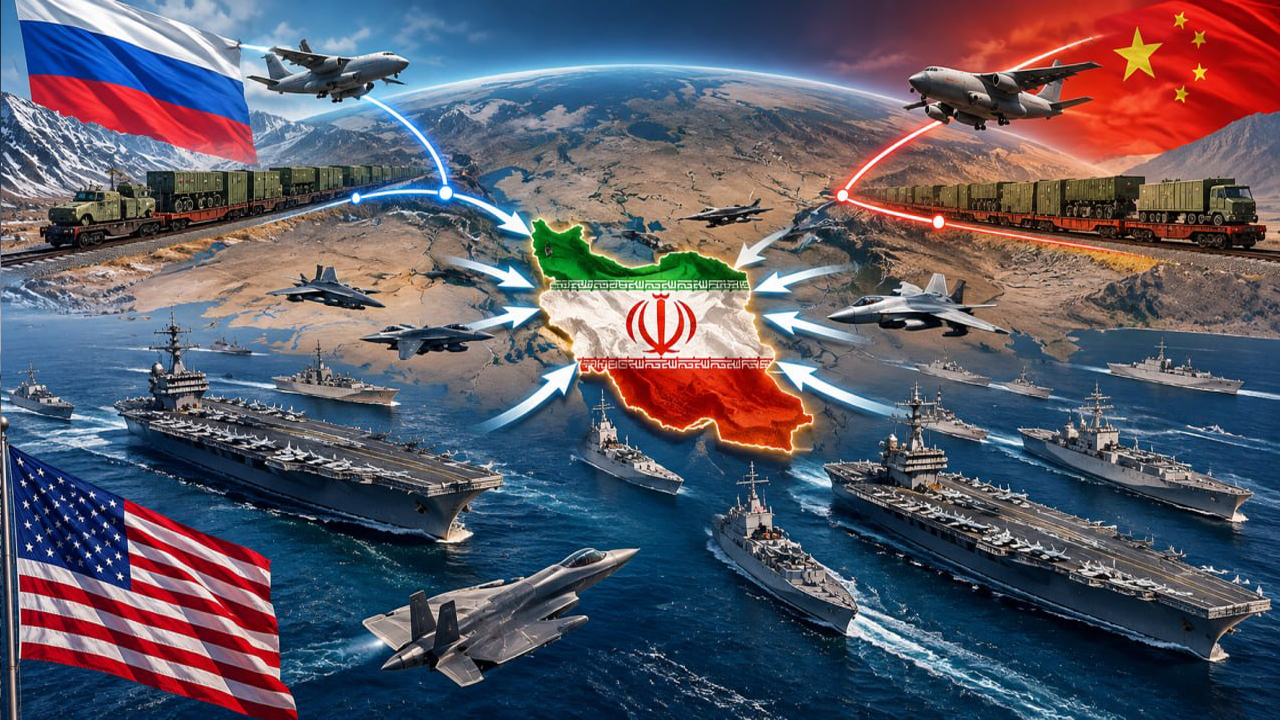
According to assessments, the current U.S. military deployment in the Middle East is the largest since Operation Iraqi Freedom in 2003. Open-source information indicates that a naval strike force comprising 5 carrier strike groups is being assembled in the Arabian Sea and the northwestern Indian Ocean: USS Abraham Lincoln, USS Gerald R. Ford, USS George H.W. Bush, USS George Washington, and USS Theodore Roosevelt. The last of these carriers is being redeployed to the potential conflict zone from the Philippine Sea, where it took part in the joint U.S.-Japanese “Keen Sword” exercises in October–November 2026.
According to U.S. sources, the carrier groups are accompanied by numerous escort and amphibious-assault vessels, including Arleigh Burke-class destroyers (in particular, Delbert D. Black, McFaul, and Mitscher), amphibious assault ships (including Makin Island and USS Tripoli), littoral combat ships, and the nuclear-powered submarine USS Georgia, equipped with cruise missiles. Exact figures for the total number of vessels in the grouping are not publicly available. However, based on the standard reinforcement configuration for each carrier group ahead of actual combat operations, the force may comprise at least 45-50 combat ships, excluding the carriers themselves.
Available information on the concentration of U.S. air power is more comprehensive and detailed. Nevertheless, it is not possible to establish the exact size of the air grouping. This is due to the constant rotation of combat units and support aircraft, as well as their regular redeployment among bases near the presumed theater of military operations.
By the end of September 2026, the U.S. Central Command (CENTCOM) had deployed a force of more than 200 fighter aircraft (including F-35s, F-15Es, F-16s, F/A-18s, and EA-18Gs), as well as 30 A-10 attack aircraft, at key Middle Eastern bases – primarily in Israel, Jordan, Saudi Arabia, and the United Arab Emirates. In addition, more than 110 carrier-based fighters, including F/A-18s and F-35s, were on combat duty in the Arabian Sea, southeast of Iran, as part of a naval group comprising 2 aircraft carriers and a large amphibious assault ship. This information is corroborated by the aviation portal Itamilradar and the British monitoring resource Military Air Tracking Alliance (MATA).
Experts regard the mass redeployment of support aircraft to the Middle East, the eastern Mediterranean, and the Indian Ocean area recorded toward the end of October as a key indicator of U.S. intentions to initiate a new phase of escalation. Aircraft arriving in the region – primarily from the U.S. and Europe, as well as from bases in the British Dominions – included EA-18G Growler electronic warfare aircraft, E-2D Advanced Hawkeye airborne early-warning aircraft, MH-60 Seahawk helicopters, and V-22 Osprey tiltrotors. The supply and maintenance of the U.S. force being deployed are supported by the intensive use of C-17 Globemaster III and C-5M Super Galaxy military transport aircraft, although their exact numbers have not been disclosed because their basing locations and logistical flights are difficult to track.
Among the aircraft involved, particular attention should be paid to U.S. Air Force KC-135 Stratotanker aerial refueling aircraft. So far, their presence has been recorded only in Israel. According to satellite-monitoring data published by MATA, by early November the United States had deployed at least 40 tankers at key Israeli air bases – Ramon (in the Negev Desert), Ovda (in the south), and Ben Gurion (near Tel Aviv). The scale of deployment of this type of support aircraft on the territory of a Middle Eastern ally is unprecedented in U.S. practice. From a technical standpoint, this creates the conditions for continuous in-flight refueling of dozens of strategic fighters conducting combat missions around the clock.
A synthesis of open-source data suggests that the U.S. strike capability assembled for possible operations against Iran already includes approximately 450 fighter and attack aircraft (around 50% of them deployed aboard aircraft carriers). The U.S. Air Force is additionally committing at least 100 support aircraft of various types.
As for air-defense assets, a significant share of the tasks involved in strengthening the air-defense shield in the Middle Eastern theater of operations is assigned to carrier-based aviation and shipborne air-defense systems incorporated into the carrier groups. Their primary function is to intercept in a timely manner critically dangerous airborne weapons capable of inflicting strategic damage on U.S. and allied ground facilities.
A comprehensive picture is difficult to establish because there is no publicly available information on the degree of integration or the parameters governing the interaction of U.S. air- and missile-defense systems with the infrastructure of regional partners. The consequences of the military escalation in the spring of this year have become an additional destabilizing factor: Iranian strikes disabled a significant portion of U.S. air-defense assets, necessitating the emergency reorganization of the resources that remained operational. The strict secrecy imposed by the Pentagon regarding these measures substantially limits experts’ ability to assess objectively the qualitative and quantitative characteristics of the air- and missile-defense grouping in the context of a possible new escalation.
The most detailed and verifiable information concerns the deployment of the U.S. ground component and airborne units. According to confirmed CENTCOM information and data from analysts at The Wall Street Journal, the number of U.S. personnel in the Middle East exceeded 40,000 by early autumn. As tensions surrounding Iran mounted, the U.S. command decided to reinforce the grouping further, sending an additional 9,000–10,000 troops to the region.
The core of these reinforcements consists of naval personnel and Marine Corps units from the USS Theodore Roosevelt carrier strike group. In late September, the group departed the naval base in San Diego to conduct the “Keen Sword” maneuvers with the Japanese Navy, after which it proceeded to the Arabian Sea. The expeditionary force included the USS Makin Island Amphibious Ready Group (ARG), transporting the 13th Marine Expeditionary Unit (with up to 2,200 personnel), equipped with F-35B Lightning II short-takeoff/vertical-landing fighters, AH-1Z Viper attack helicopters, and amphibious landing craft.
The integration of the arriving forces with the 8,000-strong ground and amphibious contingent already deployed in the Middle East is intended to form the strike core of the ground forces. It could be used in a scenario involving a limited military operation against the IRI’s strategic facilities. Citing confidential sources, The Wall Street Journal and The Washington Post reported that the planned actions could include helicopter landings on key islands in the Strait of Hormuz (primarily Qeshm Island), as well as a special operation to seize and remove from the country approximately 450 kg of Iranian enriched uranium.
The remainder of the U.S. military presence in the region (estimated at 40,000–50,000 personnel) consists of ship crews, pilots, air-defense crews, military instructors, communications units, technical specialists, and facility-security personnel. This contingent is stationed at military bases in Israel, Jordan, Saudi Arabia, the UAE, Bahrain, and Qatar, as well as aboard ships in the Persian Gulf and adjacent maritime areas.
It should be emphasized that the assessment presented in this review covers only the U.S. armed forces and does not include the capabilities of Washington’s regional allies. This applies above all to Israel, whose military resources could substantially reinforce the U.S. strike grouping. At the same time, the direct integration of the full capabilities of the Israeli forces – especially its fighter aircraft – into the U.S. grouping in the event of a military operation does not appear certain. The scale and nature of Israeli military involvement in a new campaign will depend on a number of factors, the most important of which are the Pentagon’s strategic concept and the decision whether or not to employ a ground component.
The scale and nature of the concentration of U.S. forces in the region, even without taking the Israeli factor into account, provide experts with substantial grounds for viewing these developments as direct preparations for a large-scale military conflict. The force assembled is broadly comparable to the power required to breach Iran’s defensive lines (an assessment of whose capabilities requires separate consideration). Accordingly, most analysts agree that Washington is not merely demonstrating its strength to pressure Tehran but is also preparing to use it in practice. A number of indirect signs support this conclusion, above all the steady steps taken by the United States to isolate Iran’s borders as much as possible, with the aim of worsening the IRI’s economic crisis and blocking military supplies from Iran’s key partners – Moscow and Beijing.
2. Military-technical cooperation between Iran and Russia
In this context, particular attention is drawn to reports that, in early November, the U.S. Central Command established a specialized operational task force called “Iron Gate”. Its main mission is to disrupt channels supplying Tehran with modern weapons, dual-use materials, and products subject to international sanctions. The task force operates in coordination with U.S. military intelligence and other intelligence agencies, focusing on monitoring logistics routes and cargo flows passing through the Caspian Sea and across the IRI’s land borders. In announcing the initiative, U.S. defense officials specifically highlighted the transportation of military goods from Russia. However, no detailed information was provided about the types of cargo, specific logistics arrangements, or countermeasures being employed.
According to analysts specializing in this field, the key functions of “Iron Gate” are to collect, systematize, and analyze intelligence on supply channels and subsequently transmit it to the U.S. Air Force command in the Middle East, enabling precision strikes against identified transport routes. All key aspects of coordinating these operations are assigned to the task force’s headquarters in Tampa, Florida.
At the same time, U.S. media, citing informed sources in the Pentagon and the U.S. intelligence community, report that Moscow’s military support for Tehran has reached an unprecedented scale in recent months. The range of supplies is broad, encompassing explosives (primarily trinitrotoluene), unmanned aerial vehicles, man-portable air-defense systems, and components for rockets. Analysts, however, question the effectiveness of the “Iron Gate” program in countering forms of Russian military assistance that do not involve direct material deliveries but nevertheless pose the greatest threat to Washington’s interests. Contrary to Donald Trump’s assurances in October that he had no grievances against Moscow because it was allegedly not providing Tehran with intelligence, Western media sources insist otherwise. In particular, the Financial Times, citing informed sources in the U.S. Department of War, reports that Iran is regularly supplied with “satellite imagery and operational intelligence data to coordinate attacks on U.S. and partner bases and facilities in the Middle East”.
According to expert assessments, it is currently not possible to halt this kind of cooperation or force Moscow to abandon joint projects with Tehran, based on Iran’s defense industry, to develop modern high-tech weapons. According to The Insider, since 2023 specialists from “Rosoboronexport”, together with Iranian engineers, have been implementing a classified project codenamed “C430L”, aimed at developing ramjet engines and supersonic cruise missiles. The U.S. Department of Defense emphasizes that the main focus of the involvement of Russian designers is the development of coastal-defense systems, which poses a direct strategic threat to U.S. forces, particularly its carrier strike groups. Western experts assess that the “C430L” project has already yielded significant results. This is also indicated by statements from Iran’s senior military command that the U.S. Navy is vulnerable and unable to maneuver freely near the Iranian coast.
Thus, U.S. analysts conclude that although Russia is unable to supply Iran with strategic weapons (for example, deliveries of S-400 air-defense systems have been postponed because Moscow needs these systems to counter Ukrainian missiles), it retains complete freedom of action in transferring intelligence, military technologies, and tactical weapons. This creates serious challenges for the United States; contrary to D. Trump’s optimistic statements in October, Russian assistance to Iran is unlikely to be neutralized through diplomacy alone without direct political dialogue with Moscow. This issue, however, falls outside the scope of the present analysis and requires separate study.
3. Military-technical cooperation between Iran and China
A similar situation can be observed with regard to Beijing’s alleged military assistance to Tehran. Chinese officials regularly issue denials, categorically ruling out the provision of any military assistance to Iran. Washington and Tel Aviv, however, take a different view.
The Israeli leadership points to China’s possible role in restoring Iran’s ballistic-missile production program following the summer 2025 military campaign. In particular, Israel’s ambassador to the United States, Yechiel Leiter, stated in an interview with Voice of America, citing national intelligence data, that Beijing had increased maritime shipments of chemical components for rocket fuel after the 12-day war. This is corroborated by Pentagon information about U.S. patrol ships intercepting vessels in the Arabian Sea carrying Chinese-origin Sodium perchlorate and Dioctyl sebacate (DOS). Despite the ongoing naval blockade of Iranian ports, China did not halt shipments of these substances after the 40-day military campaign of 2026 either. In addition to chemicals used in the synthesis of solid propellant, the U.S. Navy tracked and intercepted Chinese merchant vessels carrying components for precision-guided weapons, including gyroscopes, spectrometers, and CNC machine tools.
According to U.S. intelligence, Beijing is making continuous efforts to circumvent the naval blockade of Iran. To this end, certain categories of dual-use goods prohibited by the United States are delivered through African ports aboard vessels sailing under the flags of third countries. For a long time, overland transit through Pakistan was also actively used for similar logistical purposes. Apparently, this factor was what compelled Islamabad, under strong pressure from Washington, to temporarily close its border with the IRI in mid-October 2026 and, after reopening it at the end of the month, introduce a special procedure for inspecting and clearing cargo.
In addition, U.S. administration officials regularly point out that China’s assistance is not limited to supplies of chemical reagents and components for weapons systems. According to U.S. officials, Beijing is supplying Tehran with finished products from its own defense-industrial complex. In particular, in the spring of this year, Donald Trump claimed that on 3 April 2026, a U.S. Air Force F-15E Strike Eagle fighter had been shot down near Isfahan using a Chinese-made man-portable air-defense system with an infrared homing system.
Nevertheless, the main concern in Washington regarding military cooperation between Beijing and Tehran remains the provision of satellite intelligence data needed to guide Iranian missiles toward U.S. facilities. According to CNN sources in the U.S. intelligence community, the high accuracy of Iranian missile and drone strikes against U.S. ships and military bases in the Persian Gulf region is directly attributable to Chinese assistance. In particular, intelligence data provided by Beijing played a decisive role in the attack on a U.S. base in Jordan in July, in which three U.S. service members were killed.
In May 2026, the United States imposed sanctions on 3 Chinese satellite operators allegedly involved in transferring real-time information to Iran. Although, during their September meeting, Chinese leader Xi Jinping assured Donald Trump that Beijing was not involved in actions against U.S. interests, and the U.S. president expressed confidence in the Chinese chief decision-maker’s position, U.S. intelligence agencies continue to maintain the opposite. According to their assessments, PRC retains extensive technical capabilities to conduct intelligence operations in support of Tehran while circumventing the restrictions in place.
As an example, U.S. analysts point to the maneuvers of the Chinese oceanographic vessel “Da Yang Yi Hao” (also known as “Ocean One”) during the 2025–2026 campaigns, when it reportedly carried out tasks involving the collection and processing of data on the movements of U.S. Navy ships. In addition, the presence in the conflict zone of the specialized Chinese Navy intelligence ship “Liaowang-1” has been recorded on several occasions; according to U.S. military assessments, it was also operating in the interests of Iran’s armed forces.
4. Geopolitical conclusions and overall assessment of escalation
U.S. intelligence and military agencies have concluded that military-technical assistance to Iran from RF and PRC not only continued after the spring military campaign but increased significantly, with the range of assistance expanding in light of combat experience gained. As a result, a potential order to conduct a third operation would require the U.S. armed forces to overcome a qualitatively different Iranian defense system. In this regard, previous criteria for assessing the combat capability of the IRI’s armed forces can be considered outdated, even in comparison with the figures from spring 2026.
The escalation in the Middle East has definitively become part of a broader confrontation between the Western bloc led by the United States and the Russia–China coalition. This explains Washington’s growing caution in choosing between a military scenario and a diplomatic settlement of the Iran issue. A new round of conflict with Tehran would no longer be a local clash; it would now constitute a confrontation with a multi-component system based on advanced technologies and a new philosophy and methodology of warfare. Even an unprecedentedly powerful U.S. strike force may prove unable to neutralize such a complex factor. This situation explains the wavering observed within the U.S. administration and its continual attempts to reach an agreement on the Iran issue directly with Beijing and Moscow, bypassing Tehran itself.
[1] The original (in Rus.) was posted on our website on 16.11.2026.