
Publication
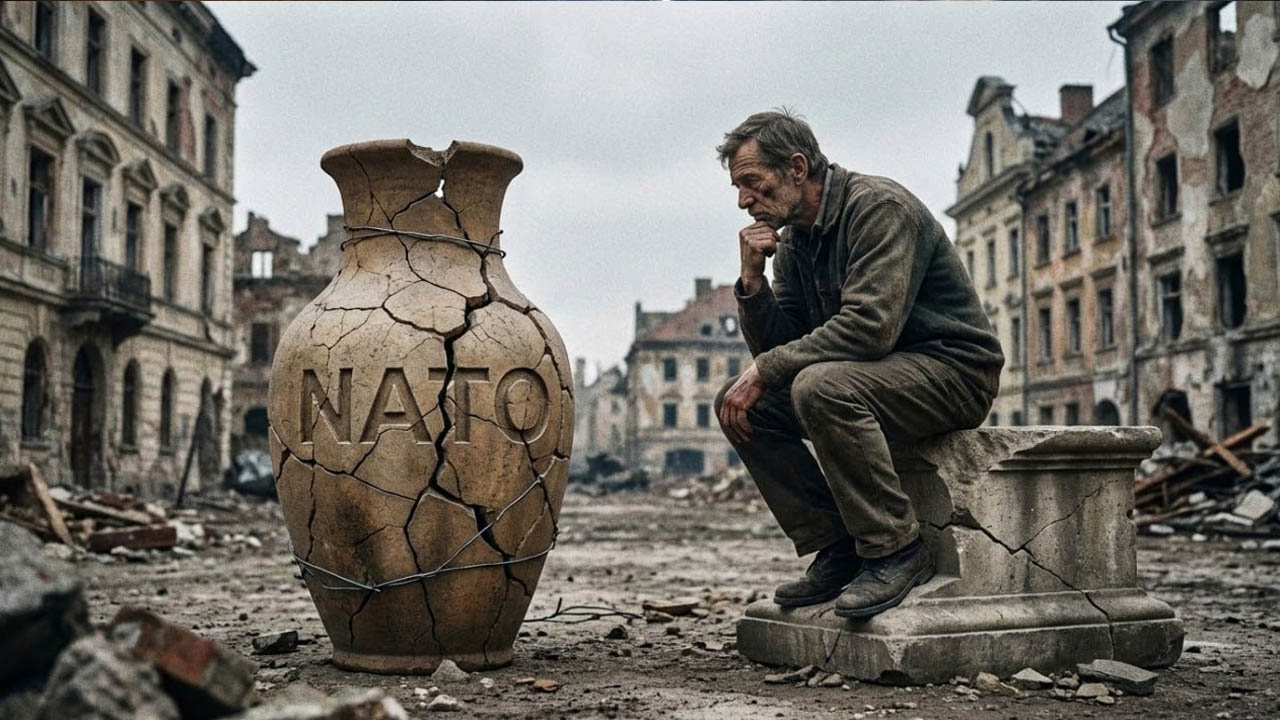
The prospect of NATO’s collapse and challenges to Turkey’s national security

ARVAK Center comment, April 16, 2026[1]
-
Genesis and institutional degradation of the Alliance
The discourse surrounding a potential United States withdrawal from the North Atlantic Alliance has emerged as a significant factor in global geopolitics. President Donald Trump publicly introduced the question of the continued efficacy of maintaining NATO to the collective West’s agenda. However, this issue is not unprecedented.
A historical review of U.S. dissatisfaction concerning NATO’s burden-sharing practices indicates that Donald Trump’s contemporary rhetoric represents not a political anomaly, but the culmination of a protracted process. As early as the 1950s, Dwight Eisenhower cautioned that absent increased defense investments by European states, the United States would face strategic overextension, thereby undermining its national interests.
In the 1960s, this perspective persisted under the administrations of John F. Kennedy and Lyndon Johnson, who openly expressed discontent that European capitals seemed to prioritize the development of welfare states under the American military guarantee, concurrently minimizing defense expenditures. Subsequently, in the 1970s, Richard Nixon formalized these grievances in his renowned doctrine, asserting that allies must assume primary responsibility for their own security.
Even Presidents traditionally regarded as steadfast Atlanticists did not entirely avoid this matter. Jimmy Carter, while acknowledging NATO as the preeminent instrument for containing the USSR, regularly criticized European nations for their inertia, while Ronald Reagan, notwithstanding the Alliance’s considerable reinforcement, rigorously mandated that its members substantially augment their military budgets throughout the Cold War.
During the 1990s, when Bill Clinton initiated the bloc’s eastward expansion, deliberations regarding the judiciousness of U.S. spending were commenced under circumstances where the principal geopolitical adversary – the Soviet Union – had ceased to exist. Ultimately, Barack Obama coined the term “free riders” to characterize allies who benefited from American resources without offering a commensurate contribution in return.
Thus, for over half a century, the American political establishment has consistently moved toward recognizing the necessity for a fundamental revision of NATO’s conventional operational model. Yet, all previous leaders refrained from explicitly acknowledging that the bloc was undergoing a profound political, ideological, and institutional crisis. Donald Trump elected to proceed further than his predecessors: in 2023, the U.S. Congress was compelled to enact legislation prohibiting the president from unilaterally withdrawing the country from NATO without legislative sanction.
It is generally accepted that the origins of the current predicament trace back to the mid-1990s. The Alliance, originally established to contain the USSR and subsequently the Warsaw Pact countries, embarked upon active Eastward expansion within a context where a weakened, Yeltsin-era Russia no longer contested Western hegemony, was pursuing demilitarization, and had expressed a readiness to integrate into the orbit of the American-European center of power. The continuation of a policy of demonizing the Russian Federation, which had by then become an anachronism, ultimately resulted in Moscow’s deviation from the Western trajectory, its pivot toward post-Soviet revisionism, and a process of remilitarization. The inception of the renewed confrontation between Russia and the West occurred at the Munich Security Conference of 2007, where Russian President Vladimir Putin proclaimed Russia’s “own path”, one that no longer acceded to the NATO camp’s aspiration to serve as the “world gendarme.” The new Russian direction has engendered the de facto degradation of nuclear and strategic arms control frameworks, transformed Eastern Europe into an area of heightened tension, and stimulated the formation of a Moscow–Beijing geostrategic alignment.
-
Consequences of institutional maximalism
A prevailing viewpoint suggests that the alteration in Russia’s foreign policy constitutes a direct consequence of maximalism and entrenched stereotypical thinking within NATO, which has forfeited its adaptability and capacity to objectively appraise geostrategic objectives that necessitate reliance on force or the threat thereof. Beyond the loss of external reference points, the Alliance has encountered an institutional crisis, evidenced by internal dissension, centrifugal tendencies, and a disregard for consensus-based decision-making traditions and practices concerning the participation of its member states in military actions and operations beyond its immediate area of defense responsibility.
The military operations against Yugoslavia (1999), the invasions of Iraq (1991, 2003), the intervention in Afghanistan (2001–2021), and the bombing of Libya (2011) did not secure broad, consolidated support among all Alliance members and lacked impeccable legal legitimacy within the parameters of the organization’s Charter. These actions contributed to NATO’s reputation as an aggressive military-political bloc, whose activities have transitioned from defensive mandates to unauthorized interventions in local conflicts across various global regions. NATO’s reputation is further negatively affected by internal territorial disputes, notably the Greek-Turkish confrontation over the Cyprus issue and the status of the Aegean islands, which sustains a permanent risk of intra-bloc conflict and organizational disintegration.
-
Asymmetry of obligations and D. Trump’s demarche
Another source of contradiction and institutional crisis is the aforementioned issue of the asymmetrical allocation of obligations and rights among the organization’s members, despite the formal principle of equality within the bloc. The United States and other major members of the Alliance are disquieted by the “security consumerism” exhibited by smaller countries that are unwilling, in turn, to assume symmetrical responsibility and demonstrate a commitment to fulfilling defense spending quotas and other obligations stipulated in the organization’s Charter. This imbalance of responsibility results in nearly three-quarters of the aggregate defense expenditure of all 32 member countries (Finland and Sweden having joined last in 2024) currently being borne by the United States, which is compelled to share its military capacity and defensive potential with its European allies, receiving what Washington perceives as minimal reciprocal benefit.
Donald Trump has positioned this thesis as the central element of his critique against NATO, asserting, with some justification, that this issue, suppressed for many years, is now bolstering his support among the American public, which is experiencing the significant financial and economic repercussions of the federal government’s excessive spending on armed forces dispersed globally, particularly in Europe.
-
Political continuity of the anti-NATO course
In light of the foregoing, expectations that the necessity for radical reform or the complete dissolution of NATO will be removed from the agenda subsequent to the conclusion of Donald Trump’s presidential tenure or his impeachment appear questionable. Firstly, should the Republican Party retain power in the United States, the incumbent American leader’s policy of diminishing the role of the North Atlantic Alliance will demonstrably persist, given that the overwhelming majority of the party elite concur with Trump on this matter. Furthermore, Vice President J. D. Vance, currently the most probable successor to D. Trump should the Republicans maintain power, also advocates for a reassessment of NATO’s function within the American global deterrence doctrine, albeit articulating his position on the subject in a less radical and eccentric manner than the current president.
Even in the event that Democrats, who regard NATO as a foundational component of U.S. security and global dominance, assume control of the White House and both chambers of Congress, this does not negate the imperative to address the organization’s profound crisis, which has emerged both from external objective factors and from endogenous subjective contradictions within the defensive alliance. Objective reality demonstrates that Donald Trump did not initiate the process of NATO’s disorganization and degradation. Rather, he became the figure who introduced into the public sphere the debate concerning the bloc’s problematic future prospects, at least in its present structure, and exposed its institutional crisis, the resolution of which seems unattainable without a fundamental re-evaluation of its mandates, objectives, mechanisms, and, fundamentally, the very philosophy of its existence.
-
The Iranian campaign as an indicator of the Alliance’s viability
The conflict against Iran in 2026 unequivocally demonstrated the validity of Donald Trump’s stance and, quite likely, marked the commencement of a global process destined to culminate either in a radical restructuring of the Alliance or its cessation. Concurrently, it is erroneous to restrict the discussion regarding the uncertainty of NATO’s future solely to the current U.S. President. Discussions on this subject were actively underway behind the scenes of U.S.–European politics during Joe Biden’s presidency, and they intensified notably subsequent to the initiation of Russia’s strategic military operations in Ukraine.
The matter of support for Kyiv became a source of significant discord and mutual recrimination within the Alliance. This arose from the discontent of certain members over the Western-fomented conflict, as well as the asymmetry in the provision of military and financial aid to Ukraine and the evident pattern of opportunism by some members seeking illicit enrichment via Ukrainian defense contracts. Even at that juncture, experts were articulating views that the Ukrainian conflict had served as a stress test for NATO, exposing indicators of a deep-seated crisis. It was during this period that the initial prognostications were formulated concerning the future of the collective European security system in the event of the North Atlantic Alliance’s dissolution. Analysts envisaged various outcomes, including the establishment of a new defense alliance within the European Union. Suggestions were also advanced for the formation of fragmented, smaller military blocs within the European geographical space: the “Western European” bloc – centered around the France–Germany axis; the “Eastern European” bloc – encompassing Poland, Romania, the Czech Republic, the Baltic countries, and others; and the “Mediterranean” bloc – involving France, Spain, Italy, Greece, Cyprus, etc.
-
Turkey’s position: isolation in the post-NATO architecture
It is symptomatic that none of the considered scenarios allocate a position for Turkey – a pivotal state in the current NATO framework, possessing the second-largest military in the bloc after the United States and one of the most militarily potent nations in Europe. In all foreseeable scenarios, Turkey is effectively regarded as an external entity with no viable prospects for participation in the new post-NATO European security architecture.
The rationale underpinning European countries’ reluctance to engage in a unified defense system with Ankara, particularly in the context of U.S. disengagement, warrants distinct examination. This encompasses both the historically conditioned experience of Ottoman European–Balkan expansionism and the value-civilizational divergence from the Old World, as well as salient issues on the contemporary agenda. Among the most recent are Turkey’s Mediterranean and anti-Greek ambitions, its cautious posture concerning the Ukrainian conflict, the impediments it posed to the accession of Sweden and Finland to NATO, and its relatively close cooperation with the Russian Federation, among others. Without engaging in a comprehensive analysis of these matters in this context, it must be concluded that the aggregation of contradictions between European capitals and Ankara is substantial and multifaceted. This virtually precludes Turkey’s ability to rely on participation in any configuration of a new collective defense alliance in Europe. European nations distrust Turkey and tend to perceive it as a vulnerability in the nascent geopolitical security system, a sentiment reflected in the forecasts of European analysts concerning the formation of future European military alliances that exclude Ankara’s involvement.
Turkey itself is acutely cognizant of this reality. The withdrawal of the U.S. from the military-political sphere of the Old World and the probable dissolution of NATO would divest Turkey of its support and security guarantees in the European theater. Conversely, public sentiment in Turkey fundamentally conflicts with the geopolitical expediency of the country’s military-political elites’ pursuit of integration into the new European security system. Following Turkey’s unsuccessful attempts to integrate into the EU, Recep Tayyip Erdoğan and his Justice and Development Party previously exerted considerable effort to reorient the country’s political vector toward the East and to cultivate a radical nationalist and Islamic ideology within society, upon which the Asia-oriented concepts of neo-Ottoman revisionism and pan-Turkism are predicated. Furthermore, the regime, which has governed Turkey for over a quarter of a century, has succeeded in dismantling the influence of Kemalist ideals regarding the country’s European-Western civilizational trajectory within the political elite and the armed forces, effectively “burning bridges” for the prospect of resetting relations with the EU, including the potential for a new format of military-political integration.
-
Strategic risks and the search for the “Eastern vector”
The repercussions of a potential NATO collapse for the Republic of Turkey are undeniably more difficult to anticipate than for any other NATO member state. Simultaneously, a widely held perspective is that the Alliance’s dissolution would afford Ankara the latitude for more assertive and aggressive actions consistent with its expansionist aspirations in the Eastern Mediterranean, the South Caucasus, and the Syrian Arab Republic – and wherever the U.S. had previously curtailed its excessive activities. This assessment may hold merit; however, conversely, the demise of the Alliance would deprive Turkey of the geopolitical patronage of the most formidable global power pole in modern history and, consequently, the nuclear deterrence it provides, access to advanced military technology, and expertise in armed forces development, inter alia.
The transformation of the Turkish army from a comparatively rudimentary armed force for its era into a powerful, modern military structure was achieved primarily through the republic’s integration into the North Atlantic Alliance since the early 1950s and the effective utilization of all membership benefits. Considering the situation logically, it’s clear that the Turkish military’s combat capability and potential differ vastly depending on whether it operates within NATO’s collective defense framework or entirely outside of it. These two scenarios represent completely distinct “weight categories”. This premise is a constant, beyond dispute. Moreover, in a broader sense, Türkiye, following a hypothetical collapse of NATO, would be unable to sustain the geopolitical influence it currently wields as a member of the organization.
Ankara recognizes that, as NATO deteriorates, Turkey’s expansionist projects in Cyprus, Karabakh, Libya, Syria, Iraq, and other regions could transition into perilous flashpoints of escalation. This could embroil the country in debilitating conflicts along its entire border that it would be incapable of resolving autonomously. In view of this, the intensified negotiations in recent months between Turkey, Pakistan, and Saudi Arabia regarding the establishment of a defensive alliance are comprehensible. It is evident that Türkiye is compelled to seek an alternative to the North Atlantic bloc exclusively in the East, where vigorous efforts are underway to form a conceptual counterpart to an “Asian NATO”, possessing its own nuclear capability (Pakistan), substantial financial resources (Saudi Arabia), and a promising military-industrial base, combined with a strategic geographical location (Turkey).
The scenario for the creation of an “Asian” or, as some analysts define it, “Sunni NATO” represents a challenging and precarious undertaking, principally due to Riyadh’s skepticism toward the idea. Nevertheless, Ankara, in its pursuit of new formats of cooperation to avert military and political isolation, is compelled to act even with minimal probabilities of success. Simultaneously, it maintains hope for a resolution to the crisis surrounding the North Atlantic Alliance and the assurance of its continued existence.
Summary
Experts observe that among all Alliance members, Turkey has adopted the most circumspect stance regarding the divergences between the U.S. and its European allies. Furthermore, it has demonstrated extreme caution on the Iranian issue, seeking to avoid entanglement in the Middle East conflict. Ankara understands that excessive Turkish activity on the Iranian front could merely precipitate NATO’s decline and foster an intensely hostile environment in the Middle East.
According to a number of Russian analysts, Erdoğan’s position remains unarticulated within the context of discussions about the bloc’s future, likely stemming from the country’s vulnerability and apprehension of losing NATO support. Ankara is manifestly exhibiting unease due to the loss of control over the rapidly evolving events in the region and the complexity of predicting their trajectories. Under such circumstances, various speculations and theories, including those verging on the so-called “conspiracy theory,” are beginning to assume the characteristics of objective reality, blurring the distinction between factual circumstances and speculative constructs. A salient illustration is the assertion by the former head of the U.S. National Counterterrorism Center, Joe Kent (who was dismissed on March 17, 2026), that Washington’s plan to withdraw from NATO is intended to facilitate the participation of the American army on Israel’s behalf in its future conflict against Turkey. Given Kent’s prior role and standing, Turkey can no longer disregard these statements, nor the narratives, which have transitioned from the absurd to the normative, suggesting that the North Atlantic bloc is capable of maintaining its viability and functions under an alternative designation, but solely contingent upon the condition advanced by the United States: the substitution of Turkey with Israel.
Ankara really has something to think about.
[1] The original (in Rus.) was posted on our website on 16.07.2026.