
Publication
Water security and climate-resilient storage in Armenia

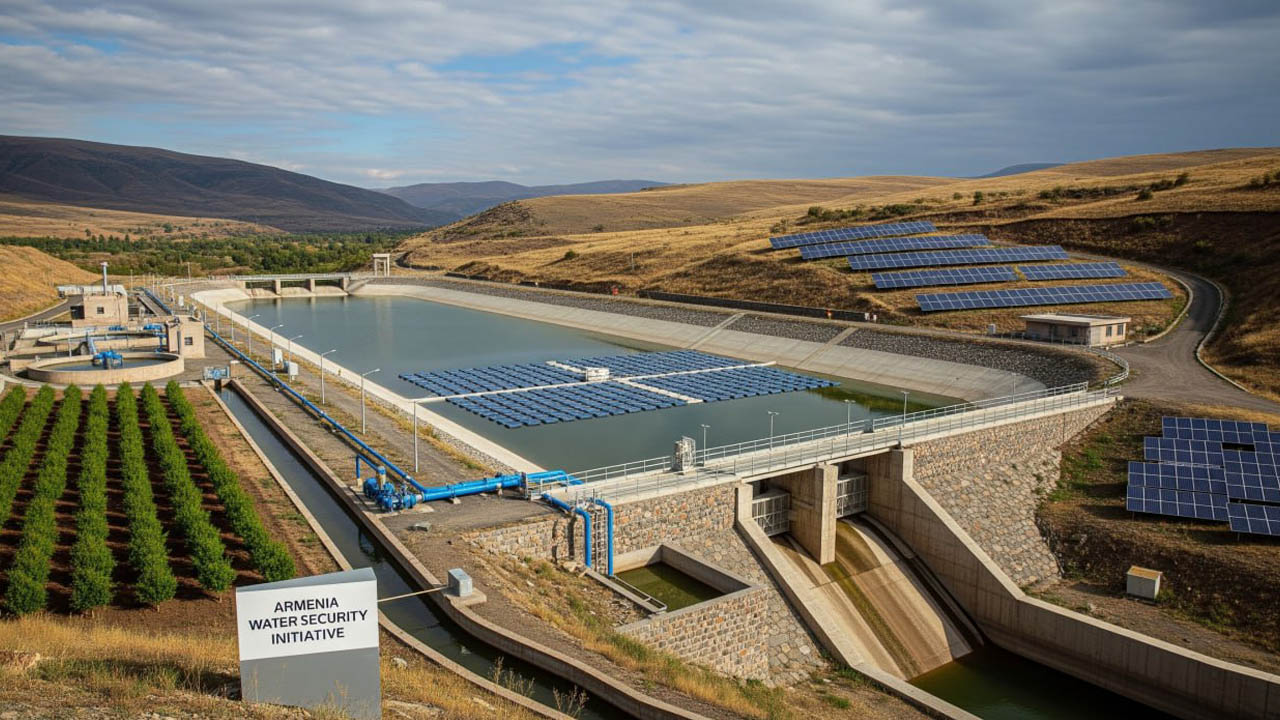
Water security and climate-resilient storage in Armenia
Harutyunyan T.[1]
Armenia is increasingly exposed to climate-induced water stress, characterized by rising temperatures, increasing frequency of droughts, and increasing seasonal and interannual variability in surface water availability [1]. Historically, the country’s water resources management strategy has relied heavily on the construction of reservoirs to accommodate spring snowmelt and regulate irrigation supply during dry periods. While this approach has yielded significant benefits, it faces increasing limitations in the face of changing climate conditions, aging infrastructure, and increasing inefficiencies related to evaporation, sedimentation, and the temporal mismatch between water availability and demand [2].
Climate change is compounded by regional hydropolitical asymmetries that significantly shape Armenia’s water security environment. Turkey’s position as an upstream actor in the Araks River basin allows it to exercise de facto control over the timing and volume of transboundary flows. Large-scale hydraulic infrastructure projects implemented in Turkey directly affect access to shared reservoirs such as the Akhuryan and reduce Armenia’s ability to rely on historical hydrological baselines [3]. Under these circumstances, domestic water policy cannot assume sustainable external inflows, which reinforces the strategic need to increase internal storage, buffer capacity, and temporal flexibility in Armenia’s hydrosystem. Similarly, Armenia’s eastern and southeastern borders impose security-related constraints that are directly related to water resources management. Following the 2020 conflict and subsequent border realignments, several highland catchments and headwaters are now located in territories occupied by Azerbaijan and not controlled by Armenia. Rivers important for national water and energy security, including the Arpa and Vorotan systems, originate in zones where access and ecosystem management are restricted [4]. These realities limit Armenia’s ability to implement snow cover regulation or afforestation in certain regions, necessitating compensatory measures in more secure basins.
This article argues that Armenia’s future water security depends not only on expanding storage capacity, but more on improving the efficiency of existing and new storage systems through an integrated, systems-level approach. It proposes a combined framework that includes the selective construction of new small and medium-sized reservoirs, the rehabilitation of existing reservoirs, targeted snowmelt timing management in mountain catchments, evaporation reduction through reservoir surface covers, and afforestation in ecologically suitable catchment areas. Rather than presenting these measures as stand-alone solutions, the article emphasizes their synergistic potential when applied at the micro-basin scale and embedded in broader water resources management reforms, including irrigation management, demand management, and institutional coordination. The proposed framework does not aim to provide a comprehensive solution to climate change adaptation or water resources management issues, but rather to analytically contribute to policy discussions by identifying additional measures that can increase systemic resilience in the face of increasing hydrological uncertainty.
-
Introduction
In addition to climatic pressures, Armenia’s water system operates in a complex regional environment characterized by shared river basins and asymmetric water governance. In this context, water security is shaped not only by domestic hydrological variability, but also by the water policies and infrastructure strategies of neighboring states. Regional experience shows that upstream control of water resources, particularly through large-scale hydraulic infrastructure, can significantly affect downstream availability during periods of drought and increased demand [5]. As climate change increases scarcity and variability, domestic water storage capacity is increasingly gaining strategic importance as a means of reducing vulnerability and strengthening national water security.
Water availability has long been a structural constraint to Armenia’s socio-economic development. The country’s mountainous topography, limited surface water resources, and heavy reliance on irrigated agriculture have historically made seasonal water regulation a strategic priority [6]. During the Soviet period and in the decades that followed, Armenia invested heavily in reservoir construction as a means of capturing spring runoff and redistributing water during the dry summer months. As a result, the country today has a relatively large number of reservoirs relative to its territorial size, with a total storage capacity often quoted as approximately 1.4 billion cubic meters.
However, the hydrological assumptions on which much of this infrastructure was designed are increasingly out of step with modern climate realities. Rising temperatures, earlier snowmelt, prolonged dry spells, and greater variability in precipitation are altering both the volume and timing of flows. These changes challenge the efficiency of existing reservoirs and complicate the justification for building new large-scale storage infrastructure.
At the same time, Armenia’s financial constraints, military risk, seismic risk, complex mountainous geology, and environmental sensitivity limit the feasibility of large, centralized water infrastructure projects. As a result, current policy discussions increasingly emphasize small, distributed reservoirs, rehabilitation of existing dams, and non-structural measures aimed at improving water use efficiency [7].
In this context, the article advances a central analytical proposition: the resilience of Armenia’s water sector will depend not only on how much water can be stored, but also on how effectively water is conserved, scheduled, and maintained in the hydrological system. This reframing shifts the focus from capacity expansion alone to integrated strategies that reduce losses and improve the functional performance of storage systems.
The article explores one such integrated strategy by examining the combined potential of five complementary intervention categories:
- Construction of new small and medium-sized reservoirs.
- Rehabilitation and modernization of existing reservoirs.
- Targeted management of snow and ice melt timing in mountain catchments.
- Reduction of evaporation losses through reservoir surface cover technologies.
- Afforestation of ecologically suitable zones around reservoirs.
The article does not address traditional water resources management tools, such as modernization of the irrigation distribution system, water pricing, or demand management. Instead, it places the proposed measures as additional components within a broader framework of water resources management that continues to respond to climatic, ecological, political, and institutional realities.
-
Literature Review
Water security has expanded beyond resource availability to include governance, dependency, and strategic vulnerability. In regions with transboundary river systems, water security is closely linked to upstream-downstream relationships and the ability of states to independently regulate and store water during periods of stress. Regional water governance analyses show that infrastructure development can create asymmetries between neighboring states, particularly where binding agreements are limited. Studies of Turkish water policy emphasize the strategic integration of water management with energy and agriculture, while analyses of Armenia–Azerbaijan relations emphasize the need to ensure the ongoing security of water stories in the face of broader geopolitical tensions [8]. This article identifies domestic storage and loss reduction measures as important tools for strengthening downstream resilience.
Existing literature on water security in conflict-prone and semi-closed regions emphasizes the interaction between hydrological stress, political asymmetry, and security risks. However, far less attention is given to how climate adaptation tools can function under conditions where transboundary governance mechanisms are weak or absent. This study contributes to that gap by examining technical vulnerability-reduction measures that remain viable even when broader geopolitical constraints cannot be immediately altered.
2.1 Climate change and mountain hydrology
Mountain regions are widely recognized as highly sensitive to climate change due to their dependence on snow and ice processes and the role of sources in downstream water systems. Numerous studies document a consistent trend of earlier snowmelt, reduced snowpack stability, and increased streamflow variability in mountain regions around the world. These processes tend to shift peak flow earlier in the year, reducing water availability during periods of highest agricultural and domestic demand [9].
In semi-arid and continental climates such as Armenia, this temporal mismatch between water availability and demand is often more important than the absolute reduction in annual precipitation. Even small changes in melt timing can significantly affect irrigation reliability, reservoir recharge cycles, and vulnerability to drought [10].
2.2 Reservoirs under climate stress
Reservoirs are commonly cited as a key adaptation tool for mitigating hydrological variability. However, the literature increasingly highlights that reservoirs are vulnerable to climate change. The main stressors are:
- reduced and less predictable inflows,
- increased evaporation losses under higher temperatures,
- accelerated sedimentation due to more intense precipitation,
- structural and operational challenges of aging infrastructure.
Several studies have argued that the marginal benefit of additional storage capacity under climate change is diminished if it is not accompanied by improved operational efficiency and reduced losses. This insight has led to increased interest in additional measures that improve the functional performance of existing reservoirs, rather than focusing solely on new construction.
2.3 Evaporation reduction technologies
Evaporation from open water surfaces represents a significant loss pathway, particularly in arid and semi-arid regions. A broad body of literature examines evaporation suppression technologies, including chemical films, floating modular elements, suspended covers, and shading structures. Reported evaporation reduction rates vary widely depending on technology, coverage fraction, wind conditions, and reservoir geometry [11].
While some experimental studies report very high evaporation suppression under controlled conditions, field studies generally emphasize more moderate but still meaningful reductions, particularly for small reservoirs with high surface-to-volume ratios. Importantly, the literature also highlights ecological and operational trade-offs, including impacts on water temperature, gas exchange, and maintenance requirements [12].
2.4 Snow and glacier covering
The use of reflective geotextiles to slow snow and ice melt has been widely documented in alpine regions, primarily in the context of ski tourism and glacier preservation. Research indicates that such covers can substantially reduce melt rates on the covered surface by reflecting solar radiation and providing thermal insulation.
However, the literature also emphasizes the limited scalability of this approach. Covering entire glaciers or large snowfields is economically and logistically impractical, and the method is best suited for protecting strategically important zones where delayed melt yields disproportionate benefits.
2.5 Afforestation and hydrological regulation
Afforestation is frequently discussed in the context of climate mitigation and biodiversity conservation, but its hydrological effects are complex and context-dependent. Forest cover can reduce surface runoff velocity, stabilize soils, and reduce sediment delivery to reservoirs. At the same time, forests consume water through evapotranspiration, and poorly planned afforestation can reduce downstream water availability in some contexts.
Recent literature emphasizes that afforestation’s contribution to water management is most positive when applied selectively, with careful consideration of altitude, species selection, soil conditions, and hydrological objectives. Around reservoirs, afforestation can play a supporting role by improving long-term storage efficiency and reducing sedimentation rather than increasing water yield directly [13].
-
Methods
3.1 Analytical approach
This article adopts a qualitative, integrative analytical approach rather than a quantitative modeling framework. The objective is not to estimate precise hydrological gains from individual interventions, but to evaluate their strategic relevance, complementarities, and policy implications within Armenia’s specific geographic and institutional context.
3.2 Sources and data
The analysis draws on:
- publicly available information on Armenia’s reservoir system and planned projects,
- national climate and water policy documents,
- peer-reviewed literature on mountain hydrology, evaporation reduction, snow management, and afforestation,
- comparative insights from international experience in semi-arid and mountainous regions.
3.3 Conceptual framework
The central methodological tool is a micro-basin water retention framework, which conceptualizes water storage as a system composed of:
- upstream accumulation and release processes,
- mid-catchment landscape regulation,
- storage infrastructure performance,
- downstream distribution and demand.
Interventions are evaluated based on how they affect water retention, timing, and losses across this system rather than at isolated points.
-
Results
4.1 Armenia’s reservoir system: strengths and limitations
Armenia has a relatively dense reservoir network, comprising a small number of large strategic reservoirs and numerous small irrigation reservoirs. This system has historically played an important role in supporting agricultural production and rural livelihoods [14].
However, a number of structural and strategic limitations are evident։
- Effective storage is often significantly below nominal capacity due to sedimentation and operational constraints.
- Evaporative losses increase in warmer climates.
- Many reservoirs are located in steeply sloping catchments with high sediment fluxes.
- Aging infrastructure and safety concerns limit operational flexibility.
- Some of the catchments are not located within the country or are located in occupied territories.
These factors reduce the reliability of reservoirs as climate buffers and increase the importance of additional measures.
TABLE 1[1]
| Reservoir category | Approximate number | Typical storage volume (million m³) | Primary
function |
Key
vulnerabilities |
| Large strategic reservoirs | 5 | 20–525 | Irrigation regulation, partial hydropower, inter-basin transfer | Sedimentation, evaporation, aging infrastructure |
| Medium reservoirs | ~15–20 | 2–20 | Regional irrigation supply | Variable inflow, operational inefficiency |
| Small reservoirs | ~50–60 | <2 | Local irrigation, drought buffering | High evaporation losses, sedimentation |
| Balancing / urban reservoirs | Limited | <5 | Water supply regulation | Limited storage, water quality issues |
4.2 Feasibility of new reservoir construction
Current policy signals and project pipelines indicate that Armenia’s future reservoir development will focus primarily on small and medium-scale projects, typically below 10 million cubic meters. Such projects are more feasible in terms of cost, construction time, and environmental impact, but their individual contribution to national water security is limited.
This reinforces the need to maximize the effectiveness of each cubic meter stored rather than relying solely on capacity expansion.
TABLE 2[2]
| Reservoir | Region | Status | Storage capacity
(million m³) |
Strategic role |
| Akhuryan | Shirak | Operational | ~525 | Strategic irrigation storage |
| Aparan | Aragatsotn | Operational | ~91 | Irrigation
regulation |
| Azat | Ararat | Operational | ~70 | Irrigation & water supply |
| Kechut | Vayots Dzor | Operational | ~23 | Water transfer to Lake Sevan |
| Kaps | Shirak | Planned | ~100 | Expanded & Reliable Irrigation |
| Kasakh | Armavir | Planned | 10.0 | Regional irrigation resilience |
| Lichk | Syunik | Planned | 4.0 | Local drought buffering |
| Astghadzor | Gegharkunik | Planned | 1.55 | Small-scale
irrigation |
| Yelpin | Vayots Dzor | Planned | 0.93 | Community-level storage |
4.3 Potential contribution of evaporation management
Evaporation reduction measures are most relevant for small reservoirs with high surface-to-volume ratios and significant late-season water demand. While not universally applicable, such measures can meaningfully improve end-of-season water availability in targeted locations.
4.4 Role of snowmelt management
Targeted snow and ice covering can delay runoff and reduce early-season losses in specific micro-catchments. When hydrologically linked to downstream storage, this can improve reservoir refill timing and drought resilience.
4.5 Afforestation as a supporting measure
Afforestation around reservoirs can reduce sediment inflow, stabilize catchments, and improve long-term storage efficiency. Its contribution is indirect but cumulative, particularly when integrated with structural measures [15].
TABLE 3[3]
| Intervention | Primary
function |
Indicative
effectiveness |
Key
limitations |
|
| New small/medium reservoirs | Increase storage
capacity |
Site-dependent,
incremental |
Limited suitable
sites |
|
| Reservoir rehabilitation | Restore effective
storage |
Often high
benefit-cost ratio |
Funding, safety constraints | |
| Snow / glacier covering | Delay runoff
timing |
Local melt reduction
on covered areas |
Limited
scalability |
|
| Reservoir surface covers | Reduce evaporation |
Material reduction
in small reservoirs |
Wind,
maintenance |
|
| Afforestation (where suitable) | Reduce sediment & runoff velocity |
Long-term cumulative
benefit |
Altitude & ecology limits | |
4.6 Climate change scenarios and implications for Reservoir-based adaptation in Armenia
An analytical assessment of water storage strategies must consider not only current hydrological conditions, but also plausible future climate trajectories. Climate projections for Armenia consistently indicate rising mean annual temperatures, increasing drought frequency and duration, and growing interannual variability in precipitation. While projections for total annual precipitation remain uncertain, most scenarios suggest a shift toward more intense but less frequent rainfall events, combined with reduced snowpack persistence in mountainous regions [16].
These trends have direct implications for reservoir-based adaptation strategies. First, earlier snowmelt compresses runoff into a shorter spring period, increasing spill losses in reservoirs designed for historical inflow regimes. Second, higher summer temperatures increase evaporation losses precisely during the period when stored water is most valuable. Third, extreme precipitation events elevate sediment transport from mountain catchments, accelerating the loss of effective reservoir capacity [17].
In this context, the analytical value of integrated measures lies in their ability to hedge against uncertainty rather than optimize for a single expected future. Measures such as reservoir rehabilitation, evaporation reduction, and afforestation improve system performance across a wide range of climate scenarios, including those characterized by higher variability rather than monotonic change.
Importantly, climate uncertainty undermines the rationale for irreversible, capital-intensive investments whose performance depends on narrow hydrological assumptions. By contrast, modular and adaptive measures – such as partial reservoir covering or targeted snowmelt management – can be scaled, modified, or discontinued as conditions evolve. This flexibility represents a form of institutional and infrastructural resilience that is particularly valuable for countries with limited fiscal space and high exposure to climate risk.
TABLE 4[4]
| Climate
stressor |
Observed/projected
trend |
Implication
for reservoirs |
| Rising air
temperature |
Increasing | Higher
evaporation losses |
| Earlier
snowmelt |
Increasing | Reduced summer inflow |
| Longer
dry seasons |
Increasing | Higher end-of-season
water stress |
| Extreme precipitation events | Increasing
variability |
Accelerated
sedimentation |
| Interannual
variability |
Increasing | Reduced reliability
of storage |
4.7 Socio-economic dimensions of water storage and drought adaptation
While the physical performance of reservoirs and associated measures is central to water security, socio-economic considerations play an equally important role in determining their effectiveness. In Armenia, irrigated agriculture remains a critical livelihood source for rural communities, and water shortages have immediate economic and social consequences.
Drought conditions disproportionately affect smallholders and peripheral regions, where alternative income sources and adaptive capacity are limited. In such contexts, even modest improvements in water reliability – such as extending reservoir availability by several weeks at the end of the irrigation season – can have outsized socio-economic impacts. These impacts include stabilizing crop yields, reducing income volatility, and limiting migration [18].
From this perspective, the proposed integrated approach should be evaluated not only in terms of hydrological efficiency, but also in terms of distributional effects. Small and medium reservoirs, coupled with evaporation reduction and local catchment management, tend to benefit specific communities rather than national aggregates. This localized benefit structure aligns well with poverty reduction and regional development objectives, even if aggregate water volumes conserved are relatively modest.
However, socio-economic benefits are contingent on governance arrangements. Without transparent allocation rules, participatory management, and accountability mechanisms, infrastructure improvements risk reinforcing existing inequalities. Therefore, the analytical framework presented in this article implicitly assumes parallel progress in institutional capacity and stakeholder engagement.
4.8 Unsettled relations with neighbors and partial control of national territory
While reservoirs and hydraulic infrastructure are primarily evaluated here through their socio-economic and climate-adaptation functions, their exposure to broader security risks cannot be ignored [19]. Concentrated storage assets inherently carry systemic vulnerability in volatile environments. This reinforces the rationale for diversification and decentralization of storage capacity as a resilience measure rather than exclusive reliance on single large installations.
Similarly, the water–energy nexus introduces an additional layer of sensitivity, particularly in relation to Lake Sevan, Hrazdan and Vorotan cascades [20]. Climate-driven reductions in inflow amplify existing structural dependencies. However, the technical measures proposed in this article are intended to complement, not replace, strategic energy-sector planning, by reducing pressure on critical systems during periods of hydrological stress.
The analysis presented does not assume full sovereignty over Armenia’s hydrological system. On the contrary, it proceeds from the recognition that water availability is shaped by both climatic and exogenous political factors. Under such conditions, technical adaptation measures represent pragmatic tools for reducing exposure and enhancing resilience within feasible domains, even when structural constraints remain unresolved.
-
Discussion
In Armenia’s regional context, water storage contributes to strategic resilience by reducing sensitivity to external hydrological and political shocks. While storage cannot eliminate transboundary interdependence, it enhances the country’s capacity to manage scarcity autonomously and stabilize key sectors. Comparative regional assessments suggest that Armenia’s constraints favor distributed and adaptive storage approaches, which also serve broader national security objectives by limiting exposure to sudden supply disruptions. This perspective does not negate the importance of cooperation but supports a dual strategy combining diplomacy with domestic resilience-building measures [21].
5.1 From isolated interventions to systemic resilience
The results presented above suggest that Armenia’s water security challenge cannot be addressed through single-measure solutions. Each intervention – whether reservoir construction, rehabilitation, snowmelt management, evaporation reduction, or afforestation – has intrinsic limitations when assessed in isolation. However, when viewed as components of a coordinated, basin-oriented framework, their combined effect becomes more significant.
This observation aligns with a growing body of water policy literature emphasizing system resilience over infrastructure expansion. In climates characterized by increasing variability rather than uniform decline in water availability, resilience is enhanced by flexibility, redundancy, and loss reduction. Armenia’s mountainous geography, fragmented catchments, and dispersed agricultural demand create conditions where incremental, distributed gains can be more impactful than large, centralized projects.
The proposed integrated framework shifts the analytical focus from “how much additional water can be stored” to “how much water can be retained, timed, and effectively delivered”. This reframing is particularly relevant in a context where most technically and economically favorable sites for large reservoirs have already been utilized, and where remaining options involve higher geological, seismic, social, military, or environmental risks.
5.2 Synergy among measures: cumulative rather than additive effects
The proposed solutions are expressions of synergy between structural, technological and ecosystem measures. Synergy in this context does not imply linear addition of benefits, but rather the reduction of constraints that limit the effectiveness of individual measures.
For example, new small reservoirs constructed in steep catchments may quickly lose effective capacity due to sedimentation if upstream land management is neglected. Afforestation and soil stabilization measures, while unlikely to increase total water yield, can significantly extend reservoir lifespan by reducing sediment inflow. Similarly, evaporation reduction technologies yield the greatest benefit when applied to reservoirs whose inflow timing has already been improved through delayed snowmelt release upstream.
This layered logic suggests that the order and coordination of interventions matter. Implementing evaporation covers on reservoirs that are chronically underfilled yields limited benefit, just as delaying snowmelt without downstream storage capacity risks shifting water losses rather than reducing them. The analytical value of the integrated framework lies precisely in identifying these interdependencies.
TABLE 5[5]
| System level | Measure | Primary effect | Contribution to resilience |
| Upper
catchment |
Snowmelt management | Delayed
runoff |
Improved
timing |
| Catchment
slopes |
Afforestation | Reduced sediment
& runoff |
Longer
reservoir life |
| Storage
infrastructure |
Reservoir rehabilitation | Restored
capacity |
Higher
reliability |
| Storage
surface |
Evaporation
control |
Reduced
losses |
More usable
water |
| Distribution | Improved management | Efficient
delivery |
Reduced drought
impact |
5.3 Infrastructure expansion versus system optimization
A persistent dilemma in water policy concerns the balance between expanding physical infrastructure and optimizing existing systems. In Armenia, this dilemma is particularly acute due to the country’s topography, seismicity, and limited availability of suitable reservoir sites.
Large-scale infrastructure expansion provides visibility and political appeal, but it is increasingly constrained by environmental, financial, and social considerations, compounded by the realities of the 2020 Artsakh War. By contrast, system optimization – through rehabilitation, loss reduction, and ecosystem-based measures – often delivers less visible but more reliable benefits. The integrated framework proposed in this article clearly aligns with the latter approach.
This does not imply a rejection of new reservoir construction. Rather, it suggests a reordering of priorities, in which new construction is pursued selectively and in tandem with measures that enhance the effectiveness of every cubic meter stored. Such sequencing reduces the risk that new assets will underperform due to systemic inefficiencies.
5.4 Time horizons and policy alignment
Another advantage of the integrated approach lies in its alignment across multiple time horizons. Reservoir rehabilitation and evaporation reduction can yield benefits within one to three years. Afforestation and catchment stabilization require longer timeframes but offer cumulative benefits over decades. Snowmelt management occupies an intermediate temporal space, offering seasonal to interannual gains.
This multi-temporal structure aligns well with policy realities, where governments must balance short-term political cycles with long-term climate commitments. By delivering early gains while laying the foundation for longer-term resilience, the proposed framework improves political feasibility without sacrificing strategic coherence.
TABLE 6[6]
| Policy choice | Advantages | Risks |
| Large new reservoirs | High visibility, large volumes | High cost, long lead time |
| Small distributed reservoirs | Flexibility, faster delivery | Limited individual impact |
| Technical loss reduction | Cost-effective | Requires maintenance |
| Ecosystem-based measures | Long-term sustainability | Delayed benefits |
| Integrated approach | Risk diversification | Governance complexity |
5.5 Spatial differentiation and policy prioritization
Not all regions of Armenia will benefit equally from the proposed approach. A critical policy implication is the need for spatial differentiation rather than uniform national application. The feasibility and effectiveness of each measure depend on altitude, catchment size, land cover, institutional capacity, and the structure of local water demand.
Low- and mid-altitude regions with existing irrigation networks and moderate slopes are generally more suitable for combined reservoir rehabilitation, evaporation management, and afforestation. High-mountain zones, by contrast, may be appropriate for targeted snowmelt management but unsuitable for afforestation or reservoir surface covers due to climatic and operational constraints.
This spatial differentiation argues for pilot-based implementation. Rather than deploying measures broadly, policymakers can prioritize a limited number of micro-basins where hydrological linkages are clear and monitoring is feasible. Successful pilots can then inform adaptive scaling or replication in other regions.
5.6 Governance and institutional considerations
The integrated framework outlined in this article implicitly challenges existing institutional arrangements. Water storage infrastructure, forestry management, climate adaptation planning, and irrigation governance are often managed by separate agencies with limited coordination. While such fragmentation is common internationally, it poses a particular challenge for integrated adaptation strategies.
From a governance perspective, the proposed approach increases the importance of:
- inter-agency coordination,
- shared data and monitoring systems,
- long-term maintenance funding,
- clarity of responsibility for non-traditional infrastructure elements (such as reservoir covers or snow protection materials).
Without addressing these institutional dimensions, technically sound interventions risk underperforming or being abandoned after pilot phases. This reinforces the argument that the proposed measures must be embedded within broader water governance reforms rather than pursued as stand-alone projects.
5.7 Relationship with traditional water management tools
It is important to emphasize that the proposed interventions do not replace traditional water management instruments. Irrigation efficiency improvements, water pricing, runoff reduction, leakage control, and demand management remain foundational to water security. Indeed, numerous studies suggest that demand-side measures often yield higher water savings per unit cost than supply-side investments.
However, the political and social feasibility of such measures can be limited, particularly in rural areas where agriculture is closely tied to livelihoods. In this context, complementary supply-side and loss-reduction measures can provide political and social space for gradual reform. By improving reliability and reducing crisis conditions, they may indirectly facilitate acceptance of demand management measures over time.
5.8 Critical counter-arguments revisited
Several critical concerns merit further discussion.
Scale and cost-effectiveness
Innovative measures such as snow and reservoir covering may attract attention disproportionate to their quantitative contribution. Without careful targeting, they risk high costs per unit of conserved water. This reinforces the need for transparent evaluation metrics, including lifecycle costs and comparative analysis against alternative interventions.
Environmental trade-offs
Covers and synthetic materials raise legitimate environmental questions, including microplastic generation, waste management, and ecological impacts on reservoirs. Afforestation, if poorly planned, may alternative ecosystems or increase evapotranspiration. These risks do not negate the proposed approach, but they require environmental safeguards and adaptive management.
Hydrological uncertainty
Climate change introduces uncertainty that limits predictive accuracy. Measures designed under current conditions may underperform under extreme or unexpected future scenarios. This uncertainty argues against irreversible, large-scale commitments and in favor of modular, reversible interventions that can be adjusted over time [22].
Risk of policy distraction
Finally, there is a risk that visible technological measures divert attention from governance reforms that are less visible but potentially more impactful. This article explicitly cautions against such substitution and frames the proposed interventions as complementary, not substitutive.
Unregulated relations and uncontrolled territories
It should be noted that ecosystem-based interventions and snowmelt management are feasible only in areas with stable access and administrative control. In areas affected by occupation or restricted access, such measures remain aspirational rather than operational. The analysis, therefore, prioritizes basins and sub-catchments where implementation is realistically achievable under current conditions [23].
Decentralization of storage further reduces strategic exposure. Large reservoirs concentrated near border zones or dependent on transboundary inflows represent potential single points of failure under security stress. In contrast, a network of smaller, locally managed reservoirs located in interior and administratively secure areas enhances redundancy and operational resilience. While such measures cannot neutralize upstream dominance or military threats, they can significantly mitigate downstream impacts by stabilizing seasonal supply [24].
-
Conclusion
While transboundary dynamics and regional power asymmetries increasingly shape water availability in Armenia, this article does not seek to provide a comprehensive hydropolitical or security strategy. Instead, it focuses on technically and institutionally feasible adaptation measures that can be implemented within areas under effective administrative control. These measures are treated not as substitutes for diplomatic or security solutions, but as necessary instruments for reducing climate-induced vulnerability under conditions of uncertainty and constrained sovereignty.
From a regional water-security perspective, Armenia’s climate vulnerability is further compounded by the hydropolitical behavior of its neighbors. Turkey’s water policy in transboundary basins poses persistent risks to downstream states, as it deliberately avoids comprehensive legal, political, and diplomatic settlements grounded in international water norms, instead preferring bilateral, asymmetrical arrangements that reflect its upstream dominance. This reality simultaneously underscores the importance of pursuing negotiated, mutually beneficial frameworks with Turkey and reinforces the necessity of strengthening Armenia’s internal resilience in the absence of reliable external guarantees [25].
In parallel, the lack of regulated relations with Azerbaijan, combined with its expansionist posture and recurrent military threats, introduces an additional layer of systemic risk. Azerbaijan’s occupation of territories encompassing parts of the Sevan, Arpa, and Vorotan watersheds, and its continued signaling toward potential escalation affecting Lake Sevan, Syunik, and Vayots Dzor – home to critical river basins and the Vorotan cascade – directly intersects with Armenia’s water and energy security. These conditions highlight a dual imperative: on the one hand, the restoration of territorial integrity and full sovereign control over national watersheds through diplomatic efforts and the reestablishment of strategic balance; on the other, the urgent need to optimize water retention, storage, and flow management within areas under effective control. Under conditions of persistent geopolitical uncertainty, effective internal water governance thus becomes not only a climate-adaptation priority, but a core component of national resilience.
The effectiveness of large and medium reservoirs must be understood within the context of externally determined inflow variability. Upstream interventions beyond Armenia’s control can significantly alter hydrological baselines. Consequently, the technical measures discussed here are not designed to offset structural upstream dominance, but to increase buffering capacity against climate-driven variability within the limits of available inflows.
In this context, the technical measures proposed in this article acquire additional strategic relevance. Distributed small and medium-sized reservoirs, rehabilitation of existing storage, and reduction of evaporation and runoff losses function not only as climate-adaptation tools but also as indirect risk-mitigation mechanisms against externally induced hydrological shocks. By diversifying storage and reducing dependence on singular exposed assets, Armenia can lower systemic vulnerability to both climatic extremes and politically driven flow disruptions.
Taken together, the analysis presented in this article supports a nuanced conclusion: Armenia’s water security under climate change will be determined less by the quantity of new infrastructure built and more by the quality of integration among diverse adaptation measures.
Reservoir construction, rehabilitation, snowmelt management, evaporation reduction, and afforestation each address distinct dimensions of the water balance. Individually, their impact may be limited. Collectively, when applied selectively and governed coherently, they can substantially improve the resilience of water systems to drought and variability.
The article does not claim to offer a comprehensive solution to water management or climate adaptation. Instead, it contributes to policy discourse by highlighting how complementary measures can be combined into a flexible, scalable framework that responds to Armenia’s specific geopolitical, geographic, climatic, and institutional context.
Accordingly, the proposed package of technical interventions should be understood as part of a broader national resilience posture. These measures do not replace diplomatic, legal, or security responses but provide practical tools to preserve functional water availability under adverse external conditions, strengthening Armenia’s water security amid persistent geopolitical uncertainty.
As climate uncertainty intensifies, such integrative approaches will become increasingly important – not only in Armenia, but in mountainous regions worldwide that face similar constraints and vulnerabilities.
References
- Gevorgyan, H. Melkonyan, T. Aleksanyan et al. An assessment of observed and projected temperature changes in Armenia.Arab Journal of Geosciences, Vol 9, 27 (2016). https://doi.org/10.1007/s12517-015-2167-y
- Melkonyan, Climate change impact on water resources and crop production in Armenia, Agricultural Water Management. 2015, 161, 86–101, https://doi.org/10.1016/j.agwat.2015.07.004
- Вода как оружие: угрозы водной безопасности Армении. «АРВАК» – Армянский аналитический центр, 01.12.2025, https://arvak.am/ru/вода-как-оружие-водной-безопас/
- Kuyumjian, Perspectives | Don’t water it down: The role of water security in the Armenia-Azerbaijan war. Eurasianet, 22.12.2021, https://eurasianet.org/perspectives-dont-water-it-down-the-role-of-water-security-in-the-armenia-azerbaijan-war
- A., Turkish hydroelectric scheme on the River Araks, Orbeli Center, 03.04.2019,
https://orbeli.am/en/post/166/2019-03-04/Turkish+hydroelectric+scheme+on+the+River+Araks - Melkonyan, M. O. Asadoorian. Climate impact on agroeconomy in semiarid region of Armenia, Environment Development and Sustainability. 2013, 16(2), 393–414. https://doi.org/10.1007/s10668-013-9483-8
- The Prime Minister of the Republic of Armenia, 2025. Where it is possible to store water, water should be stored. 5 new reservoir construction projects to be implemented in Armenia. Press releases, 24.10.2025, https://www.primeminister.am/en/press-release/item/2025/10/24/Prime-Minister-Nikol-Pashinyan-meeting/
- Kibaroglu, A. Baskan, 2011. Turkey’s Water Policy Framework. https://www.researchgate.net/publication/301184614_Turkey’s_Water_Policy_Framework
- Beniston, M. Stoffel, Assessing the impacts of climatic change on mountain water resources. Science of The Total Environment, Volume 493, 15 September 2014, Pages 1129-1137, https://doi.org/10.1016/j.scitotenv.2013.11.122
- Shahgedanova, W. Hagg, D. Hassell, C.R. Stokes and V. Popovnin, Climate Change, Glacier Retreat, and Water Availability in the Caucasus Region, Threats to Global Water Security. NATO Science for Peace and Security Series C: Environmental Security. Springer, Dordrecht. https://doi.org/10.1007/978-90-481-2344-5_15
- Yao, H. Zhang, C. Lemckert, A. Brook and P. Schouten, 2010, Evaporation Reduction by Suspended and Floating Covers: Overview, Modelling and Efficiency. Urban Water Security Research Alliance Technical Report No. 28, https://research-repository.griffith.edu.au/server/api/core/bitstreams/2db73309-0244-55b5-b787-df118d0fa67e/content
- P. Craig, 2005. Loss of storage water due to evaporation – a literature review. NCEA publication, University of Southern Queensland, Australia, https://research.usq.edu.au/download/3059dd70c5cd1933666620bb99b38c97ae1745e70cfcc6ed1fdff1e82c463aa6/1936292/Craig_2005_Evap_Lit_Review.pdf
- R. Calder, Forests and water—Ensuring forest benefits outweigh water costs. Forest Ecology and Management, 2007, 251, 110–120, https://doi.org/10.1016/j.foreco.2007.06.015.
- Armenian Government, 2022. 2022–2026 Climate Change Adaptation Plan in the Water Resources Sector, 03.11.2022, https://nature-ic.am/en/news/ra-government-has-approved-the-%222022-2026-climate-change-adaptation-plan-in-the-water-resources-sector%22
- FAO, 2013, Forests and Water: International Momentum and Action, https://www.fao.org/4/i3129e/i3129e.pdf
- World Bank, CCDR. Water Security and Climate Change: Insights from Country Climate and Development Reports,12.11.2024, https://documents.worldbank.org/en/publication/documents-reports/documentdetail/099124511122431814
- Naumann, et al., Global Changes in Drought Conditions under Different Levels of Warming. Geophysical Research Letters, vol. 45, no. 7, 13.04.2018, pp. 3285–3296, https://doi.org/10.1002/2017gl076521.
- Coping with Water Scarcity in Agriculture. FAO Water Reports, 2016, https://openknowledge.fao.org/server/api/core/bitstreams/ba17d716-8fe6-4b41-8903-742bede79e13/content
- Turkey’s water policies leave Iraq parched and poised for unrest. The Arab Weekly, 06.07.2025, https://thearabweekly.com/turkeys-water-policies-leave-iraq-parched-and-poised-unrest
- Б. Атанесян, Экологические аспекты внешней политики Азербайджана по отношению к Армении и Грузии, «АРВАК» – Армянский аналитический центр, 04.03.2024, https://arvak.am/ru/эгология-и-внешняя-политика-азр/
- M. Aleksanyan, Features of the Water Policy of Armenia and Azerbaijan: A Comparative Analysis. RUDN Journal of Political Science, Vol 27, No 1, 2025, 116-128, https://doi.org/10.22363/2313-1438-2025-27-1-116-128
- Climate Change 2022: Impacts, Adaptation and Vulnerability. Cambridge University Press, 29.06.2023, https://doi.org/10.1017/9781009325844
- The water issue as a justification for Baku’s aggressive policy, “Geghard” Scientific Analytical Foundation, 15.12.2025, https://geghard-saf.am/en/757/water-issue-azerbaijan
- Kibaroğlu, Türkiye’s Water Security Policy: Energy, Agriculture, and Transboundary Issues. Insight Turkey, 2022, Volume 24, Number 2, 69-88, https://www.insightturkey.com/articles/turkiyes-water-security-policy-energy-agriculture-and-transboundary-issues
- Daly, Turkey’s Water Policies Worry Downstream Neighbors. Turkey Analyst, vol. 7, no. 16, 10.09.2014, https://turkeyanalyst.org/publications/turkey-analyst-articles/item/343-turkey%E2%80%99s-water-policies-worry-downstream-neighbors
[1] PhD, worked at the “Noravank” Foundation as a Deputy Director; at the Public Administration Academy of Armenia as a Head of the Center for the Regional Studies; researcher at the Institute for Armenian Studies (Yerevan State University), and at the “Enterprise Incubator Foundation” as a Program Coordinator. Specialized in science and higher education management and regional security issues.
[2] Overview of Armenia’s Reservoir System by Type and Function
[3] Examples of Major and Planned Reservoirs in Armenia
[4] Effectiveness Ranges of Proposed Interventions (Indicative)
[5] Climate-Related Stressors Affecting Reservoir Performance in Armenia
[6] Synergistic Effects at the Micro-Basin Scale
[7] Policy Trade-offs and Strategic Choices