
Publication
The Russian Federation’s National Security Doctrine and its geopolitical ambitions in the Caucasus Region

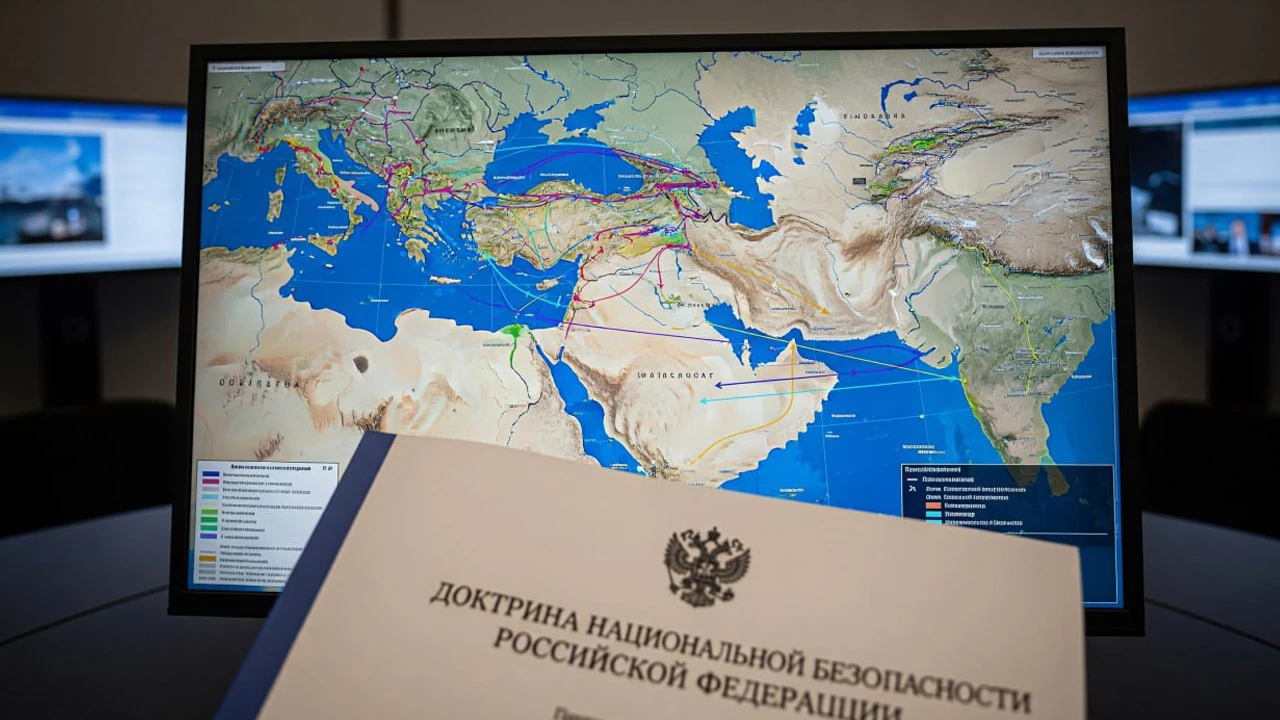
Доктрина национальной безопасности РФ и ее геополитические амбиции в Кавказском регионе
Дунамалян Н. А.
Аннотация
В статье анализируется эволюция доктрин национальной безопасности и внешней политики Российской Федерации в контексте трансформации ее геополитических амбиций на Южном Кавказе. Показано, что регион на протяжении постсоветского периода рассматривался преимущественно в рамках концепта «ближнего зарубежья» и не был институционализирован как самостоятельное направление стратегического планирования. На основе сопоставления стратегий 2015 и 2021 годов, а также Концепции внешней политики РФ 2023 года выявляется переход от интеграционной модели к фрагментированной и реактивной политике присутствия, ориентированной на управление рисками в условиях многополярной конфронтации.
ՌԴ ազգային անվտանգության դոկտրինը և նրա աշխարհաքաղաքական նկրտումները Կովկասյան տարածաշրջանում
Դունամալյան Ն. Ա.
Սեղմագիր
Հոդվածում վերլուծվում է Ռուսաստանի Դաշնության ազգային անվտանգության և արտաքին քաղաքականության դոկտրինների էվոլյուցիան՝ Հարավային Կովկասում նրա աշխարհաքաղաքական հավակնությունների փոխակերպման համատեքստում։ Ցույց է տրվում, որ հետխորհրդային ողջ ժամանակաշրջանում տարածաշրջանը հիմնականում դիտարկվել է «մերձավոր արտերկիր» հայեցակարգի շրջանակում և երբեք չի ինստիտուցիոնալիզացվել որպես ինքնուրույն ռազմավարական ուղղություն։ Ռուսաստանի Դաշնության 2015 և 2021 թթ. Ազգային անվտանգության ռազմավարությունների, ինչպես նաև 2023 թ. Արտաքին քաղաքականության հայեցակարգի համեմատական վերլուծության հիման վրա բացահայտվում է ինտեգրացիոն մոդելից դեպի ֆրագմենտացված և ռեակտիվ (հակազդող) քաղաքականության անցումը։
Dunamalyan N. A.[1]
The Russian Federation’s National Security Doctrine and its geopolitical ambitions in the Caucasus Region
Introduction
Throughout the post-Soviet period, the South Caucasus occupied a paradoxical position in Russian foreign policy and military-strategic thought. On the one hand, the region was objectively highly significant in terms of the security of the Russian Federation’s southern frontiers, transport corridors, energy infrastructure, and the convergence of interests between leading regional and global actors. On the other hand, Russian doctrinal documents rarely considered it a policy priority with its own logic, dynamics, and structural characteristics.
The main framework for interpreting the South Caucasus was the concept of “close abroad»[2], which emerged in the 1990s and has retained its significance to this day. Within this approach, the region was perceived not as a group of sovereign states with different development strategies, but as part of the post-Soviet space, with respect to which Russia retains special historical, political, and moral rights and obligations. This logic was initially hierarchical, implying not an equal partnership but an asymmetrical relationship in which Moscow acts as a guarantor of stability or an arbitrator.
Inclusion of the South Caucasus in the category of “near abroad” meant that its problems were viewed primarily through the prism of common threats: destabilization, separatism, external intervention, and the spread of alternative models of political development. At the same time, the region’s internal specifics – ethnopolitical conflicts, competition among regional powers, and differences in the foreign policy orientations of Armenia, Azerbaijan, and Georgia – remained on the periphery of strategic analysis for a long time.
The development of this approach was significantly influenced by the focus on preserving the post-Soviet space as a zone of Russia’s primary interests. The South Caucasus was viewed as part of a single geopolitical “belt”, along with Central Asia and Eastern Europe, where the key objective was to prevent the strengthening of alternative centers of power – primarily NATO, the United States, and subsequently the European Union. In this logic, regional policy was replaced by reactive crisis management.
It is significant that during the period of Russia’s active military and political presence in Georgia (until 2007), Azerbaijan (until 2012), and Armenia, including the peacekeeping operation in Nagorno-Karabakh, the South Caucasus was never institutionalized as a separate strategic direction. It remained a “subsection” of broader post-Soviet policy, dependent on the overall state of Russia’s relations with the West and the internal logic of the global confrontation.
Thus, the fundamental problem of Russia’s doctrinal policy in the South Caucasus is not a lack of interest per se, but the absence of a specific vision for the region. This predetermined the subsequent evolution of Russia’s strategic documents, in which the region consistently lost its clear outlines and transformed from a zone of active influence into a space of situational presence.
Evolution of the Russian Federation’s National Security Doctrines: the South Caucasus factor
The term “Transcaucasia” is found only in two editions of the Concept of National Security of the Russian Federation – 1997 and 2000[3]. In later strategies, the South Caucasus is already integrated into broader contexts.
The adoption of the “National Security Strategy of the Russian Federation” in 2015 was an important stage in the institutionalization of a new phase of Moscow’s foreign policy thinking, formed after the Ukrainian crisis of 2014[4]. This document does not identify the South Caucasus as a separate region, but its issues fit seamlessly into the broader context of the post-Soviet space, which is viewed as a zone of increased vulnerability and potential destabilization.
The key concept of the 2015 Strategy is security in its broader sense, encompassing not only military but also political, ideological, and social aspects. Within this framework, the South Caucasus is perceived primarily as a potential source of threats related to international terrorism, extremism, ethnopolitical conflicts, and external intervention. The causes of instability are interpreted primarily as exogenous, that is, caused by the actions of external actors (primarily Western states).
This approach allowed the Russian leadership to avoid a deeper analysis of the internal transformations of the region’s countries. Social changes, legitimacy crises, generational elite shifts, and identity transformations in Armenia, Georgia, and Azerbaijan were not viewed as autonomous processes, but rather interpreted through the prism of “color revolutions” and an externally orchestrated political undertaking. As a result, the South Caucasus was deprived of any subjectivity, even at the level of analytical understanding.
The 2015 Strategy conceptualizes the post-Soviet space as a unified geopolitical entity, within which Russia’s key objective is to maintain the status quo, although the situation with Ukraine, and earlier with Georgia, has demonstrated the growing threat of disintegration within the post-Soviet space. In this context, the South Caucasus is not viewed as a zone of development or integration, but rather as a territory subject to stabilization and control. This approach has shaped a conservative model of regional policy, focused not on adapting to change, but on containing it.
The Russian Federation’s 2021 National Security Strategy demonstrates a further development of these principles, but with a noticeable strengthening of the ideological and civilizational component[5]. The document marks a definitive break with the “illusion” of a strategic partnership with the West and portrays the external environment as hostile and competitive. Within this paradigm, the South Caucasus is definitively transformed into an element of global confrontation rather than an object of independent regional policy. Furthermore, the 2021 Strategy emphasizes strengthening internal security capabilities.
A fundamental shift in focus from specific threats to value-based and identity-based challenges was crucial. The 2021 Strategy emphasizes the danger of the erosion of traditional values, the undermining of historical memory, and national sovereignty. For the countries of the South Caucasus, this meant their inclusion in a zone of ideological confrontation, where the choice of foreign policy is interpreted as an indicator of loyalty or disloyalty to Russia. However, after 2020, a pragmatic approach dominated Russian foreign policy, creating a contradiction between declared and actual actions.
At the same time, strategic documents continued to fail clearly distinguish between the states in the region. Armenia, a formal ally of Russia and a member of the CSTO, was not accorded a separate status in doctrinal discourse, distinct from that of Georgia or Azerbaijan. All three countries were viewed through a single threat filter, which negated the specificity of their alliance commitments and diminished their practical significance. Meanwhile, references to the EAEU and CSTO also failed to take into account the specificities of the member states, presenting them primarily as structural units for control over the “near abroad”.
The evolution of the 2015 and 2021 doctrines cemented a fundamental contradiction in Russian policy in the South Caucasus. On the one hand, the region continued to be viewed as strategically significant; on the other, the lack of an individual approach and a focus on abstract threats led to the erosion of a realistic regional strategy. It was during this period that the preconditions for a crisis of trust and governance emerged, which became fully evident after 2020.
It is worth adding that the strategic documents of 2015 and 2021 formed a new model of strategic vision, which was embodied in overcoming the inconsistency of positions within the “tandem” of power that existed in 2008–2012, and in the clash of the conditionally “liberal” and “conservative” pictures of Russia’s foreign policy development. After 2012, the Russian leadership attempted to “catch up” on the previous period by engaging in direct confrontation with the U.S. and EU in Ukraine and Syria. Similar processes occurred in other post-Soviet countries: Armenia joined the Customs Union and then the Eurasian Economic Union; Georgia experienced a change of government; Azerbaijan took a more assertive stance, denying Russia permission to operate the Gabala radar station in 2012 and joining the “great game” on Turkey’s side during the April War in Nagorno-Karabakh in 2016.
The Strategy of 2020, adopted in 2009, established the previous structure of relations between Russia and other states, which began to change rapidly after 2009[6]. This document largely enshrined the inertial model of Russia’s relations with the post-Soviet space that emerged in the first half of the 2000s. It was based on the notion of the relative stability of the regional order, the possibility of combining economic modernization with limited political liberalization, and the preservation of Russia’s influence in neighboring states without direct geopolitical confrontation.
In this sense, the 2015 and 2021 documents represented an attempt at a “catch-up” revision of the strategic vision, designed to compensate for the gap between previous inertial approaches and the new configuration of forces, including the situation in the South Caucasus. Perhaps, after the end of the Second World War in Ukraine, the Russian side will once again be forced to acknowledge the contradictions between strategic documents adopted before and after 2022, something it has already partially accomplished in 2023 and 2025 with the publication of the new Russian Federation Foreign Policy Concept and the State National Policy Strategy until 2035.
Strategic additions after 2022: The South Caucasus in the Logic of multipolar confrontation
Acceptance of “Concepts of foreign policy of the Russian Federation” in 2023 became not just another stage of updating the doctrinal course[7], but also a record of a profound transformation in the foreign policy self-awareness of the Russian state. Unlike the strategies of previous years, this document was frankly programmatic in nature and reflected the transition from a model of predominantly reactive interaction with the external environment to a model of “civilizational” and geopolitical confrontation (“Russia as a civilization-state”). Within the framework of the new concept, the South Caucasus is finally losing its status as a region subject to long-term stabilization and institutional “guardianship”, and is increasingly viewed by Russian elites as an element of the peripheral space of global competition.
The Concept of 2023 was based on the premise of the irreversible collapse of the previous world order and the establishment of a multipolar system of international relations. However, it did not offer any vision that differed from the “0post-Soviet” practice of Russia’s relations with the states of the South Caucasus. Russia began to position itself as an independent center of power, rejecting the universalist norms and rules promoted by the West. In this logic, the post-Soviet space, including the South Caucasus, was no longer interpreted as a zone of integration attraction, but as an arena for the clash of different development models, identities, and foreign policy orientations. This fundamentally changed the very nature of Russia’s presence in the region from one of integration to one of competitive restraint.
It is significant that the 2023 Foreign Policy Concept lacks a detailed description of regional priorities. The South Caucasus is primarily mentioned indirectly: through formulas about the states of “near abroad”, the need to protect compatriots, to oppose the expansion of military blocs, and the inadmissibility of external interference. Such language indicates a rejection of the previous logic of “responsible leadership” and the transition to a more pragmatic, limited and situational model of presence[8]. The region is viewed not as an object of strategic planning, but as a space of manageable risks.
A consequence of this new approach to foreign policy is that alliances have become distinctly instrumental and largely ceased to play a significant role. Formal commitments and long-term contractual structures are giving way to an assessment of current political loyalty and alignment with Russia’s interests at a particular point in time[9]. For the states of the South Caucasus, this signifies a de facto devaluation of the previous alliance and partnership models built in the 1990s and 2000s. Regional actors are no longer perceived as strategic partners “by default” and are becoming variable configurations of interests, interactions with which can be quickly reconsidered in the face of global destabilization.
A significant addition to the logic of the actions of the Russian elites after the Special Military Operation is “The Strategy of the State National Policy of the Russian Federation for the period up to 2036”, adopted at the end of November 2025[10]. Although this document focuses primarily on domestic processes, it directly influences the foreign policy perception of the post-Soviet space. The strategy emphasizes the priority of internal consolidation, the preservation of cultural and civilizational unity, and the protection of the “Russian world” as a value-based and humanitarian space. This leads to a shift in focus from external institutional influence on internal resilience and identity security – a trend already enshrined in the National Security Strategy of 2021.
In this context, the South Caucasus (including Abkhazia and South Ossetia, which are specifically mentioned in the two most recent Security Strategies) is no longer viewed as a space for active, direct influence on political processes. Instead, a selective approach is intensifying, with interactions built around issues of economic cooperation, humanitarian presence, historical memory, language, diasporas, and compatriots. Foreign policy is thus becoming increasingly intertwined with the national agenda and identity politics within Russia.
Of particular significance is the rejection of the idea of RF’s exclusive responsibility for the security of post-Soviet space. While Moscow previously declared its role as the key guarantor of regional stability, this function has been noticeably blurred in its doctrinal guidelines after 2022. Russia de facto recognizes the presence of other centers of power in the South Caucasus – primarily Turkey and Iran – and demonstrates a willingness to share responsibility and influence[11]. The region is increasingly interpreted as a zone of “distributed balance” where direct and costly intervention is seen as undesirable.
At the same time, the rhetoric of the Concept of 2023 retains elements of geopolitical ambition. It emphasizes the inadmissibility of external interference, criticizes the activities of Western institutions, and declares the protection of the sovereignty of regional states. However, this rhetoric is not supported by a clearly articulated strategy of action. On the contrary, it is a deliberate avoidance of specifics, allowing Moscow to maintain tactical flexibility but simultaneously reducing the predictability of its policies for its regional partners.
Thus, strategic documents beyond 2022 cement the transformation of Russia’s role in the South Caucasus. Geopolitical ambitions remain at the discourse level, but their practical implementation is becoming increasingly limited and selective. This creates a structural vacuum, in which the influence of other regional actors is growing, and the autonomy of the South Caucasus states is increasing. This inevitably leads to a revision of established models of interaction and a decline in Russia’s ability to act as the sole system-forming player in the region.
Alliance and pragmatism in the context of doctrine revision: Armenia and Azerbaijan in Russian politics
The Russian Federation’s relations with Armenia and Azerbaijan throughout the post-Soviet period were shaped by different but interrelated logics. Armenia was viewed as a formal ally and a pillar of Russia’s presence in the South Caucasus, while Azerbaijan was viewed as a pragmatic partner, with whom interaction was based on a balance of interests and limited obligations. However, the evolution of Russia’s doctrinal framework, particularly after 2020–2023, has led to a gradual blurring of these distinctions and a reconsideration of the very nature of regional interaction[12].
“The Treaty of Friendship, Cooperation and Mutual Assistance between the Russian Federation and the Republic of Armenia” of 1997 agreement, along with the agreement on the deployment of a Russian military base, institutionalized the model of asymmetrical alliance. Russia assumed the role of guarantor of Armenia’s security, while Yerevan ensured Moscow’s military and political presence in the strategically sensitive region[13]. Doctrinally, this model corresponded to the logic of the “near abroad”, within the framework of which the allies were viewed as elements of a single security system under Russian leadership.
However, by the late 2010s, this construct had already begun to show signs of erosion. The shifting regional balance of power, the growing role of Turkey, the transformation of Armenia’s domestic politics, and the growing global confrontation between Russia and the West led to Moscow’s diminished attention to the specifics of its alliance commitments. The doctrinal documents for 2021–2023 effectively shift relations with Armenia from a strategic partnership to a conditional interaction, dependent on the political situation.
The Russian Federation’s Foreign Policy Concept of 2023 marked a rejection of the previous understanding of alliance within the framework of long-term commitments[14], emphasizing multipolarity, where the prospects for development of BRICS and the SCO are considered more significant than strengthening the regional structures of the EAEU or CSTO. In relation to Armenia, this manifests itself in a shift in emphasis from security guarantees to demands for political loyalty. Any attempts by Yerevan to diversify its foreign policy or rethink the format of relations with Russia within doctrinal logic are interpreted as a threat rather than a natural process of adaptation of a small state to a changing environment.
As a result, Armenia finds itself in a paradoxical situation. While formally remaining Russia’s ally, it is effectively losing its status as a priority partner. Russian policy is increasingly demonstrating passivity on issues that were previously considered key elements of its alliance commitments. Ultimately, documents such as “The Declaration on allied cooperation between the Russian Federation and the Republic of Armenia, oriented towards the 21st century» of 2000[15], are becoming an anachronism. This gap between the treaty framework and political practice undermines trust and encourages the search for alternative forms of security.
A different logic is evident in Russia’s relations with Azerbaijan. The signing of the Declaration on Allied Cooperation in 2022[16] did not signify a transition to a classic alliance, although the parties perceived this document differently, as would become clear later. Two days before the start of the Special Military Operation in Ukraine, the declaration established a pragmatic model of cooperation based on shared interests in specific areas and the renunciation of mutual obligations in the area of collective security. At the same time, in a geopolitical sense, Azerbaijan, as of 2020, was already viewed as an autonomous actor capable of independently pursuing its national interests[17].
Russia demonstrates a willingness to accept Azerbaijan’s rise as a regional power, even if it leads to a change in the status quo. Doctrinally, the priority is not maintaining balance but minimizing its own costs. This leads Baku to increasingly view Russia’s position as a factor that allows for unilateral action even in times of crisis in relations.
Thus, the differences between Armenian “alliance” and Azerbaijani “pragmatism” are largely losing their significance. In both cases, Russia is moving away from institutionalized commitments and toward situational management of relations, which also depends on the behavior of the Armenian and Azerbaijani elites.
Current security issues for the Russian Federation in the South Caucasus: three regional cases
By the mid-2020s, Russia’s policy in the South Caucasus faced a systemic crisis, manifested not so much in the loss of formal positions as in the erosion of the very foundations of its regional presence. Unlike previous stages, when the main challenges were perceived as external and manageable, the current situation is characterized by a combination of internal transformations in the region’s states and Moscow’s limited ability to respond to these changes. Furthermore, the “equalization” of the importance of Azerbaijan and Armenia for Russia in the 2010s led to a distortion of the original balance of power in the region, beginning with the demarcation of the Russian-Azerbaijani border[18] and the rapprochement of the elites of the two countries.
The Armenian case represents the most painful example of the loss of influence in a formal alliance zone for Russian strategic thinking. From Moscow’s perspective, the key problem lies in Armenia’s gradual shift away from its previous model of foreign policy dependence and its attempts to diversify its sources of security and international support. These processes are interpreted as the result of “Western influence” and as a consequence of the mistakes of the Armenian leadership, undermining the foundation of allied relations.
In reality, however, Armenia’s turn reflects a deeper crisis of trust that existed even before 2018–2020. Since 2020 and subsequent events, Russia’s role as a security guarantor has been significantly devalued in Armenia’s public and political perceptions. Moscow’s passivity at critical moments, the uncertainty of its commitments (in terms of containing Azerbaijan’s September aggression in 2022 and the unilateral mandate of Russian peacekeepers in Nagorno-Karabakh), and its focus on maintaining a minimal status quo have created a situation in which formal alliances are no longer perceived as a reliable resource. As a result, Russia is facing not just a political cooling, but a transformation of the entire architecture of relations that previously underpinned its presence in the region.
The Georgian case, by contrast, demonstrates a different kind of problem. After the 2008 war, Georgia became entrenched in Russian doctrinal discourse as a hostile state oriented toward integration with the West. However, Tbilisi’s actual policy in the 2020s has increasingly become pragmatic. Economic cooperation, transit, humanitarian contacts, and limited dialogue are shaping a new model of interaction that defies the “friend/foe” binary.
For Moscow, this creates a paradoxical situation. On the one hand, Georgia remains a symbol of “lost influence” and an example of Western penetration into the post-Soviet space, on the other hand, its de facto policy poses no direct threat to Russian security and, in some areas, even contributes to regional stability. Thus, the problem lies not so much with Georgia itself, but rather in the discrepancy between Russia’s rigid doctrine and the changing reality, which limits Moscow’s options.
The Azerbaijani case is the most complex and dynamic. Official Russian thinking continues to view Azerbaijan as a rational partner, focused on balancing interests and avoiding confrontation with Moscow. However, after 2023, Baku has increasingly demonstrated a desire to unilaterally change the regional status quo, using military force, diplomatic pressure, and support from Turkey to impose its own conditions.
For Russia, this means the loss of its monopoly on crisis management and the balance of power in the South Caucasus. Although Moscow formally retains channels of influence, its ability to contain or direct Azerbaijan’s actions has been significantly diminished. This has not yet been adequately reflected in doctrinal discourse: Azerbaijan continues to be seen as a partner, despite the growing asymmetry of interests and periodic flare-ups of conflict in bilateral relations (for example, the political speculation by the Azerbaijani leadership surrounding the Aktau air crash and the blocking of Russian media and the “Russian House”).
Taken together, these three cases demonstrate that the Russian Federation’s current security challenges in the South Caucasus are not episodic, but structural. They stem from the discrepancy between the changing regional reality and the inert doctrinal model within which Russia continues to conceptualize the region as a manageable geopolitical space.
Fragmentation of influence and the crisis of strategic management
Modern Russian policy in the South Caucasus is characterized by a combination of formal presence and an actual loss of strategic initiative. Despite maintaining certain instruments of influence – military, diplomatic, and economic in nature – Moscow increasingly acts reactively, adapting to circumstances that have already taken shape. This indicates not so much temporary difficulties as a systemic crisis in the strategic management of the region.
The fragmentation of Russian influence is manifested primarily in the loss of Moscow’s integrating role. The South Caucasus no longer functions as a unified political space in which Russia acts as the chief coordinator. On the contrary, the region is breaking down into several relatively autonomous vectors of interaction: the “American” vector (TRIPP and bilateral contacts with Armenia and Azerbaijan); the “Turkish” vector (Turkey’s strengthening role in the region and the prospects of the “Middle Corridor”); the “European” vector (rapprochement with Armenia against the backdrop of a crisis in relations with Georgia and an energy dialogue with Azerbaijan); the “Chinese” vector (bilateral relations with each of the South Caucasian states); and the “Iranian” vector – the most likely trigger of a new regional crisis. Russia’s presence is only partially embedded in each of these circuits and increasingly bears an auxiliary character.
The change in the status of Russia’s military presence is of particular significance. The presence of a Russian military base in Armenia and participation in the peacekeeping mission in Nagorno-Karabakh were originally viewed as key instruments for controlling regional dynamics. However, in conditions of political erosion of allied relations and the occupation of the Republic of Artsakh, these instruments are losing their strategic effectiveness. The military presence remains, but it has ceased to be a guarantor of influence and is increasingly perceived as an inertial element of a bygone era.
The crisis of strategic management is also evident in the fact that Russia no longer offers the region a positive project for the future. In the 1990s and 2000s, this project was represented by ideas of Eurasian integration, collective security, and a special civilizational space. In the 2020s, these narratives have lost their persuasiveness for a significant portion of South Caucasian elites and societies. Instead, the Russian leadership has adopted the concept of the “civilization-state”, shifting the focus to the self-sufficiency of the Russian state and a transition toward a certain isolationist foreign policy, as well as the limitation of interaction within the EAEU amid the ongoing hostilities in Ukraine.
Taken together, the fragmentation of influence and the crisis of strategic management mean that Russia is gradually losing its ability to be the architect of the regional order in the South Caucasus. The RF remains an important actor but is ceasing to be the central one. Nevertheless, the region’s geopolitical configuration changes frequently, and Russia’s “Scythian tactics” may be precisely calculated to exhaust more active global and regional players. At the same time, such an approach leads once again to a revision of Russia’s doctrinal vision and attempts to regain lost opportunities within the context of a completely renewed structure of regional relations.
Prospects for the transformation of Russian policy in the South Caucasus: scenarios and structural constraints
In the context of the transformation of the regional order, the South Caucasus represents a highly uncertain area for Russian foreign policy. The prospects for changing Russia’s role in the region depend on a combination of the state’s internal resources, the global context, and the behavior of regional actors. An analysis of the current situation allows us to identify several development scenarios, each with limitations stemming from both the doctrinal framework and objective geopolitical dynamics:
- Maintaining the status quo with limited reactivity. In this case, Russia continues to retain formal instruments of influence, minimizing active intervention and focusing on situational adjustments. This approach is feasible in the short term, but it reinforces the trend toward diminishing Russian agency and promotes the growing independence of Armenia, Georgia, and Azerbaijan. Doctrinally, this signifies a further transformation of allied relations into a conditional partnership without long-term commitments.
- A return to a more proactive regional strategy based on a strengthened military and diplomatic presence. In practice, the implementation of this scenario faces serious constraints: resource pressure, foreign policy confrontation with Turkey and Western actors, and the changed internal dynamics of the South Caucasus countries. Doctrinally, such a course requires a revision of the “near abroad” concept and adaptation of the allied model to new realities.
- Partial adaptation to multipolar reality. Russia may transition toward a model of flexible engagement, where economic cooperation, conflict containment, and situational partnerships become the primary priorities. Such an approach presupposes an abandonment of the pursuit of exclusive influence and a recognition of the presence of other regional actors. In doctrinal logic, this scenario aligns with the concept of multipolarity enshrined in the Foreign Policy Concept of 2023, but it requires significant institutional restructuring to ensure its effectiveness.
Structural constraints in implementing any of these strategies are evident. First, Russia’s limited resources and its involvement in global conflicts reduce the capacity for an active presence. Second, the shifting balance of power in the region – notably the strengthening role of Turkey and other external players – renders traditional instruments of pressure less effective. Third, the transformation within the countries of the South Caucasus – characterized by increasing political autonomy, economic diversification, and the mobilization of national identities – diminishes the predictability of Russian initiatives.
Despite these limitations, the Russian side maintains ambitions to influence the South Caucasus. It relies on flexibility, situationalism, and maintaining minimal control, reflecting an attempt to combine declarative goals with real resource capabilities. According to this logic, the South Caucasus ceases to be a priority zone for active policy and is transformed into a space where Russia acts as one of several equal participants. In terms of doctrinal continuity, this demonstrates a shift from the “guarantor of regional stability” to the model “conditional partner and balancing actor”. However, such dynamics depend on the emergence of crisis zones within Russia itself should one or another actor gain strength. The risk of “losing” the South Caucasus could lead to several long-term consequences: a shift in the security line to the North Caucasus, as well as the growth of Islamism and nationalism in the region; increased Turkish influence in the Turkic and Muslim regions of the Russian Federation; weakened control over migration and border security; economic marginalization of the south of the country; and loss of control over transport and energy corridors.
Many of these threats are already nascent and are becoming more pressing with the introduction of new restrictions against Russia (for example, in the area of energy sales). Although strategies may prove ineffective in the context of global instability, Russia needs to develop a doctrine aimed at neutralizing persistent vulnerabilities, rather than preparing for the challenges characteristic of the previous model of international relations.
Sources and literature
- Бордачев Т. СНГ перестало быть постсоветским. Взгляд. https://vz.ru/opinions/2020/12/25/ 1076920.html
- Декларация о союзническом взаимодействии между Российской Федерацией и Азербайджанской Республикой (22.02.2022). http://www.kremlin.ru/supplement/5777
- Декларация о союзническом взаимодействии между РФ и РА, ориентированном в XXI век (05.10.2000) https://mid.ru/ru/detail-material-page/1682171/
- Дунамалян Н. A. Российско-армянские отношения на современном этапе (1991–2023). АРВАК – Армянский аналитический центр. https://arvak.am/ru/россйиско-армянские-отношения-на-сов/
- Дунамалян Н. А. «Окончательный» распад постсоветского пространства: построение новой структуры региональных отношений. АРВАК – Армянский аналитический центр. https://arvak.am/ru/распад-постсоветского-пространства/
- Калашникова О. Река Самур и граница с Азербайджаном. Готова ли РФ к «раскачке» Дагестана? ИА Красная Весна. https://rossaprimavera.ru/article/26f22906
- Концепция внешней политики Российской Федерации (утверждена Президентом Российской Федерации В. В. Путиным 31 марта 2023 г.). МИД РФ. https://www.mid.ru/ru/detail-material-page/1860586/
- Лебедева О., Бобров А. Концепция внешней политики России 2023: стратегия многополярного мира. РСМД. https://russiancouncil.ru/analytics-and-comments/ analytics/kontseptsiya-vneshney-politiki-rossii-2023-strategiya-mnogopolyarnogo-mira/
- Мелконян С. Новая концепция внешней политики России: что важно знать для Армении? Медиамакс. https://mediamax.am/ru/column/121415/
- О Концепции национальной безопасности Российской Федерации: Указ Президента Российской Федерации от 17.12.1997 г. № 1300. http://www.kremlin.ru/acts/bank/11782
- О Концепции национальной безопасности Российской Федерации: Указ Президента Российской Федерации от 10 января 2000 года № 24. –Москва, 2000. https://www.prlib.ru/item/352298
- Окунев И. Ю. Геополитические коды России – внешнеполитическая стратегия и национальные приоритеты. РСМД. https://russiancouncil.ru/analytics-and-comments/ analytics/geopoliticheskie-kody-rossii-vneshnepoliticheskaya-strategiya-i-natsionalnye-prioritety/
- Рожкова Л. В., Ивченков С. Г., Полутин С. В. Ближнее зарубежье во внешней политике Российской Федерации и оценках россиян. Известия Саратовского университета. Новая серия. Серия: Социология. Политология. 2025. Т. 25, вып. 2. С. 120–125. https://doi.org/10.18500/1818-9601-2025-25-2-120-125
- Стратегия национальной безопасности Российской Федерации до 2020 года. http://www.kremlin.ru/supplement/424
- Указ Президента Российской Федерации от 02.07.2021 г. № 400 о Стратегии национальной безопасности Российской Федерации. http://www.kremlin.ru/acts/bank/47046
- Указ Президента Российской Федерации от 25.11.2025 № 858 «О Стратегии государственной национальной политики Российской Федерации на период до 2036 года», http://publication.pravo.gov.ru/document/0001202511250024?index=3
- Указ Президента Российской Федерации от 31.12.2015 г. № 683. О Стратегии национальной безопасности Российской Федерации. http://www.kremlin.ru/acts/bank/40391
- Фомин И., Силаев Н., Макарычева А., Столярова С., Шавлай Э. Союзники России: формальные обязательства и фактическое сотрудничество. Международные процессы. 2019;17(2):101-130. https://doi.org/10.17994/IT.2019.17.2.57.6
[1] Candidate of Political Sciences, Associate Professor, author of more than 30 scientific papers and articles.
[2] Рожкова Л. В., Ивченков С. Г., Полутин С. В. Ближнее зарубежье во внешней политике Российской Федерации и оценках россиян. Известия Саратовского университета. Новая серия. Серия: Социология. Политология. 2025. Т. 25, вып. 2. С. 120–125. https://doi.org/10.18500/1818-9601-2025-25-2-120-125 (download date: 12.01.2026).
[3] О Концепции национальной безопасности Российской Федерации: Указ Президента Российской Федерации от 17.12.1997 г. № 1300. http://www.kremlin.ru/acts/bank/11782 (download date: 12.01.2026); О Концепции национальной безопасности Российской Федерации: Указ Президента Российской Федерации от 10 января 2000 года № 24. –Москва, 2000. https://www.prlib.ru/item/352298 (download date: 12.01.2026).
[4] Указ Президента Российской Федерации от 31.12.2015 г. № 683. О Стратегии национальной безопасности Российской Федерации. http://www.kremlin.ru/acts/bank/40391 (download date: 12.01.2026).
[5] Указ Президента Российской Федерации от 02.07.2021 г. № 400 о Стратегии национальной безопасности Российской Федерации. http://www.kremlin.ru/acts/bank/47046 (download date: 12.01.2026).
[6] Стратегия национальной безопасности Российской Федерации до 2020 года. http://www.kremlin.ru/ supplement/424 (download date: 12.01.2026).
[7] Концепция внешней политики Российской Федерации (утверждена Президентом Российской Федерации В. В. Путиным 31 марта 2023 г.). МИД РФ. https://www.mid.ru/ru/detail-material-page/1860586/ (download date: 12.01.2026).
[8] Дунамалян Н. А. «Окончательный» распад постсоветского пространства: построение новой структуры региональных отношений. АРВАК – Армянский аналитический центр. https://arvak.am/ru/ распад-постсоветского-пространства/ (download date: 12.01.2026).
[9] Окунев И. Ю. Геополитические коды России – внешнеполитическая стратегия и национальные приоритеты. РСМД. https://russiancouncil.ru/analytics-and-comments/analytics/geopoliticheskie-kody-rossii- vneshnepoliticheskaya-strategiya-i-natsionalnye-prioritety/ (download date: 12.01.2026).
[10] Указ Президента Российской Федерации от 25.11.2025 № 858 «О Стратегии государственной национальной политики Российской Федерации на период до 2036 года». http://publication.pravo.gov.ru/ document/0001202511250024?index=3 (download date: 12.01.2026).
[11] Мелконян С. Новая концепция внешней политики России: что важно знать для Армении? Медиамакс. https://mediamax.am/ru/column/121415/ (download date: 12.01.2026).
[12] Фомин И., Силаев Н., Макарычева А., Столярова С., Шавлай Э. Cоюзники России: формальные обязательства и фактическое сотрудничество. Международные процессы. 2019; 17(2):101-130. https://doi.org/10.17994/IT.2019.17.2.57.6 (download date: 12.01.2026).
[13] Дунамалян Н. A. Российско-армянские отношения на современном этапе (1991–2023). АРВАК – Армянский аналитический центр. https://arvak.am/ru/россйиско-армянские-отношения-на-сов/ (download date: 12.01.2026).
[14] Лебедева О., Бобров А. Концепция внешней политики России 2023: стратегия многополярного мира. РСМД. https://russiancouncil.ru/analytics-and-comments/analytics/kontseptsiya-vneshney-politiki- rossii-2023 -strategiya-mnogopolyarnogo-mira/ (download date: 12.01.2026).
[15] Декларация о союзническом взаимодействии между РФ и РА, ориентированном в XXI век (05.10.2000). https://mid.ru/ru/detail-material-page/1682171/ (download date: 12.01.2026).
[16] Декларация о союзническом взаимодействии между Российской Федерацией и Азербайджанской Республикой (22.02.2022). http://www.kremlin.ru/supplement/5777 (download date: 12.01.2026).
[17] Бордачев Т. СНГ перестало быть постсоветским. Взгляд. https://vz.ru/opinions/2020/12/25/ 1076920.html (download date: 12.01.2026).
[18] Калашникова О. Река Самур и граница с Азербайджаном. Готова ли РФ к «раскачке» Дагестана? ИА Красная Весна. https://rossaprimavera.ru/article/26f22906 (download date: 12.01.2026).