
Publication
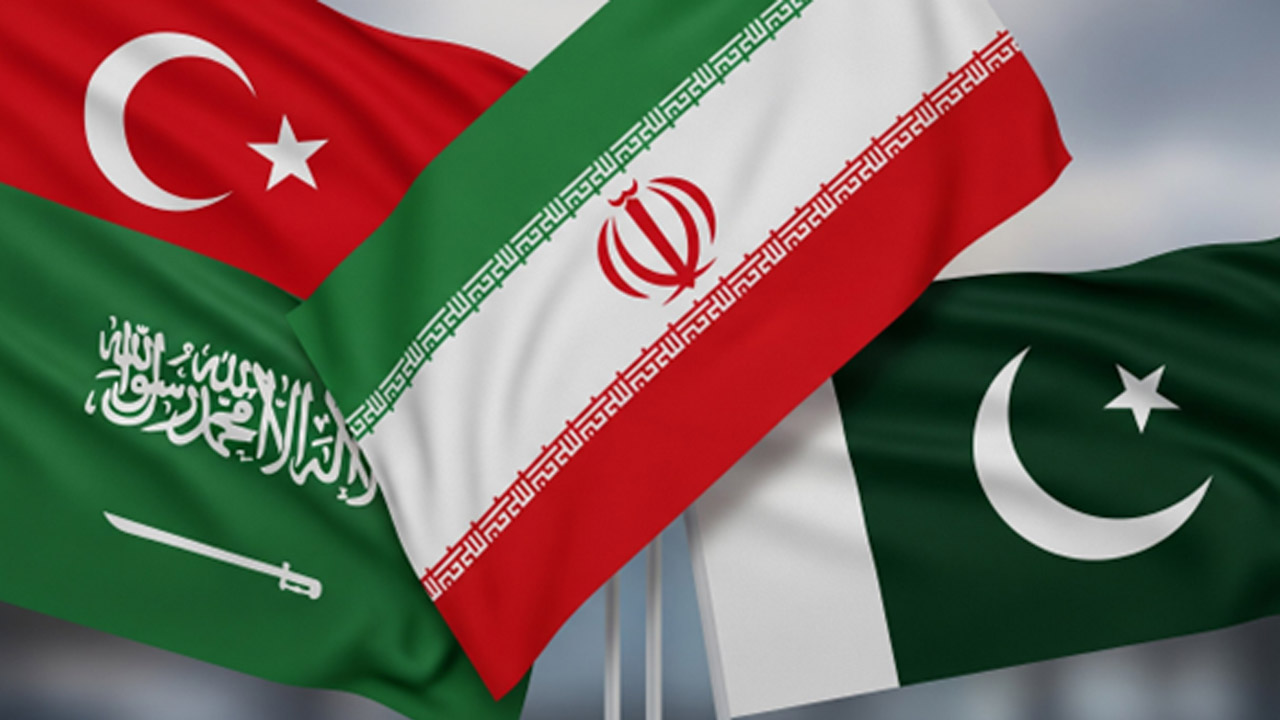
Union of Turkey, Saudi Arabia, and Pakistan amid unrest in the IRI

ARVAK Center comment, 14.01.2026[1]
1. A new Defense pact
In early January 2026, Arab sources reported that Turkey, Saudi Arabia, and Pakistan, amid increasing tensions in the Middle East, were conducting intensive preparations for the signing of a “mutual defense” treaty. Chronologically, this information coincided with socio-political unrest in Iran, the formal trigger of which was another sharp inflationary spike, as well as reports of the Pentagon deploying U.S. Navy and Air Force groups to the Middle East and Persian Gulf.
2. Signs of impending escalation
According to several experts, Washington and Tel Aviv are preparing for a new military operation against Iran, which seems inevitable in light of the increasing likelihood of mass social protests transitioning into a phase of civil confrontation. This is indicated not only by the data on the relocation of the American fleet and military aviation to Iranian borders but also by frequent statements from the White House and the U.S. Congress regarding their readiness to apply force against the “totalitarian Islamic regime for repressions against the freedom-loving Iranian people”.
Another indirect confirmation of the escalating situation around the IRI was the information regarding the emergency evacuation of Russian diplomatic personnel and all willing citizens of the Russian Federation from Israel. According to analysts, this may be related to information held by Moscow regarding Tehran’s preparation of an unprecedented missile and drone strike on the territory of the Jewish state. There is a high probability of preemptive actions by Iran, whose military-political leadership, presumably, is not inclined to wait for an Israeli-American attack – as occurred in the summer of 2025 – and in the current situation intends to act proactively.
According to leaks from Israeli official circles, in December 2025, Israeli prime minister Benjamin Netanyahu appealed to the president of the RF Vladimir Putin with a request to inform the Iranian leadership through Moscow’s channels that Tel Aviv does not plan to strike Iran. This fact can be seen as indirect confirmation of information regarding Tehran’s preparation of preemptive measures.
3. Iran in the grip of internal and external destabilization
Iranian authorities have reason to believe that social unrest in the country is transforming into a political démarche not without the participation of Israeli and Western special services, which seek to destabilize Iran’s internal situation before applying external military force. Essentially, this is merely a change in the sequence of actions following the failure of the American-Israeli tandem’s attempts to provoke a civil war and activate separatist movements during the previous military campaign against Tehran.
The radical wing in the Iranian leadership and the IRGC general staff realize that internal political destabilization will inevitably lead to external military intervention. Under these conditions, they have nothing to lose, and preemptive actions against reachable Israeli and American targets in the region will become a necessity for them.
Thus, an extremely explosive situation is forming inside and around Iran. Obviously, it is this factor that creates the prerequisites for the formation of an alliance between Turkey, Pakistan, and Saudi Arabia, which is formally positioned as a joint defense initiative. The desire to coordinate the actions of these major regional powers in the event of destabilization and a possible civil war in Iran appears to be a justified measure from the perspective of ensuring regional security.
At the same time, it cannot be ruled out that this may involve the formation of an alliance oriented toward participation in the military campaign against Iran being prepared by the U.S. and Israel. In this context, such a configuration could join the list of direct beneficiaries of the long-circulating narrative regarding the “pending collapse” of the Islamic Republic of Iran. This version correlates with the thesis set out in the recently published “New National Security Strategy of the USA”, which provides for Washington delegating the right to establish order in the Middle East to its most influential regional allies. All three countries forming this alliance are to some extent placed within the U.S. orbit of influence and, despite existing contradictions between them, are potentially capable of acting in line with Washington’s anti-Iranian policy, counting on receiving significant preferences.
Over the past two decades, Washington’s most strained relations have been with Islamabad, which maintains fairly close interaction with Beijing. However, expectations from the Iranian precedent (the prospect of Iran’s disintegration), along with some activation of U.S.-Pakistani military, trade-economic, and diplomatic ties in recent years, may stimulate Islamabad to participate in the initiatives to reshape the Greater Middle East. Furthermore, Pakistan has established strong allied and trusting relations with both Turkey and Saudi Arabia, which facilitates cooperation among the alliance countries on the Iranian track and significantly offsets Beijing’s dissatisfaction with developments in the region.
4. Three stages of the anti-Iranian campaign
In the logic of the version under consideration, a military alliance of Sunni countries is forming around Shiite Iran, acting as regional operators of the U.S. interests in the Middle East and Central Asia. These countries may be assigned a role in the disintegration of IRI, with the subsequent provision of preferences in the process of dividing this country. Based on this version, the anti-Iranian campaign itself can be implemented in three stages:
Stage I: Against the backdrop of deepening internal destabilization in the IRI, the U.S. and Israel may deliver a new, more powerful military strike, which is likely to provoke more decisive actions from Iranian internal opposition segments and their transition to open armed uprisings of a separatist nature in its peripheral areas. It is not excluded that the U.S. and Israel may resort to limited and localized ground operations in Iran, indirectly evidenced by the transfer of a significant number of American assault helicopters to the region. However, a decision to abandon a full-scale invasion scenario will likely be made.
Stage II: A large-scale invasion will be carried out by proxy forces of the U.S. and Israel in the region. This assumption is confirmed by leaks in Middle Eastern media regarding the preparation of a significant number of Kurdish armed formations in Iraq and Syria for transfer across the Iranian border. According to information received, on January 5, 2026, a closed meeting of representatives of various Kurdish parties and the most influential tribes took place in Iranian Rojhilat (Iranian Kurdistan), where it was decided to join the armed struggle against Tehran “in the name of the separation and independence of Iranian Kurdistan”. Additionally, the version regarding the use of proxy groups in Iran is consistent with data from Russian experts stating that, starting from the summer of 2025, at the initiative of Turkey and Israel, tens of thousands of Punjabi and Pashtun militants from Pakistan have been dislocated in Afghanistan and Azerbaijan (an ally of Ankara). According to these reports, these units, having undergone special training, are to “seep” from Azerbaijan into the northern Turkic-speaking provinces of Iran, and from Afghanistan into the Khorasan region. Their operational task may be the disorganization of state border protection, attacks on government troops, and support for ethno-separatist armed uprisings on the ground. Likely, the factor of Iranian Baluchistan (Sistan and Baluchestan province) will be involved in a similar scenario, where a high level of separatist sentiment remains and Tehran’s capabilities for forceful control of the situation are limited.
Stage III: The third and final stage involves direct military intervention by the Republic of Turkey (obviously with the participation of its ally Azerbaijan), the Kingdom of Saudi Arabia, and the Islamic Republic of Pakistan in internal Iranian processes under the formally “legitimate” pretext of humanitarian intervention to stop the civil conflict and ensure the safety of the local population.
5. Geography of division of the “Iranian inheritance”
There are specific territories in Iran – potential “zones of responsibility” – that represent interest for these countries, taking into account historical, ethnic, and strategic priorities:
Turkey and Azerbaijan: Traditionally attracted to the northwestern provinces of Iran, inhabited predominantly by Turkic-speaking peoples and having strategic significance in the context of the program for the geopolitical consolidation of the so-called “Turkic world”. Traditionally strong separatist aspirations of the so-called “Iranian Azerbaijanis” facilitate Ankara’s task of removing these territories from Tehran’s control under the pretext of protecting the security and rights of ethnically related peoples.
Saudi Arabia: Extremely interested in the prospect of establishing control over the Iranian province of Khuzestan, predominantly inhabited by Arabs, as well as the Hormozgan province, where ethnic Arabs constitute a significant part of the population and which covers the entire length of the Strait of Hormuz from the east. In total, this would provide Riyadh with the opportunity to establish strategic control over almost the entire Persian Gulf region, ensuring access to the most significant Iranian oil fields and important maritime transport and energy logistics.
Pakistan: Of critical importance is the border Iranian province of Sistan and Baluchestan, inhabited predominantly by Balochs – a warlike ethnic group also living compactly in the namesake and largest province of Pakistan. In Iranian Baluchistan, there are significant deposits of precious and industrial metals, as well as coal and gas. Additionally, the largest Iranian maritime logistics hub, Chabahar, is located in Sistan and Baluchestan, representing direct competition to the Pakistani port of Gwadar on the Indian Ocean coast. Control over Chabahar would potentially allow Islamabad to dominate the maritime routes of the so-called Chinese “Southern Route” and become a key link in the IMEC economic corridor. Hypothetically, Islamabad could use the unrest in Iran and the expected activation of Iranian Baloch groups for direct intervention in the internal conflict in the IRI.
The pretext for such intervention could be the need for forceful suppression of separatist pockets in Iranian Baluchistan, which could potentially provoke an armed uprising in Pakistani Baluchistan, where this ethnic group also has extremely strained relations with the central government in Islamabad.
Thus, the information regarding the formation of an alliance between the three most influential Sunni states of the region bordering Iran allows for the conclusion of a desire to develop coordinated mechanisms and actions in the event of the transformation of the internal political crisis in the IRI into a stage of full-scale civil war. These are preemptive measures which, at minimum, should secure regional subjects neighboring Iran from upheavals in that country that threaten the entire macro-region, and at maximum, ensure their readiness to receive their own share of the “Iranian inheritance” in the event of the country’s political collapse.
6. The role of Washington and global consequences
This initiative certainly could not have been implemented without the consent – or rather, without the patronage – of the United States of America, which, together with Israel and several allies, are the main beneficiaries of eliminating the Islamic Republic of Iran for various reasons. In Washington’s case, it is primarily about neutralizing a factor preventing the implementation of the doctrine of strategic containment of the PRC and the Russian Federation.
However, the U.S. and its allies are not ready to independently carry out the entire range of measures for the military-political suppression of Iranian sovereignty and the establishment of direct control over this large country, as occurred previously in Iraq and Afghanistan. On the contrary, Washington’s Iranian policy case does not involve establishing its own order in that country but, apparently, is rather aimed at chaos in the IRI, around it, and in the region as a whole. Such a development is capable of destroying the architecture of security and trade-economic integration on the continent, as well as undermining the prospect of forming a “collective” Asian pole of power, the outlines of which are already marked in the SCO (Shanghai Cooperation Organization) format.
7. Conclusion
It is obvious that the United States is involving regional Sunni powers in the process of eliminating the ruling regime in Tehran. The calculation is that their activation and ambitions regarding the “Iranian inheritance” will exacerbate the crisis situation in the region and provoke fierce conflicts based on political and religious (sectarian) enmity. In general, a Syrian scenario is being purposefully reproduced for Iran, including sequential stages of political isolation, economic strangulation, internal destabilization, civil war, and intervention. Together, this algorithm forms a guaranteed path to the country’s disintegration, unless the self-preservation mechanisms of its political system demonstrate sufficient viability.
[1] The original (in Rus.) was posted on our website on 10.01.2026.