
Publication
U.S. Energy Doctrine within the framework of the New National Security Strategy (2025)

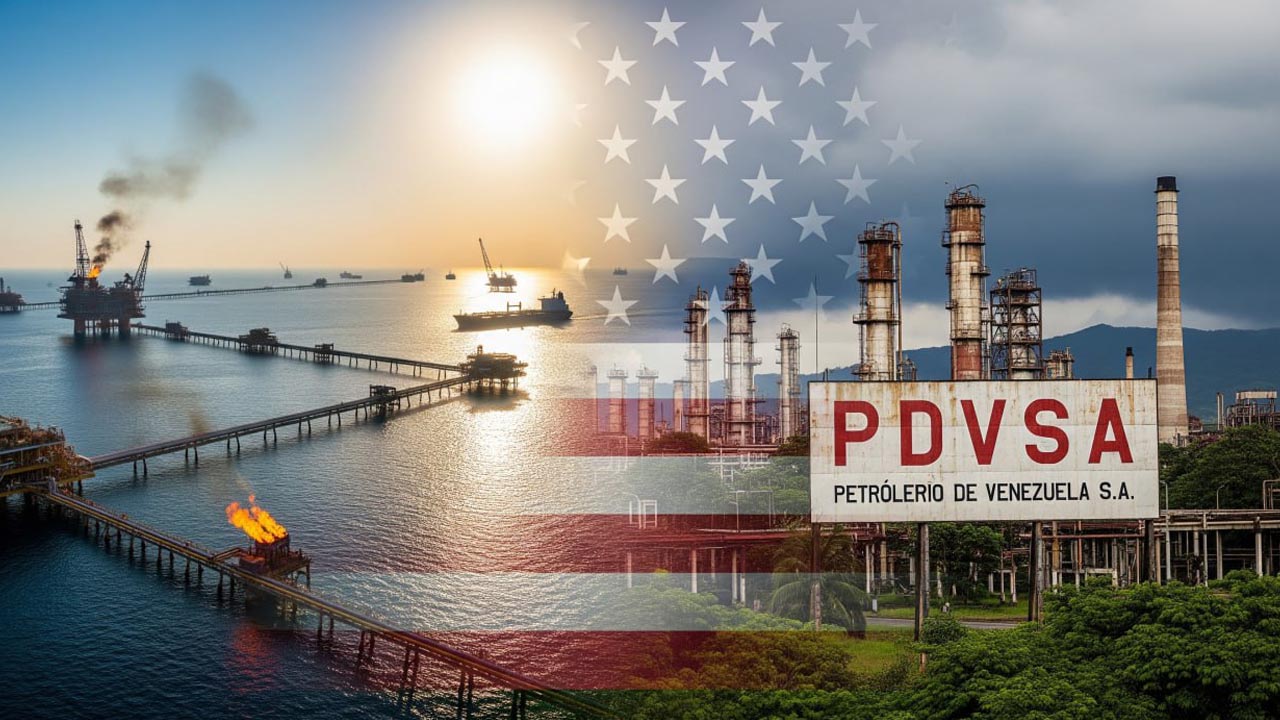
ARVAK Center comment, December 26.12.2025[1]
1. Revision of energy priorities in Washington’s doctrinal stance
A core tenet of the “New National Security Strategy” (NSS), published on December 4, 2025, is the assertion of the diminished strategic importance of the Middle East to Washington’s energy and raw material interests. The document codifies the deprioritization of Middle Eastern hydrocarbon resources and signals the U.S. intent to facilitate the global diversification of energy supplies, thereby insulating Western economic dynamics from the geopolitical instability of the Persian Gulf.
The Strategy declares a reliance on the United States’ own energy resources. However, this thesis prompts skepticism, given that confirmed U.S. oil and gas reserves are incomparable to the scale of the Middle Eastern resource base. Furthermore, U.S. legislation strictly regulates domestic extraction and export quotas. Clarity was provided by President Donald Trump, who, following the NSS publication, stated on several occasions that the U.S. intends to reclaim “its oil” from Venezuela.
2. Strategic focus on Venezuela’s energy potential
Venezuela possesses the world’s largest proven oil reserves. Since the nationalization of the industry in 1976 and the creation of the state-owned PDVSA, direct access for Western corporations – primarily American and European – to the country’s resources has been significantly restricted. For decades, Washington consistently criticized the “anti-democratic Venezuelan regime”, characterizing these measures as the illegal expropriation of assets. In 2025, the Trump administration officially designated the Venezuelan government as a “foreign terrorist organization”, thereby asserting a U.S. right to the immediate return of all lost assets under its jurisdiction.
The escalation of the confrontation, motivated in the fall of 2025 by the fight against drug trafficking in the Caribbean, has effectively transformed into a total economic blockade. The employment of naval blockade instruments aims to destabilize the government of Nicolás Maduro. Should sanctions fail, Washington is considering a scenario of direct military intervention to restore control over the world’s largest hydrocarbon reserves.
Caracas interprets these actions as an “act of imperialist aggression” and an attempt to restore a colonial model in violation of the UN Charter. Venezuela intends to file an official complaint with the UN, demanding that member states provide an appropriate political and legal assessment of Washington’s conduct. Meanwhile, the New NSS defines the Western Hemisphere as a zone of exclusive U.S. dominance, where no other actors are permitted to interfere in the order established by Washington.
3. Monopolization of Western Hemisphere resources as a compensatory mechanism
The reduction of U.S. activity in Eurasia under the new doctrine is accompanied by intensified efforts to monopolize the resource base of the Western Hemisphere. Washington has conducted an inventory of the region’s strategic assets, planning their redistribution in the interest of the American economy. This includes not only Venezuelan oil but also significant deposits of rare-earth metals (particularly in Brazil) and control over critical maritime trade routes.
The probability of Venezuela maintaining sovereignty over its natural resources under current conditions is assessed by experts as extremely low. The only restraining factor for the Trump administration is domestic political opposition in Congress – including some Republican members – and the American public’s aversion to a new armed conflict. Projections suggest that after the 2026 elections, a Democratic majority in the House of Representatives could block the President’s military initiatives. However, there remains a risk of provocative executive actions designed to force Caracas into military retaliation, allowing the President to bypass Congressional restrictions. The ongoing seizure of Venezuelan tankers by the U.S. Coast Guard is viewed as a component of this provocation strategy.
4. Degradation of the security system in the Persian Gulf
Washington’s declining interest in Middle Eastern resources is driven by the inability to ensure their security at an acceptable cost. The problem of the Strait of Hormuz, which remains under Tehran’s de facto control, is still unresolved. Iran retains leverage over approximately 50% of oil and gas exports from the Persian Gulf monarchies. Western attempts to pivot logistics toward land routes (pipelines bypassing the Strait) have failed due to permanent conflicts in Iraq, Syria, Turkey, and the zone of Israeli responsibility (Palestine, Jordan, Lebanon).
Simultaneously, the technological advancement of the Iranian military-industrial complex has jeopardized the entire refining infrastructure and LNG terminals of U.S.-allied Arab monarchies. The war against the Houthi rebels in Sana’a (2015–2020) demonstrated the vulnerability of Saudi Arabian facilities to UAV and missile strikes, even without direct Iranian intervention. The deployment of expensive Western-style air defense systems has failed to provide reliable protection, subsequently devaluing Arab oil as a stable asset.
According to several experts, the “12-Day Iran–Israel War” of 2025 was halted by Washington primarily due to Tehran’s threat to paralyze the Strait of Hormuz and launch mass strikes on the energy infrastructure of Arab states. Fearing a global market collapse and the forced depletion of strategic reserves, the U.S. compelled Israel to cease attacks on Iranian nuclear facilities.
5. Geoeconomic consequences of Iran–China cooperation
An additional destabilizing factor is the low cost of Iranian oil supplied to China in circumvention of the sanctions. Beijing covers a significant portion of its demand by importing “illegal” oil via the “shadow fleet” and “gray” payment schemes. Barter deals (oil for Chinese technology, semiconductors, and weaponry) bolster the PRC economy and facilitate Iran’s militarization.
Furthermore, several U.S. allies (e.g., Turkey) actively utilize shadow schemes to import Iranian hydrocarbons, effectively providing Tehran with avenues to bypass the financial sanctions imposed by the U.S. and its European allies. This situation mirrors the circumstances surrounding the Russian Federation, which redirected its exports to the Chinese and Indian markets following the imposition of sanctions.
Thus, Western over-reliance on Middle Eastern energy resources negatively impacts Washington’s ability to maintain global geoeconomic leadership. The complex web of conflicting interests among regional and global actors in the Persian Gulf requires significant U.S. resources to maintain dominance.
6. Conclusion: institutionalizing the energy-economic dictate
The implementation of the New NSS entails a reduction of the U.S. military footprint in the Middle East and the delegation of control functions to regional “operator-powers”. At first glance, this approach might appear positive, potentially reducing tensions in the Persian Gulf and the broader Middle East, as excessive U.S. intervention has traditionally been viewed as the primary cause of regional hostility over recent decades. However, the declared reduction in U.S. operational involvement may be an element of a “managed chaos” strategy designed to provoke local conflicts.
A U.S. withdrawal will inevitably disrupt the fragile balance of power, sparking wars for control over energy resources and supply routes. Hypothetically, Washington may benefit from such a scenario for two reasons:
- Containment of the PRC: Creating direct threats to China’s energy security through the instability of Middle Eastern supplies.
- Energy Expansion in Europe: Replacing Arab and Russian hydrocarbons in the EU energy balance with American-Canadian gas and Venezuelan oil.
Such a reconfiguration of the import portfolio would permanently institutionalize Washington’s energy-economic dictate over Europe, stripping the Continent of its strategic autonomy and transforming the energy lever into an instrument of direct political control.
[1] The original (in Rus.) was posted on our website on 25.12.2025.