
Publication
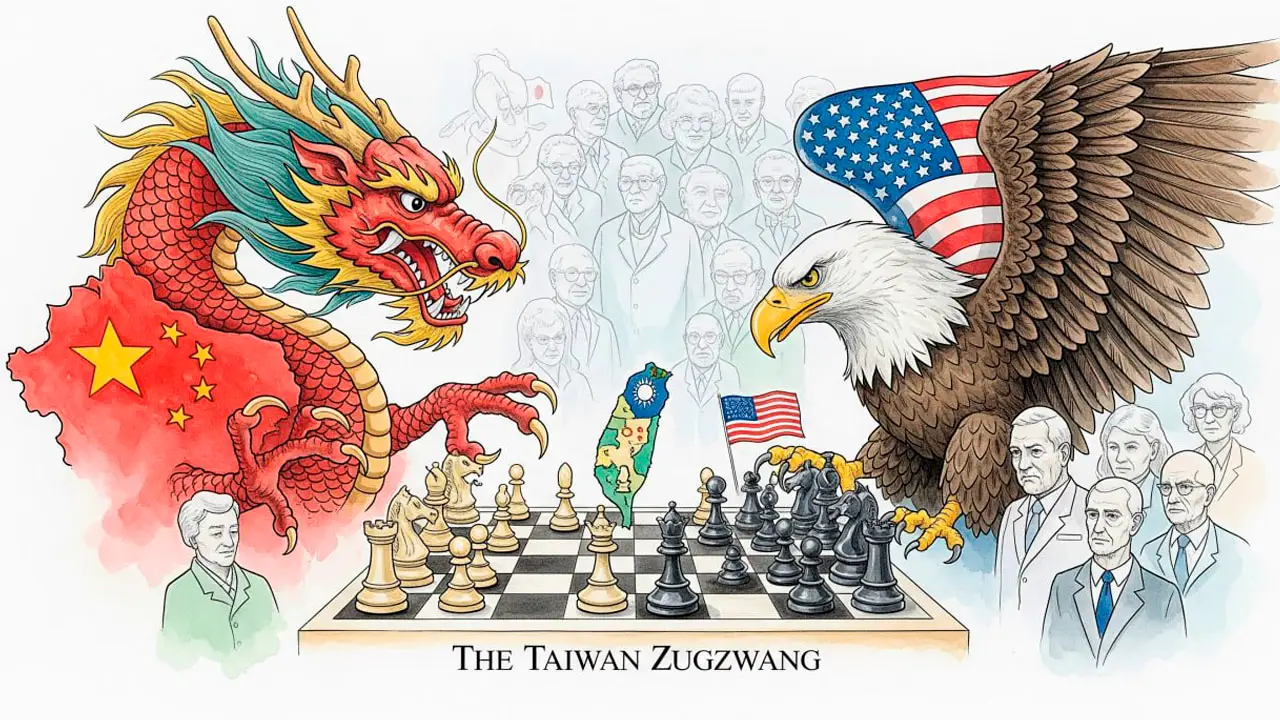
The Taiwan Zugzwang

ARVAK Center comment, December 09, 2025[1]
The geopolitical environment around Taiwan remains tense. A new spiral of crisis began after Taipei included a number of Chinese companies, including Huawei Technologies Company and Semiconductor Manufacturing International Corporation (SMIC) megacorporations, in its export control list in June of this year. In response, Beijing introduced a ban in July on the export of dual-use products for 8 Taiwanese aerospace and shipbuilding companies [1].
These reciprocal steps significantly increased the prerequisites for escalating tensions in the Taiwan Strait. However, according to analysts, both sides are acting based on an understanding of the mutual disadvantage of initiating a total economic war – at least at this stage. Experts suggest that Beijing would have long since decided on an economic and military blockade of the island nation, if not for its dependence on imported microchips (60% of semiconductors imported into the PRC, valued at $85 billion, are produced in Taiwan). Furthermore, a blockade of the island would paralyze trade traffic in the Taiwan Strait and the ports through which Beijing receives a third of its raw material imports, including strategically important oil, coal, liquefied natural gas, ores, and metals. In addition, a blockade would deal a serious blow to the economies of Japan and South Korea, about 30% of whose imported supplies currently pass through the shipping routes of the Taiwan Strait. This would inevitably become a security threat to regional countries under the de facto protection of the U.S. – Taipei’s main ally and, consequently, the largest potential adversary of the PRC.
According to repeated statements by authorities in Taipei, a blockade of the island would be regarded as a de facto declaration of war by Beijing, with all the ensuing consequences [2]. Taiwan’s economy is one of the most import-dependent in the world and has virtually no autonomous and self-sufficient production chains in any key sphere [3]. A total blockade would primarily affect the food security of the island state, whose agricultural production accounts for only about 3% of its GDP. A blockade of the island would naturally paralyze exports, including the main source of state revenue – the supply of semiconductors, high-tech chips, and their production equipment to the global market. Taiwan essentially provides 1/3 of the global demand for such products [4] and is therefore hardly interested in provoking China into actions that could deprive the island of its conditions for global dominance in this ultra-profitable industrial sector.
In the event of a total economic blockade, a military conflict between mainland China and Taiwan, which broke away in 1949, would become inevitable, and neither side could count on guaranteed success. Blockaded Taipei would, lacking choice, be forced to resort to a military option with the support of its allies – a scenario highly likely to lead to the destruction of the island state. Beijing, in turn, has the option of abandoning the idea of a blockade and thereby not provoking hostilities that are unlikely to lead to the destruction of the Chinese state but would inevitably lead to the undermining of its current growth and a recession. Apparently, the Chinese authorities are well aware of this, and, according to experts, the maximum step Beijing is prepared to take under current conditions is not a blockade of the island, but a quarantine regime in the Strait, involving the inspection and passage of goods flow to and from the island. This approach symbolically and psychologically will demonstrate the PRC’s dominance over Taiwan yet will not undermine the vital conditions for its existence. It can be assumed that Taipei is also prepared for such a scenario, which would outwardly appear as another act of Beijing’s expansionism but would in reality redirect its ambitions away from military escalation.
Thus, both sides are in a position of zugzwang. They have ramped up conflict to a critical mark, where any subsequent step in the logic of escalation is fraught with inevitable loss for the initiator. Hypothetically, China possesses all the necessary arsenal and capabilities for both the economic exhaustion of Taiwan – an option that Beijing has long considered as a possible course of action – and for a military campaign aimed at the forced subjugation of the island. However, Beijing’s success in both cases can only be guaranteed on the condition of neutrality from the U.S. and the alliances Washington has built in the Indo-Pacific region.
At the official level, the U.S. does not recognize Taiwan’s independence and has adhered to the “One China” concept since 1979. Yet, in practice, it pursues a policy of intensive militarization of the island (the U.S. has supplied Taiwan with $70 billion worth of weapons in recent years alone) [5] and is de facto the guarantor of its security. Over the past two decades, Washington has only accelerated the pace of Taipei’s militarization, while conducting extensive work to integrate Taiwan’s security issue into the agenda of strategic dominance of the U.S. and its allies (Japan, South Korea, Australia, New Zealand, Philippines) in the Indo-Pacific region. Even during the administration of Joe Biden [6], the U.S. activated a special mechanism for arms supplies to Taipei for the first time – “within the scope of presidential drawdown authority” [7]. Periodic entries into the South China Sea were recorded by U.S. carrier groups and aircraft carriers Ronald Reagan and Nimitz, heading towards Taiwan [8].
The most provocative act of U.S. anti-China policy during the presidential term of J. Biden was the visit to Taipei by the Speaker of the House of Representatives, Nancy Pelosi, on August 2, 2022. This was perceived by Beijing as an open hostile act [9].
In contrast to the double game played by American Democrats, during his second term, president Donald Trump is pursuing a more cautious policy regarding the Taiwan crisis, even considering his confrontational actions against Beijing in the sphere of economics. D. Trump prefers not to mix the Taiwan issue with the problems of U.S.–China global economic competition. This is challenging for U.S. analytical centers that favor a comprehensive approach. Trump’s position was largely unexpected [10]. Trump tries as much as possible to “not put all eggs in one basket”, preferring to “defeat” China on the trade and economic front without provoking a bloody or nuclear conflict over Taiwan. This was confirmed by his words in late November to the Japanese government, requesting them not to provoke the PRC over the Taiwan issue and not to seek war with it [11].
According to some analysts, D. Trump’s noticeable distancing from the idea of comprehensive support for Taiwan can also be explained by Taipei’s refusal to share the island’s main export production with the U.S. In early October 2025, it became known that authorities in Taipei rejected the proposal of U.S. Commerce Secretary Howard Lutnick to transfer half of Taiwan’s advanced chip production to the U.S. [12]. It is possible that Taipei’s refusal was motivated by the consideration that, having acquired the technologies, Washington would lose interest in Taiwan [13].
Regardless, D. Trump reacted extremely negatively to Taipei’s rejection. His administration had planned to introduce 20% duties on U.S. imports of Taiwanese chips. Now, options for “punishing” Taiwan through multiple increases in tariffs are being discussed. D. Trump is deeply concerned that Taipei is disrupting his plans for the technological “overtaking” of the PRC, which is forming its own powerful industrial base in the field of IT technologies, secured by the world’s largest sovereign reserves of rare-earth elements [14].
At the same time, experts note that Trump’s dissatisfaction cannot significantly influence U.S. policy regarding the further militarization of the island within the framework of the strategic containment program for China in the Indo-Pacific region. Washington continues to supply high-tech weapons systems [15] and is actively preparing its military. Analysts warn that the U.S. is rapidly forming the so-called “Indo-Pacific NATO”, striving to “wrest the initiative” from the PRC and undermine its growing military power in the region [16]. Should China attempt to initiate hostilities against Taiwan, the U.S. would immediately recognize the sovereignty of the self-proclaimed island state, which could provoke a global conflict.
Thus, the militarization of Taipei and the maintenance of the Sino-Taiwanese conflict in a smoldering state, along with the organization of military-political alliances in the East Asian region and the formation of the so-called “Central Asian NATO” (the “Turan” project [17]), are key components of the PRC containment doctrine. The U.S. is not prepared to abandon these strategic institutional principles.
Given the above, the PRC is hardly prepared to risk initiating a military conflict with Taiwan at the present moment. Experts suggest that doubts arose in the Chinese leadership regarding the real chances of success for a military campaign against Taipei, which would inevitably open the way to a direct confrontation with the U.S. military potential.
In spring 2025, Beijing initiated large-scale military exercises around Taiwan [18]. Many perceived these as a dress rehearsal for an invasion, but events showed that the decision to start a war was either changed or postponed due to the intensification of contacts between Xi Jinping and D. Trump. The October incident involving mass purges in the top echelons of the Chinese army command [19] was officially attributed to corruption but may also signal Beijing’s “not-yet-readiness” for war over Taiwan. It can be assumed that the Chinese authorities have concluded that the concept of a bloodless economic war, favored by D. Trump, is more profitable for Beijing at this stage than an attempt at a forced resolution of the crisis through military means with an unpredictable outcome.
In the event of the use of military force, the PRC cannot count on the loyalty and support of significant segments of Taiwan’s elites and population. The overwhelming majority of Taiwanese no longer identify themselves as Chinese in terms of ethnicity [20]. War would only deepen the socio-psychological divide and reinforce China’s expansionist image. Furthermore, military conflict would slow down China’s economic ascent.
Beijing also holds the “Hong Kong card”. Hong Kong is a de facto autonomy integrated into the PRC as a “Special Administrative Region”. It is obvious that, should the question of a military resolution be definitively removed, Beijing will signal to Taipei its readiness to apply virtually the same Hong Kong model for future voluntary integration with China. Simultaneously, the PRC will not abandon attempts at total economic pressure: undermining high-tech exports, dumping chips and IT services, manipulating prices for strategic rare-earth elements, quarantining trade logistics, and so on. Economic war of attrition and Taipei’s voluntary surrender – this is the most realistic prospect for the “conquest” of the island at this stage, even considering China’s extensive trade and tariff struggle with the U.S. This struggle is already intensely underway, and there are no obvious signs yet, that China is losing it.
References
[1] П. Булатов, «Китай–Тайвань: напряжение нарастает». Инфо Шос, 22.11.2025, http://infoshos.ru/ru/?idn=44084 (download date: 01.12.2025).
[2] “Chinese blockade would be act of war, Taiwan says”. CNN World, 23.10.2024, https://edition.cnn.com/2024/10/23/asia/taiwan-china-blockade-act-of-war-intl-hnk (download date: 01.12.2025).
[3] «Импорт Тайваня | 1981-2025 Данные | 2026-2027 прогноз». Trading Economics, https://ru.tradingeconomics.com/taiwan/imports (download date: 01.12.2025).
[4] «Экономика Тайваня». TAdviser, 27.02.2025, https://www.tadviser.ru/index.php/Статья: Экономика_Тайваня (download date: 01.12.2025).
[5] «Обзор военных обязанностей США в отношении Тайваня». Российский совет по международным делам, 26.10.2023, https://russiancouncil.ru/blogs/a-terzi/obzor-voennykh-obyazannostey-ssha-v-otnoshenii-tayvanya/ (download date:01.12.2025).
[6] «Байден подтвердил, что США не поддерживают независимость Тайваня». ТАСС, 13.01.2024, https://tass.ru/mezhdunarodnaya-panorama/19724079 (download date:02.12.2025).
[7] «США впервые передадут Тайваню оружие по схеме поставок Украине». РБК, 29.07.2023, https://www.rbc.ru/rbcfreenews/64c463cc9a79474de9346414 (download date: 02.12.2025).
[8] «Nikkei сообщила о переброске авианосца США ближе к Тайваню». РБК, 01.08.2022, https://www.rbc.ru/rbcfreenews/62e7b8299a7947c98caea311 (download date: 02.12.2025); «Оборонное ведомство Тайваня заявило об американском авианосце Nimitz к востоку от острова». ТАСС, 06.04.2023, https://tass.ru/mezhdunarodnaya-panorama/17463515 (download date: 02.12.2025).
[9] «Байден и Си Цзиньпин обменялись предупреждениями по поводу Тайваня». BBC NEWS, 29.07.2022, https://www.bbc.com/russian/news-62328908 (download date: 02.12.2025).
[10] “Trump said Taiwan ‘never came up’ in meeting with China’s Xi: ‘They know the consequences’ of military action”. CBS NEWS, 02.11.2025, https://www.cbsnews.com/news/trump-taiwan-china-xi-60-minutes-interview/ (download date: 02.12.2025).
[11] «WSJ: Трамп после разговора с Си Цзиньпином призвал Токио к сдержанности». ТАСС, 27.11.2025, https://tass.ru/mezhdunarodnaya-panorama/25742499 (download date: 02.12.2025).
[12] «Тайвань отверг требование США о переносе половины производства чипов в Америку». DNS Клуб, 01.10.2025, https://club.dns-shop.ru/digest/154369-taivan-otverg-trebovanie-ssha-o-perenose-polovinyi-proizvodstva-ch/?utm_referrer=%20https%3A%2F%2Fww w.google.com%2F (download date: 02.12.2025).
[13] «Эксперт Цзинь: США откажутся от Тайваня после переноса производства чипов TSMC». ТАСС, 17.11.2025, https://tass.ru/mezhdunarodnaya-panorama/25643941 (download date: 02.12.2025).
[14] «География редкоземельных элементов: инфографика мировых запасов». Naked Science, 26.11.2025, https://naked-science.ru/community/1136010 (download date: 03.12.2025).
[15] «США возобновили поставки оружия Тайваню». Korrespondent.net, 14.11.2025, https://korrespondent.net/world/4832602-ssha-vozobnovyly-postavky-oruzhyia-taivanui (download date: 03.12.2025).
[16] «Индо-Тихоокеанское НАТО»: ускорить США, вооружить Австралию, воспитать Южную Корею». Институт изучения разведки Ральфа Ван Демана, 02.07.2025, https://vandeman.org/ ru/indo-tihookeanskoe-nato-uskorit-ssha-vooruzhit-avstraliju-vospitat-juzhnuju-koreju/ (download date: 03.12.2025).
[17] «USAID-в прошлом», Великий Туран» – в настоящем: с помощью каких сил США будут разжигать конфликты в Центральной Азии (прогноз)». Stan Radar, 20.02.2025, https://stanradar.com/news/full/56840-usaid-v-proshlom-velikij-turan-v-nastojaschem-s-pomoschju-kakih-sil-ssha-budut-razzhigat-konflikty-v-tsentralnoj-azii-pr.html (download date: 03.12.2025).
[18] «Китай проводит масштабные военные учения вокруг Тайваня». DW, 01.04.2025, https://www.dw.com/ru/kitaj-provodit-masstabnye-voennye-ucenia-vokrug-tajvana/a-72104210 (download date: 03.12.2025).
[19] «Чистка в китайской армии: отстранены девять генералов, третьим по значимости лицом стал борец с коррупцией». BBC NEWS, 23.10.2025, https://www.bbc.com/russian/articles/ crrez7p22qpo (download date: 03.12.2025).
[20] «Большинство жителей Тайваня говорят, что они тайваньцы, а не китайцы». EPOCH TIMES RUSSIA, 21.01.2024, https://www.epochtimes.ru/mir/aziya/bolshinstvo-zhitelej-tajvanya-govoryat-chto-oni-tajvantsy-a-ne-kitajtsy-196182/?utm_referrer=https%3A%2F%2Fwww.google. com%2F (download date: 03.12.2025).
[1] The original (in Rus.) was posted on our website on 04.12.2025.